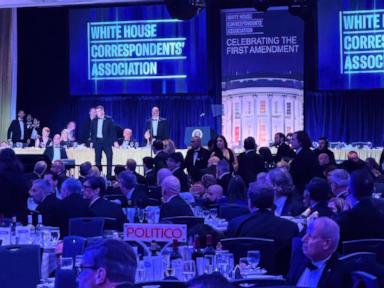
Standard news coverage of a trial date treats a court calendar entry like a simple finish line, missing how federal scheduling operates as an operational tug-of-war between evidentiary volume, constitutional preparation time, and prosecutorial escalation. When a federal judge schedules jury selection for September 7, 2027, in the prosecution of Cole Tomas Allen for the April 25, 2026, shooting incident at the White House Correspondents' Association dinner at the Washington Hilton, that date reflects concrete resource and legal constraints rather than routine docket delay.
Competitor reporting typically maps this story along a thin chronological line: an armed suspect breached security at a high-profile Washington gala, federal authorities brought serious charges, defense lawyers and prosecutors clashed over timing, and a judge picked a date months ahead. That surface sequence leaves out the underlying causal chain. A long runway between indictment and trial changes how digital forensics are audited, how contested ballistics and witness accounts are tested, and how superseding indictments reshape sentencing exposure. Meanwhile, you can find other developments here: The Game Theory of Sovereign Brinkmanship Inside the European Union.
Deconstructing Conventional Coverage and Its Blind Spots
Standard wire and broadcast dispatches organize political-violence court updates around immediate drama: the scale of the event, the defendant's identity, the headline felony count, and the gap until trial. This structure helps readers track milestones quickly, yet it blurs three structural mechanics that govern how the case actually moves through federal court.
First, conventional reporting treats the trial date as a fixed deadline rather than a conditional schedule. In complex federal prosecutions involving multiple law enforcement agencies, electronic devices, writings, and security footage, early dates are frequently provisional until discovery volume and motion schedules are clarified. Second, coverage often merges disputed factual claims with formal charges as if they carried equal evidentiary weight at this stage. Third, news summaries rarely connect trial timing to prosecutorial charging strategy, even when new counts alter the statutory theory of the case. To understand the complete picture, check out the detailed analysis by NPR.
- Known facts: Cole Tomas Allen faces federal prosecution in the District of Columbia stemming from the April 25, 2026, incident at the Washington Hilton during the White House Correspondents' Association dinner. A federal judge set jury selection for September 7, 2027, with an estimated trial length of three to four weeks, after prosecutors had suggested May 2027. Federal prosecutors also added an armed terrorism count in a superseding indictment alongside existing counts including attempting to assassinate the president, assaulting a federal officer with a deadly weapon, and firearms offenses.
- Educated hypotheses: Granting a September 2027 start rather than May 2027 likely reflects judicial recognition that defense counsel needs substantial time to review multi-agency discovery, challenge disputed factual narratives, and prepare suppression or evidentiary motions without triggering appellate reversal risks over rushed preparation. Adding an armed terrorism count after initial indictment likely aims to align the legal framing with alleged ideological or political grievances while expanding the government's narrative options before a jury.
The Four Pillars of Federal Trial Scheduling
To evaluate why a complex federal case lands on a calendar more than a year after the underlying event, analysts should examine four operational pillars rather than relying on calendar gap length alone.
1. Evidentiary Discovery and Forensics
High-profile security incidents generate dense evidentiary packages across multiple agencies, including the FBI Washington Field Office and the U.S. Secret Service. Investigators and defense teams must work through surveillance video, checkpoint logs, firearm purchase and serial-number records, medical and injury documentation, and written materials attributed to the defendant. Each layer adds review hours before counsel can meaningfully cross-examine witnesses or challenge admissibility.
2. Contested Factual Claims vs. Indictment Allegations
An indictment states what prosecutors allege and intend to prove; it does not settle disputed facts. In the Washington Hilton incident, reporting has highlighted conflicting accounts over details such as whether the suspect fired the round that struck an officer, alongside alleged statements and writings. When core factual points are contested, longer pretrial windows allow both sides to lock down forensic experts, examine ballistics and physical evidence, and test witness consistency before opening statements.
3. Defense Preparation vs. Prosecutorial Pacing
Prosecutors typically push for earlier trial dates once their core investigative file is assembled, as seen when the government proposed May 2027. Defense teams, starting from a reactive posture against federal investigative resources, argue for longer lead times to vet discovery independently and file targeted motions. Judges weigh speedy-trial considerations against the practical cost of a mistrial or ineffective-assistance claim if defense counsel is forced forward underprepared.
4. Superseding Indictments and Charge Stacking
Prosecutors can refine or expand charges via superseding indictments as investigative review continues. Adding an armed terrorism charge on top of attempted presidential assassination, assault on a federal officer with a deadly weapon, and firearms counts changes the legal architecture of the prosecution. Even when maximum exposure already includes life imprisonment on lead counts, additional statutory elements give prosecutors distinct avenues to prove intent, violence, or public disruption, while requiring defense counsel to address each element's legal definition and evidentiary threshold.
Cause-and-Effect Chains Conventional Coverage Misses
Tracing cause and effect clarifies why procedural rulings matter long before a juror is sworn in.
- Cause: A security breach occurs at an event hosting the president and senior officials at a major hotel, followed by federal arrest and multi-count indictment.
- Effect: Jurisdiction and investigative control center on federal authorities and national-security prosecutors, turning a local security response into a multi-year federal docket with heavy evidentiary and motion demands.
- Cause: Defense counsel requests additional time beyond the prosecution's proposed May 2027 window, and the court sets jury selection for September 7, 2027, for a projected three-to-four-week trial.
- Effect: Pretrial litigation stretches across the intervening months, creating space for motions in limine, disputes over restraints or courtroom protocol, and potential plea negotiations or evidentiary narrowing before jury selection begins.
- Cause: Prosecutors file a superseding indictment adding an armed terrorism count.
- Effect: Discovery review and trial preparation must account for the specific statutory elements of that count alongside the original charges, potentially lengthening motion practice and shaping how evidence of motive, planning, and weapons possession is argued.
Consider how a defense team manages a multi-weapon, multi-witness federal case where disputed factual details intersect with political writings. Rushing to trial in spring compresses the window to audit every timeline entry, subpoena or review records, and prepare motions to exclude prejudicial material. Pushing to September buys calendar time for preparation, but it also means the case remains active through months of pretrial filings and public scrutiny.
Operational Workflow for Tracking High-Stakes Federal Trials
Analysts, editors, and legal observers tracking this proceeding can apply a four-step workflow to separate signal from noise between now and September 2027.
- Audit the active charging instrument. Track the exact counts in the operative indictment or superseding indictment rather than relying on shorthand labels, noting which elements require proof of specific intent, firearm discharge, interstate transport, or terrorism predicates.
- Separate alleged conduct from adjudicated facts. Label statements from prosecutors, defense filings, or news reports as allegations or disputed claims until tested through rulings or trial testimony, especially where accounts diverge.
- Map pretrial motion milestones against the calendar. Watch deadlines for evidentiary motions, suppression challenges, and witness or expert disclosures leading up to the September 7, 2027, jury selection date, as those rulings often determine what the jury actually sees.
- Re-evaluate schedule durability before trial. Treat a set trial date as a baseline target that can hold or shift depending on discovery disputes, superseding filings, or courtroom availability.
Analytical Limits and Methodological Guardrails
This framework has clear boundaries. Without access to sealed filings, grand jury transcripts, or non-public discovery logs, outside observers cannot verify the exact weight of every piece of evidence before trial. In addition, predicting trial outcomes from docket dates or charge counts is unreliable; juries evaluate credibility, intent, and reasonable doubt on the admissible record presented in court, and pretrial rulings can narrow or reshape the case in ways outsiders cannot forecast with certainty.
Strategic Recommendation for Coverage and Risk Analysis
Editorial and intelligence teams covering this prosecution should shift from event-driven date alerts to milestone-driven tracking anchored to the operative superseding indictment, pretrial evidentiary rulings, and the September 7, 2027, jury selection window. Build a dedicated case ledger that logs each added or modified charge alongside its specific statutory elements, tags contested factual claims explicitly as disputed until resolved in court, and flags major pretrial motion deadlines sixty and thirty days ahead of autumn 2027 so coverage stays accurate, measured, and ahead of routine wire summaries.