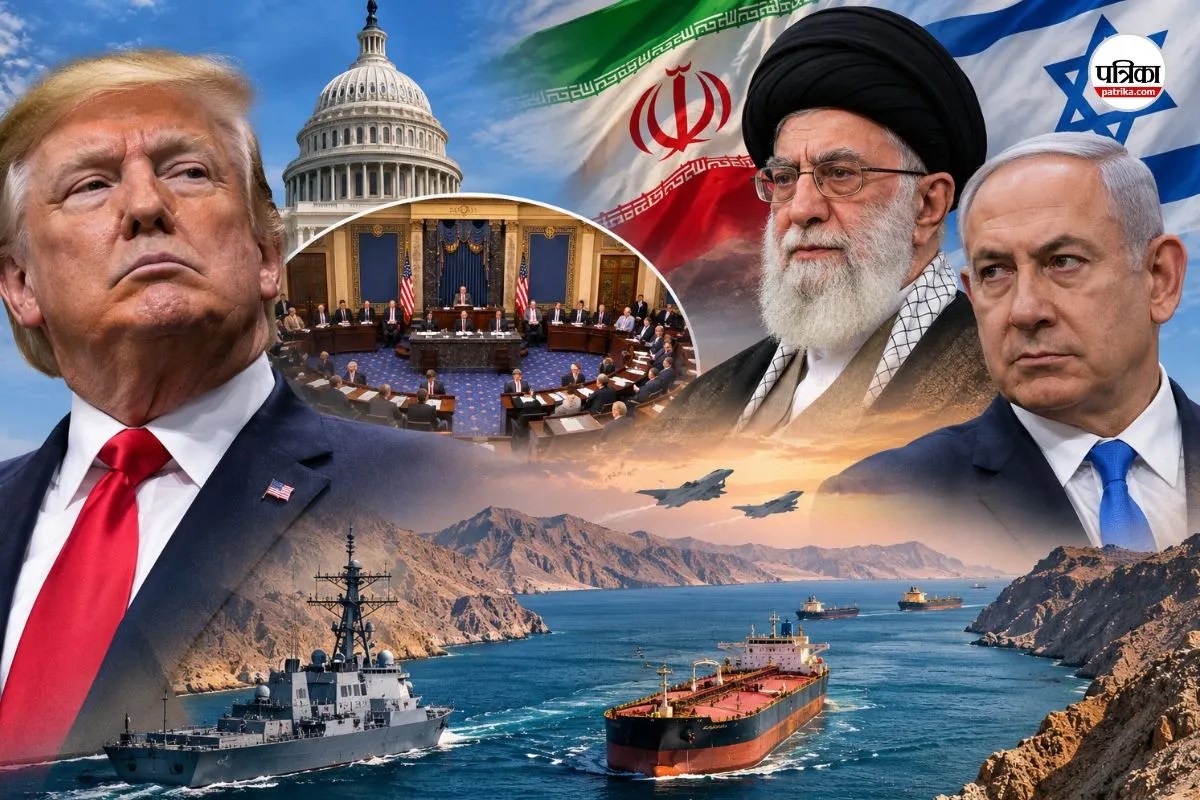
Modern statecraft relies on coupling unrelated geopolitical theaters into a single bargaining ledger, yet conventional political reporting treats presidential rhetoric as literal prediction rather than strategic signaling. On November 20, 2026, U.S. President Donald Trump linked three distinct security crises into one unified narrative: projecting optimism for a negotiated settlement to the Russia-Ukraine war, celebrating a trilateral nuclear risk-reduction declaration with China and Russia in Shenzhen, and issuing an absolute prohibition against Iranian nuclear weaponization amid an active eight-month U.S.-Iran military conflict. Understanding whether these statements reflect an impending diplomatic breakthrough or an escalation trap requires stripping away campaign-style phrasing and analyzing the underlying game theory, force posture, and economic constraints governing Washington, Moscow, Beijing, and Tehran.
The Architecture of Linked Geopolitical Bargaining
When an executive links an Eastern European land war, strategic nuclear arms control in East Asia, and naval coercion in the Persian Gulf within a single news cycle, the underlying mechanism is issue linkage—a bargaining strategy where concessions in one theater are implicitly or explicitly priced against restraint in another.
Surface-level coverage of the November 20 remarks takes the optimism at face value, assuming that productive bilateral talks on Ukraine and a trilateral summit in Shenzhen naturally create momentum toward peace in the Middle East. Operational reality works in the opposite direction. Each theater operates on an independent incentive structure, and progress in one frequently creates friction in the others.
- The Eastern European Attrition Ledger: Trump cited a figure of 25,000 monthly casualties—predominantly military personnel—to frame the Russia-Ukraine war as an unsustainable drain requiring immediate settlement. In bargaining theory, highlighting mutual exhaustion is a standard precursor to freezing a conflict along existing lines of control. However, Ukrainian leadership has raised alarms that a newly floated U.S.-backed European security framework risks locking in territorial gains for Moscow without providing binding enforcement mechanisms.
- The Shenzhen Trilateral Signal: The Shenzhen meeting between Trump, Chinese President Xi Jinping, and Russian President Vladimir Putin produced a joint declaration pledging to prevent nuclear conflict and initiate trilateral talks on nuclear risk reduction. While framed publicly as a historic non-proliferation breakthrough, independent diplomatic assessments indicate the closed-door 70-minute session yielded narrow institutional agreements—such as UN reform, fossil fuel refining, and curbing the International Criminal Court—rather than verifiable warhead caps or inspection regimes.
- The Persian Gulf Coercive Track: Unlike the diplomatic framing applied to Moscow and Beijing, Washington's posture toward Tehran relies on active military and economic compellence. Following the outbreak of direct hostilities on February 28, 2026, U.S. strategy shifted from diplomatic containment to physical interdiction, including strikes on Qeshm Island, a naval blockade affecting the Strait of Hormuz, and the deployment of an additional aircraft carrier strike group to the region.
Deconstructing the Shenzhen Trilateral Mechanism
Strategic arms control requires three verifiable components: baseline data declarations, intrusive on-site inspections, and binding limits on delivery vehicles. The Shenzhen declaration contains none of these elements. Instead, it functions as a low-cost diplomatic stabilizer that serves distinct domestic and strategic interests for each participant without altering their force postures.
- Washington's Objective: The White House uses the image of a three-power nuclear accord to demonstrate global leadership and project the capacity to manage great-power competition while simultaneously prosecuting a regional war in the Persian Gulf. By grouping China—which has historically resisted bilateral U.S.-Russia arms control frameworks due to the smaller size of its arsenal—into a trilateral format, the administration claims a diplomatic precedent.
- Beijing's Objective: China secures high-level diplomatic parity with Washington and Moscow while deflecting U.S. pressure on trade, tariffs, and semiconductor export controls. Agreeing to non-binding discussions on "reducing nuclear risks" costs Beijing zero warheads while reinforcing its preferred narrative as a responsible global mediator opposing further U.S. military escalation in the Middle East.
- Moscow's Objective: Russia gains diplomatic rehabilitation on the world stage alongside Xi and Trump, undermining Western efforts to isolate the Kremlin over Ukraine. By participating in nuclear stability talks, Putin signals that Moscow remains an indispensable pillar of global security architecture, strengthening his hand in parallel negotiations over Ukrainian territory and European security guarantees.
The central analytical flaw in treating the Shenzhen summit as a catalyst for resolving the Iranian crisis lies in the divergence of great-power interests. Both Beijing and Moscow have publicly opposed further U.S. military action against Iran, citing global economic disruption and energy market instability. Neither power has an incentive to expend political capital forcing Tehran to accept unilateral American disarmament terms while Washington maintains active economic and technological pressure on Beijing and proxies against Moscow.
The Compellence Paradox in the Persian Gulf
To understand the trajectory of the U.S.-Iran confrontation, one must distinguish between deterrence (persuading an adversary not to take an action it has not yet taken) and compellence (forcing an adversary to undo an action or surrender an existing capability through active force). Trump's declaration that Iran "will never have a nuclear weapon" and that Tehran cannot advance its nuclear program without U.S. approval represents pure compellence.
This strategy faces a severe structural contradiction rooted in the timeline of the conflict itself:
- The Verification Gap: Following U.S. strikes on Iranian nuclear enrichment facilities in 2025, the White House declared the sites completely destroyed. Yet by February 2026, the administration launched a broader military campaign citing the urgent need to prevent an Iranian nuclear weapon, and by November 2026, it deployed additional carrier strike assets while maintaining a naval blockade. If the physical infrastructure was already eliminated, ongoing military escalation cannot be purely preventive; it is aimed at forcing political capitulation and verifiable surrender of residual fissile material.
- The Five-Point Deadlock: Indirect negotiations mediated by Qatar in Doha reveal the exact friction points preventing a ceasefire. Washington's preconditions demand that Tehran transfer roughly 400 kilograms of enriched uranium to U.S. custody, dismantle all but a single nuclear facility, cease regional hostilities, and forfeit demands for war reparations while leaving at least 25 percent of its frozen assets locked.
- The Regime Survival Trap: Tehran's counter-demands center on lifting the U.S. naval blockade, removing oil sanctions, unlocking over $6 billion in frozen funds, and obtaining binding guarantees against future U.S. withdrawal from any agreement. For the Islamic Republic, surrendering its remaining nuclear leverage and enriched stockpile without ironclad security guarantees—particularly after experiencing direct U.S. strikes and NATO-aligned operational pressure—creates an existential vulnerability. While Trump explicitly stated that regime change is not his personal criterion for victory, Israeli leadership continues to push for the collapse of the Iranian government, leaving Tehran uncertain whether compliance buys survival or merely disarms the state ahead of a subsequent phase of hostilities.
Economic Chokepoints and Asymmetrical Endurance
The outcome of the Doha mediation hinges on an endurance contest between two distinct economic vulnerabilities: Iran's export strangulation and global maritime energy transit.
Iranian economists have acknowledged that alternative overland trade routes and domestic fiscal adjustments cannot offset the revenue collapse caused by the U.S. naval blockade. Deprived of seaborne crude exports and access to foreign currency reserves, Tehran faces mounting domestic inflation and fiscal contraction. This economic compression is the primary mechanism Washington relies upon to force acceptance of its nuclear conditions.
However, Tehran possesses a symmetric retaliatory lever: disrupting commercial navigation through the Strait of Hormuz. By linking the reopening of the waterway to sanctions relief and the lifting of the naval blockade, Iran imposes a continuous risk premium on global energy markets and regional Gulf states. Even though global oil prices showed resilience earlier in the conflict, sustained attacks on regional infrastructure—such as strikes on military sites in Kuwait and commercial tankers—create acute diplomatic pressure from Gulf mediators like Qatar and the UAE to secure an immediate de-escalation.
Operational Constraints and Strategic Limitations
Every diplomatic and military track outlined in the November 2026 statements carries built-in failure modes that limit the probability of a clean, simultaneous resolution:
- Enforcement Deficit in Ukraine: A rapid settlement driven by fatigue over monthly casualty rates risks producing a fragile armistice rather than a durable peace. Without robust third-party peacekeeping forces or credible security guarantees, a frozen front line merely grants both combatants an operational pause to reconstitute degraded brigades and artillery stockpiles.
- Illusion of Trilateral Consensus: Treating the Shenzhen summit as an operational alliance against Iranian proliferation overestimates Beijing's willingness to enforce Washington's red lines. China relies on discounted energy imports and regional stability; it will not actively assist a U.S. blockade that threatens its own supply chains.
- Escalation Dominance vs. War Termination: Deploying an additional aircraft carrier reinforces U.S. tactical superiority in the Persian Gulf, ensuring Washington can strike Iranian targets at will. Tactical dominance, however, does not automatically translate into war termination. Air and naval power can destroy fixed infrastructure and interdict shipping, but they cannot compel a regime to sign an instrument of surrender unless the leadership believes refusal guarantees immediate internal collapse.
Strategic Forecast and Execution Path
Expecting the Shenzhen trilateral declaration to unlock a simultaneous settlement in Ukraine and capitulation in Iran misreads the causal chain of late-2026 geopolitics. The three tracks will decouple over the next two quarters rather than converge into a grand bargain.
In Eastern Europe, diplomatic momentum will likely produce a tentative framework for a ceasefire along current battle lines, driven by mutual attrition and U.S. pressure to reallocate strategic bandwidth. Kyiv will face intense pressure to accept deferred territorial resolution in exchange for Western reconstruction financing and bilateral security pacts, even as European allies debate the viability of the resulting security architecture.
In the Persian Gulf, rhetoric claiming victory is "at hand" will collide with the friction of Qatari-mediated bargaining. Because Tehran cannot politically survive total unilateral disarmament under active bombardment, a comprehensive nuclear settlement remains unlikely in the immediate term. Instead, the highest-probability operational outcome is a phased, transactional de-escalation: a temporary naval truce in the Strait of Hormuz paired with partial release of frozen Iranian funds in Doha, trading immediate maritime transit security for a freeze on Iranian enrichment activities without resolving the underlying regime security dilemma. Analysts and market participants should discount announcements of broad diplomatic breakthroughs and monitor three hard indicators instead: verified transfers of enriched uranium out of Iranian territory, commercial shipping insurance rates in the Persian Gulf, and formal troop-withdrawal timetables along the Dnieper line.