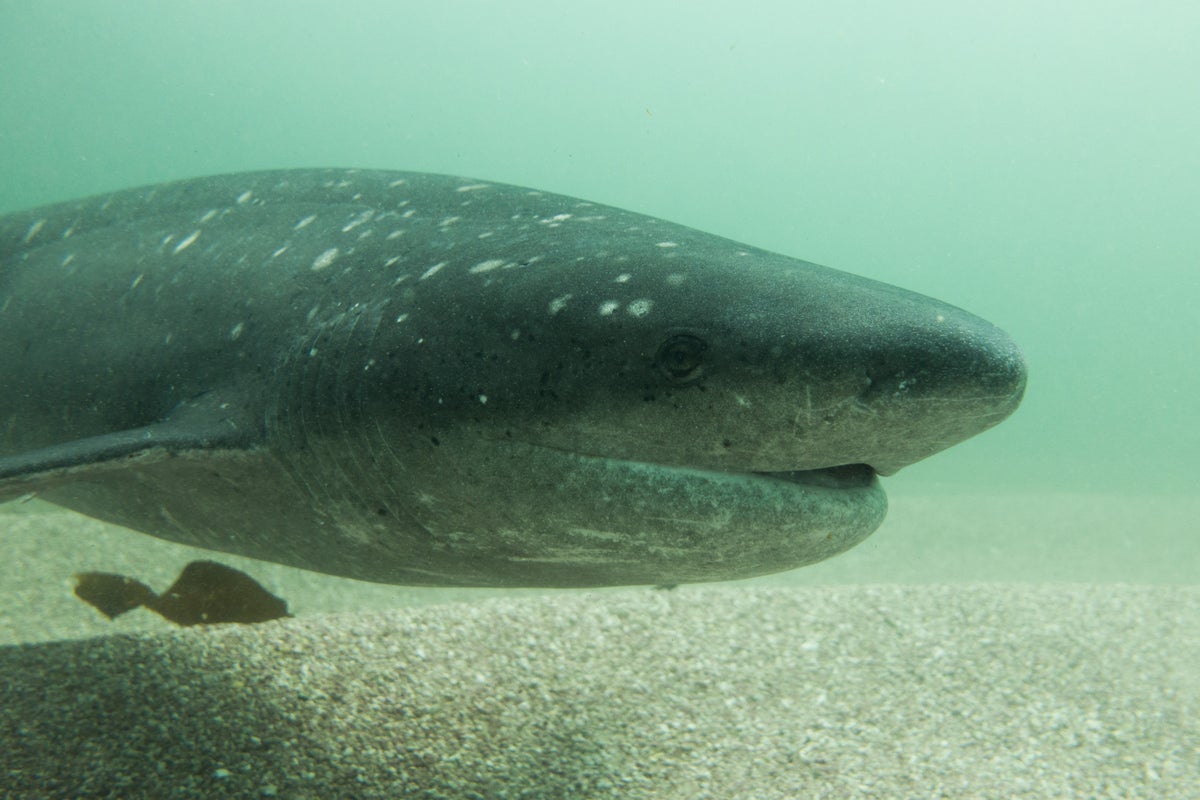
A commercial diver faces a life-altering emergency in the waters off Bruny Island, and the immediate reaction follows a predictable script. Media outlets rush to publish breathless headlines about teeth and terror. Public anxiety spikes. Politicians face immediate pressure to do something, anything, to secure the coast. Yet the frantic coverage of the recent shark attack near Adventure Bay ignores the systemic failures that put divers at risk long before they ever step off the boat.
This was not a random stroke of bad luck in an untouched wilderness.
The waters of southeastern Tasmania have changed dramatically over the last two decades. Marine ecosystems are shifting due to rapidly rising water temperatures, bringing large apex predators into direct conflict with a highly lucrative commercial diving industry. At the same time, the emergency response infrastructure required to protect these workers has eroded. To understand why this attack happened, we have to look past the surface panic and examine the convergence of shifting predator distributions, industrial pressure, and a medical safety net that is dangerously close to snapping.
Shifting Currents and New Predators
Tasmania's waters are warming at nearly four times the global average. The East Australian Current, a massive conveyor belt of warm water pushing down from the tropics, now penetrates much further south than it did thirty years ago. This environmental shift has radically altered the local marine hierarchy.
Species that once rarely ventured past New South Wales are now permanent residents in Tasmanian waters. For the local abalone and sea urchin divers who spend hundreds of hours underwater every year, the change is palpable. The kelp forests that historically provided cover and structure are thinning, replaced by barren rock zones created by overgrazing invasive urchins.
This loss of habitat destroys the natural buffers between divers and large predators.
In a healthy marine environment, a diver working the bottom is part of a complex, cluttered landscape. Today, they are increasingly exposed in wide-open, degraded environments. Great white sharks, drawn south by shifting seal colonies and changing fish migrations, are navigating these altered coastal zones with higher frequency. The data suggests these animals are not changing their behavior; they are simply following their food supply into areas where humans happen to work.
The Myth of Total Mitigation
Following any major shark incident, the immediate public demand is for absolute safety. Coastal communities call for nets, drumlines, or high-tech acoustic monitoring arrays to create an invisible wall between the ocean's apex predators and human beings.
This desire for total security is a dangerous illusion.
The reality of the Tasmanian coastline defies simple engineering solutions. Adventure Bay is a vast, open body of water subject to brutal Southern Ocean swells. Installing traditional shark exclusion nets in these conditions is practically impossible and ecologically disastrous, as they routinely trap non-target species like dolphins, seals, and endangered sea turtles.
Personal deterrent devices offer a different kind of false confidence. Many commercial operators rely on electronic shield devices worn on the ankles or attached to scuba tanks. These units emit an electromagnetic field designed to overwhelm the sensitive ampullae of Lorenzini—the jelly-filled pores on a shark's snout used to detect prey.
While independent testing shows these devices can reduce the likelihood of a bite from a curious or investigating shark, they are not bulletproof vests. A large white shark traveling at high speed on an ambush trajectory relies on pure kinetic momentum. By the time the animal enters the electromagnetic field of a personal deterrent, its predatory strike is already locked in. The device cannot alter the physics of a multi-ton animal moving at thirty miles per hour.
The Crumbling Medical Lifeline
When a critical bite occurs in a remote location like Bruny Island, survival is entirely a matter of minutes and logistics. The initial challenge is blood loss management on a pitching boat deck, but the secondary, overlooked crisis is access to specialized hyperbaric care.
Commercial divers operating at depth accumulate nitrogen in their tissues. When an attack forces an immediate, panicked ascent to the surface, the diver bypasses the mandatory decompression stops required to let that gas safely escape. The result is a dual medical emergency: severe, traumatic blood loss combined with acute decompression sickness, commonly known as the bends.
Tasmania's primary hyperbaric medicine facility, located in Hobart, is the absolute frontline for these injuries. Yet across Australia, these specialized units are facing severe funding constraints and staffing shortages. Hyperbaric chambers are expensive to maintain and require highly trained technicians and physicians who can manage patients inside a pressurized environment.
If a diver suffers an attack in a remote corner of the state and the local hyperbaric facility is understaffed or undergoing maintenance, the patient must be stabilized and flown to Melbourne or Sydney. For a victim dealing with arterial tears and massive gas bubbles in their bloodstream, that extra transit time can be fatal. The safety of every diver in Tasmanian waters depends entirely on a heavily burdened public healthcare system that rarely gets recognized until a catastrophe occurs.
Balancing Conservation and Workplace Safety
The debate surrounding shark management invariably splits into two hostile camps. On one side are the staunch conservationists who argue that humans enter the ocean at their own risk and that marine predators must be protected at all costs. On the other side are industrial advocates and terrified locals who demand culls to protect human lives and regional tourism economies.
This binary argument prevents real progress.
White sharks have enjoyed strict federal protection in Australian waters since the late 1990s. This protection was necessary to prevent the collapse of a vulnerable species. However, decades of conservation success mean that human populations and shark populations are now intersecting more frequently.
Acknowledging this reality does not mean reverting to the indiscriminate slaughter of sharks. It means treating marine safety as a workplace health and safety issue rather than an emotional debate.
Commercial diving is a critical economic driver for regional Tasmania, generating tens of millions of dollars annually through the export of high-grade seafood. If a terrestrial workplace faced an emerging, lethal hazard that altered the daily environment of its workers, regulators would step in immediately to overhaul safety protocols, mandate new backup systems, and fund real-time tracking research. The marine industry deserves the exact same rigorous, data-driven approach.
Redefining the Maritime Safety Protocols
The incident at Adventure Bay exposes the limits of relying on luck and basic first aid kits. To prevent the next tragedy, the commercial fishing sector and state regulators must move away from reactive panic and implement a proactive, multi-layered defensive strategy.
- Satellite Tracking Integration: State fisheries should maintain a centralized, real-time database of tagged shark movements, directly linked to an alert system for commercial vessel captains operating in specific zones.
- Mandatory Advanced Trauma Training: Every deckhand and skipper on a commercial diving vessel must undergo specialized training for massive hemorrhage control, including the use of modern arterial tourniquets and hemostatic dressings.
- Dedicated Hyperbaric Funding: The Tasmanian government must guarantee ring-fenced funding for the Hobart hyperbaric unit to ensure round-the-clock operational readiness throughout the peak diving seasons.
Relying on the old assumption that the ocean is a static environment is a luxury we no longer possess. The waters are changing, the predators are moving, and the systems designed to protect human lives must evolve with them or become entirely obsolete.