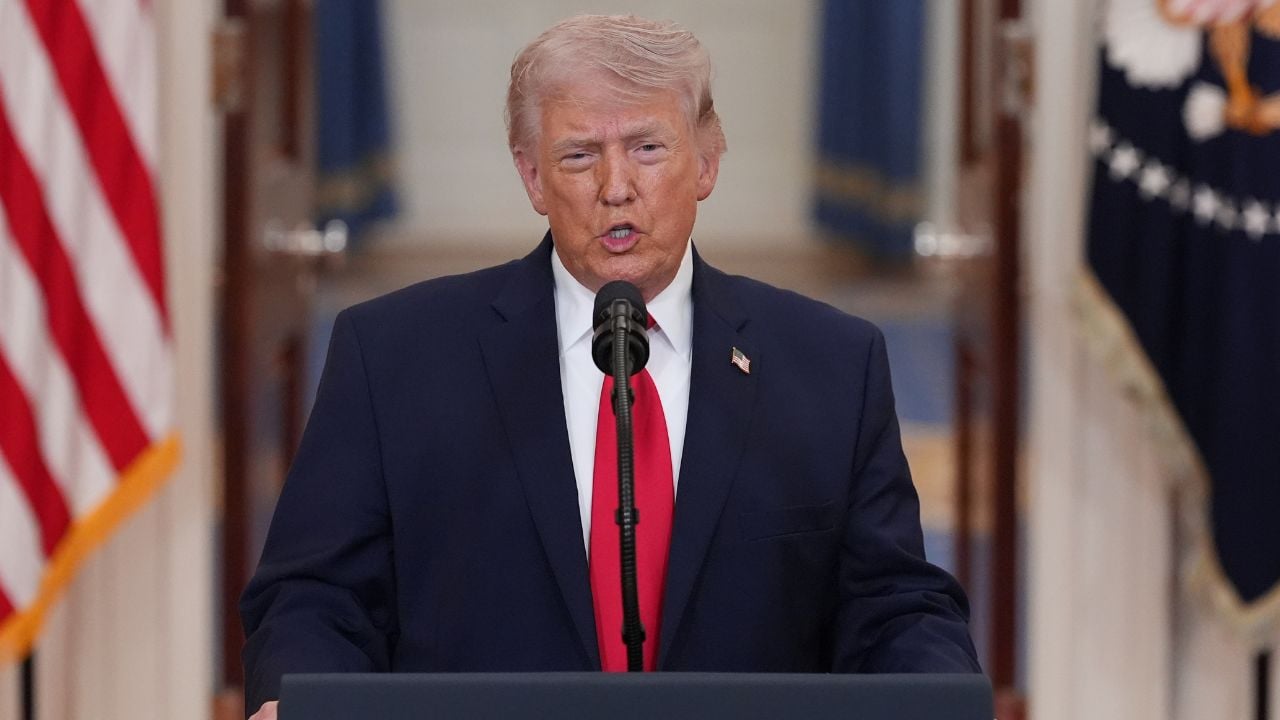
Don't believe every "leaked" document you see on your feed right now. The diplomatic world is currently a mess of conflicting PDF files and "official-looking" letterheads. President Donald Trump just took to Truth Social to drop a massive warning. He's claiming that a wave of fraudulent letters, agreements, and lists is circulating regarding the ongoing U.S.-Iran negotiations. According to him, these aren't just mistakes. They're the work of "fraudsters and charlatans" trying to hijack the most sensitive peace talks in years.
It’s easy to see why this is happening. We’re in a high-stakes two-week ceasefire that felt like it came out of nowhere after Trump’s "civilizational" threats. Now, everyone wants a piece of the narrative. If you’re confused about who’s actually at the table, you aren't alone.
The Chaos of Unauthorized Diplomacy
Trump's latest outburst isn't just a random grievance. It's a tactical move to reclaim control over the messaging. He's been very clear that "numerous agreements" are being sent out by people who have zero authority to speak for the United States. These letters often claim to outline specific terms of the ceasefire or long-term deals that haven't been touched yet.
Think about the timing. Just hours after the ceasefire was announced, Iranian state media started pushing a 10-point plan. This plan claimed the U.S. had already agreed to lift all primary and secondary sanctions. It even suggested the U.S. would pay compensation to Iran. Trump is essentially saying: "If it didn't come from me or my closed-door team, it's garbage."
The stakes couldn't be higher. The Strait of Hormuz—the world’s most important oil chokepoint—is at the center of this. Iran briefly closed it again today, despite the truce. This kind of volatility is exactly why fake letters are so dangerous. They create expectations that aren't grounded in reality, which can lead to one side feeling "betrayed" and pulling the trigger on renewed strikes.
Why the Fake News Narrative is Gaining Steam
Trump isn't just blaming "charlatans." He’s also aiming at mainstream media, specifically calling out CNN. He accused them of headlining a "source" that had no power to write the letters they were reporting on. It's a classic Trump play, but there’s a kernel of truth that’s hard to ignore. In the rush to be first, news outlets are sometimes biting on documents that haven't been verified by the actual negotiators.
- The Pakistani Factor: Prime Minister Shehbaz Sharif and General Asim Munir are the primary mediators here. Much of the noise is coming from Islamabad.
- The Lebanon Contradiction: Pakistan says the ceasefire includes Lebanon. Israel says it doesn't. Iran says it must.
- The Missing Signatures: Many of these "fake letters" circulating online lack the verification of the actual U.S. State Department or the White House.
You've got a situation where multiple countries are trying to manifest their own version of the deal into existence. It’s like a diplomatic "fake it until you make it." But in the world of nuclear-capable nations and regional wars, faking it usually leads to body bags.
The Only Points That Actually Matter
Trump insists there's only one set of "meaningful points" that are acceptable. He’s keeping those under lock and key for now. This "closed-door" approach is a departure from his usual loud-and-proud negotiation style, but it’s probably a survival tactic for this specific deal.
If the public saw the actual working document, both sides would likely face an immediate political revolt at home. Hardliners in Tehran don't want to look like they're caving to Trump’s "maximum pressure," and Trump’s base doesn't want to see him being "soft" on a regime he just threatened with annihilation.
The real negotiation starts on April 10 in Islamabad. That’s when the U.S. and Iranian delegations are supposed to sit down and see if this two-week breather can become something permanent. Until then, treat every "leaked" 10-point plan with a massive grain of salt.
Check the source. If it isn't coming through official government channels or being confirmed by the mediators in Pakistan, it’s probably one of those "fraudulent" letters Trump is warning about. Stay skeptical. The next 48 hours will determine if the Strait of Hormuz stays open or if the region goes back into a full-scale tailspin.
Keep your eyes on the official White House briefings and ignore the Truth Social noise unless it’s a direct policy update. The "leaks" are mostly noise designed to move oil prices or save face.