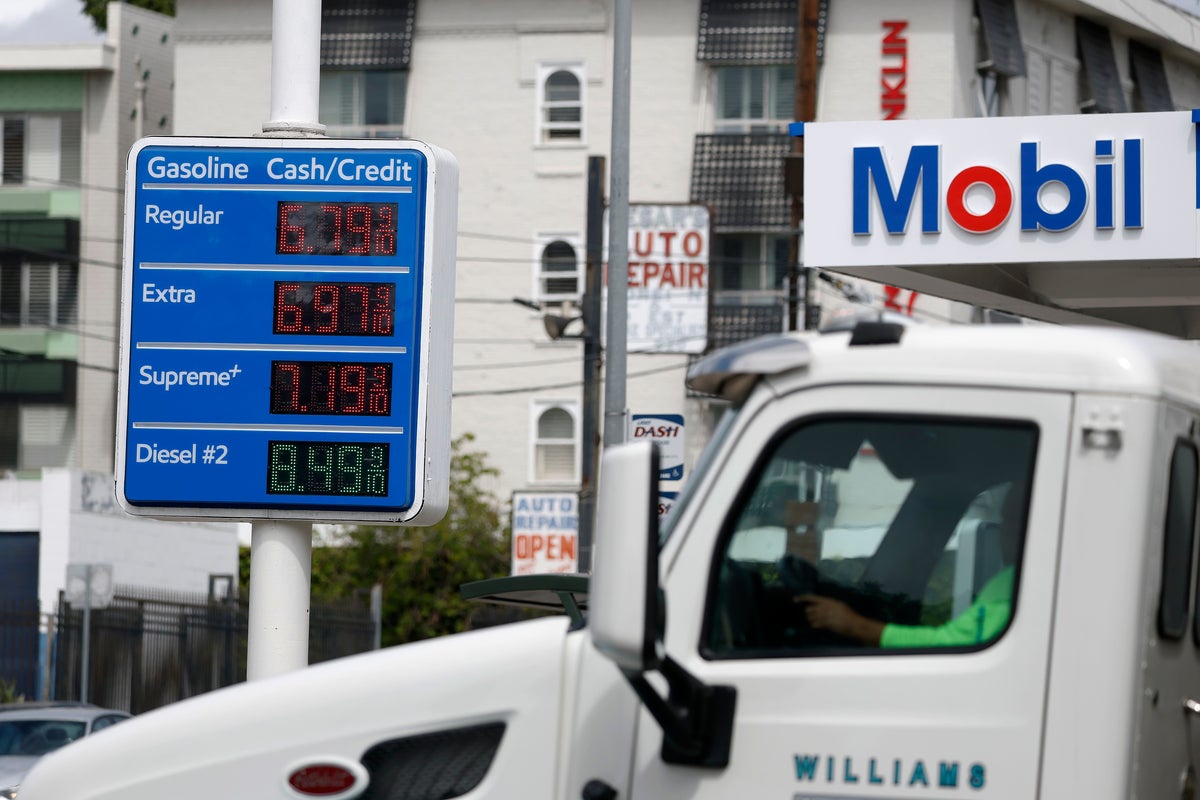
You’ve seen the headlines and heard the speeches. Donald Trump is out there telling anyone with a microphone that gas prices have plummeted under his watch. Meanwhile, his Transportation Secretary, Sean Duffy, is basically telling you to pack your bags and hit the open road for a classic American road trip. It sounds like a dream, right? But if you’ve actually pulled up to a pump lately, you might be scratching your head. There’s a massive gap between the "official" narrative and the digital display at your local Shell or Exxon.
The reality of the 2026 energy market is messy. Depending on who you ask, we’re either in a "golden age of travel" or we’re being gaslit—pun intended—at the pump. Let’s look at why the administration is taking a victory lap while your bank account is taking a hit.
The math behind the claim
When Trump says gas prices are "way down," he’s usually comparing current numbers to the absolute peaks of the last few years. It’s a classic political move. If prices hit a terrifying high of $5.00 a gallon and then "drop" to $4.45, a politician will tell you they saved you money. Technically, the price is lower than the peak. But compared to the $2.00 or $3.00 range we saw years ago? It’s still significantly higher.
Current data shows the national average for regular gasoline sitting around $4.45 per gallon. That’s a roughly 50% jump from where things stood just before the recent escalations in the Middle East and the ensuing war with Iran. The administration points to "immediate relief" on the horizon, but independent reports from the Fed and other agencies aren’t so sunny. They’re suggesting we won’t see pre-war levels again until 2027 or later.
So, when the President says prices are down, he's basically using a very specific, very favorable starting point for his math. It’s not a lie in a vacuum, but it doesn't reflect the long-term trend that’s actually hitting your wallet.
The Transportation Secretary wants you to travel
Sean Duffy isn't just defending the prices; he’s actively encouraging Americans to spend more on fuel. During recent stops, including a high-profile visit to Georgia, Duffy painted a picture of an affordable America. He claimed that the "unleashing" of American energy is making life cheaper for everyone.
His logic? He cites specific instances where gas was found for $2.75 in local pockets. While those "unicorn" prices exist in a few lucky zip codes, they aren’t the reality for the average commuter in California paying closer to $5.80. Telling people to take road trips when seven out of ten Americans say they're "extremely concerned" about fuel costs feels a bit out of touch. It’s like telling someone with a leak in their roof that it’s a great time to buy a new rug.
Why the numbers don't add up for you
It’s easy to get lost in the "he said, she said" of Washington politics. Here’s what’s actually happening in the real world:
- Regional Disparity: If you live in Oklahoma, you might see $3.38. If you’re in Washington or Nevada, you’re looking at nearly $5.00. National averages are a lie because nobody buys "national average" gas.
- The Iran Factor: The conflict has restricted supply through the Strait of Hormuz. The administration claims reopening this will fix everything instantly. Experts say the logistics of "flowing again" don't happen overnight.
- Inflation Lag: Even if gas drops 10 cents, the cost of the groceries that were shipped using that gas hasn't dropped. You’re paying "hidden" gas prices in every loaf of bread and gallon of milk you buy.
The administration’s "Drill, Baby, Drill" rhetoric hasn't quite translated into the $2.00 gallon we were promised during the campaign. While they’ve rolled back EV mandates and cut regulations, the global market doesn't always play ball with White House press releases.
Reality check on the 50 percent promise
During the campaign, the promise was bold: cut energy and electricity prices by 50% within 12 to 18 months. We’re currently in that window, and for most people, the opposite is happening. Electricity bills are surging, particularly in the Midwest and DC, where some residents saw a 23% jump.
Trump has blamed everyone from "ideologically driven" wind and solar advocates to the previous administration's "mandates." But at the end of the day, a pledge is a pledge. When the bill comes due and it’s higher than last year, the "prices are down" narrative starts to feel like a fantasy.
What you can actually do right now
Don't wait for a press secretary to tell you how to feel about your finances. If you’re planning that road trip Duffy wants you to take, do it smart.
- Use apps like GasBuddy religiously: The price difference between two exits on the highway can be 40 cents. That adds up to $6-$10 per tank.
- Watch the Middle East news: Gas prices are now tied directly to the Strait of Hormuz. If tension spikes, the pump price will follow within 48 hours. Fill up before the Sunday night news cycle.
- Audit your electricity: Since the "50% cut" hasn't hit your utility bill, look into Time-of-Use (TOU) rates if your provider offers them. It’s the only way to actually see a price drop right now.
The "Golden Age of Travel" might be here for the people flying on private jets to press conferences, but for the rest of us, it’s still a game of checking the price per gallon before we pull the trigger.