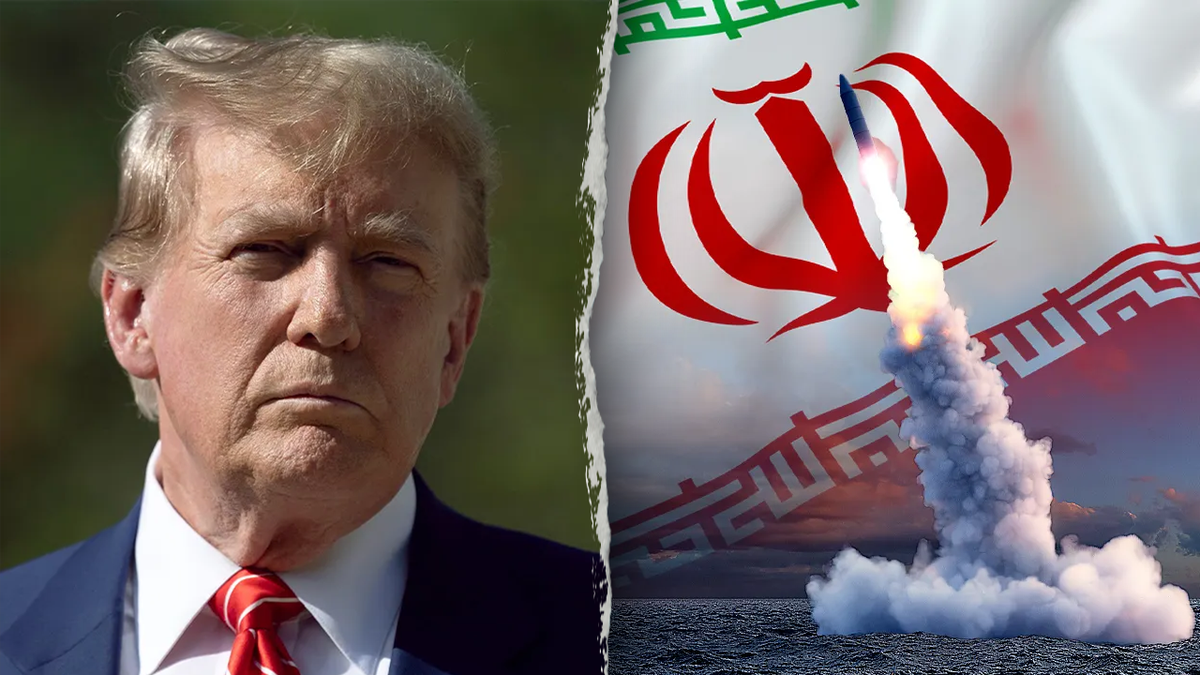
Donald Trump says his targeted strikes against Iranian interests didn't just rattle the Middle East. He argues they stopped a nuclear war before it could even start. It's a massive claim. Critics call it revisionist history, while supporters see it as the ultimate proof of his "peace through strength" doctrine. To understand if there's any weight to this, you have to look past the campaign trail rhetoric and examine the specific friction points between Washington and Tehran that peaked during his first term.
The logic is simple enough on the surface. By taking out high-value targets like Qasem Soleimani, Trump believes he established a level of deterrence that forced Iran to tap the brakes on its nuclear ambitions. He often points to the "maximum pressure" campaign as the reason the region didn't spiral into a full-scale atomic standoff. Whether you buy that depends entirely on how you view the ripple effects of the 2020 Baghdad drone strike and the subsequent fallout.
The Soleimani Strike and the Deterrence Argument
In January 2020, the world held its breath. The US assassination of Qasem Soleimani, the head of Iran's Quds Force, was a gamble of historic proportions. Trump's core argument is that this move stripped away Iran’s sense of invincibility. He suggests that by showing a willingness to strike the most powerful military figure in the Islamic Republic, he created a psychological barrier that prevented further escalation toward nuclear breakout.
Deterrence is a fickle thing. It requires the opponent to believe you'll actually pull the trigger. Trump’s team argued that the previous administration's approach—specifically the JCPOA—was a slow-motion train wreck that gave Iran a paved road to a bomb. By shredding that deal and opting for kinetic action, Trump asserts he reset the rules of the game. He basically told Tehran that the old Brinkmanship 101 playbook was dead.
Maximum Pressure vs Nuclear Breakout
The "Maximum Pressure" campaign wasn't just about catchy slogans. It was a systematic attempt to bankrupt the Iranian regime through sanctions. Trump argues that a country with a collapsing currency and internal unrest can’t easily fund the massive infrastructure required for a nuclear weapons program. It’s an economic chokehold meant to produce a diplomatic result.
However, the data from organizations like the International Atomic Energy Agency (IAEA) shows a more complicated picture. After the US exited the nuclear deal, Iran actually increased its uranium enrichment levels. They moved from the 3.67% limit set by the accord to 20% and eventually toward 60% purity. Trump’s counter-argument is that this was always their plan, and his strikes were the only thing keeping them from going all the way to 90%, which is weapons-grade.
Misreading the Tehran Playbook
Critics often say Trump’s moves actually brought us closer to the brink. They point to the retaliatory missile strikes on the Al-Asad airbase in Iraq as evidence that Iran wasn't deterred at all. But Trump views that specific event differently. He has hinted in various interviews and speeches that the back-channel communications during that period showed Iran was "saving face" rather than seeking a real war.
If you look at the timeline, the predicted "Great Regional War" didn't happen in 2020. This is the cornerstone of the "prevented nuclear war" claim. From Trump's perspective, the fact that we are still talking about enrichment levels rather than active mushroom clouds is a direct result of his willingness to use force. It’s a classic "dog that didn't bark" scenario. You can't easily prove a war didn't happen because of X, but you can certainly take credit for the silence.
The Role of the Abraham Accords
You can't talk about Iran without talking about its neighbors. Trump’s strategy involved building a wall of regional opposition to Tehran. By brokering the Abraham Accords, he helped normalize relations between Israel and several Arab nations, including the UAE and Bahrain. This shifted the balance of power.
Suddenly, Iran wasn't just facing US sanctions; it was facing a unified regional front. This geopolitical isolation is a huge part of the "prevention" narrative. When a regime feels surrounded by a coalition of technologically superior neighbors, its path to nuclear hegemony becomes much narrower. Trump argues this collective pressure was more effective than any signed piece of paper from 2015.
What the Intelligence Community Says
If you dig into reports from the Office of the Director of National Intelligence (ODNI) from that era, the assessment of Iran’s intentions was always nuanced. They maintained that while Iran was expanding its program, it hadn't yet made the formal decision to build a device. Trump uses this as evidence. He believes his "unpredictability" kept the Supreme Leader from signing off on the final phase of weaponization.
There's a school of thought in international relations called the "Madman Theory." It suggests that if your enemies think you're volatile enough to do anything, they'll be extra cautious. Whether intentional or not, Trump leaned into this. By striking Soleimani, he proved he wasn't following the standard Washington establishment script. To him, that uncertainty is exactly what kept the peace.
Evaluating the Nuclear War Claims
Was a nuclear war actually imminent? Probably not in the sense of missiles flying the next day. But the "pathway" to one is what matters. A nuclear-armed Iran likely triggers a massive arms race in the Middle East. Saudi Arabia has hinted for years that if Iran gets a bomb, they'll get one too.
Trump’s argument is that his strikes interrupted this cycle. By forcing Iran to focus on internal survival and regional proxy management rather than a final sprint to a nuclear test, he claims to have saved the world from a multi-polar nuclear nightmare in the desert. It’s a bold take that ignores some of the technical advances Iran made in enrichment during that time, but it focuses heavily on the "will" of the regime.
Shifting the Focus to Direct Action
The real takeaway here isn't just about one strike or one set of sanctions. It's about a fundamental shift in how the US handles "rogue" states. Trump’s approach was a total departure from the "strategic patience" of the Obama years or the nation-building of the Bush years. It was transactional, loud, and physically aggressive.
If you’re trying to make sense of these claims today, look at the current enrichment levels and the regional proxy wars. The tension hasn't vanished. But the specific moment in 2020 remains the peak of the "Will they? Won't they?" cycle of the last decade. Trump has staked his foreign policy legacy on the idea that his finger on the trigger was the only thing keeping the safety on for the rest of the world.
To get a better handle on this, check out the public reports from the Congressional Research Service regarding Iranian regional influence. Compare the enrichment timelines provided by the IAEA from 2018 to 2021. You'll see a clear jump in technical capability, but a simultaneous shift in how Iran engaged with US assets directly. That gap—between what they could do and what they dared to do—is exactly where Trump’s argument lives.