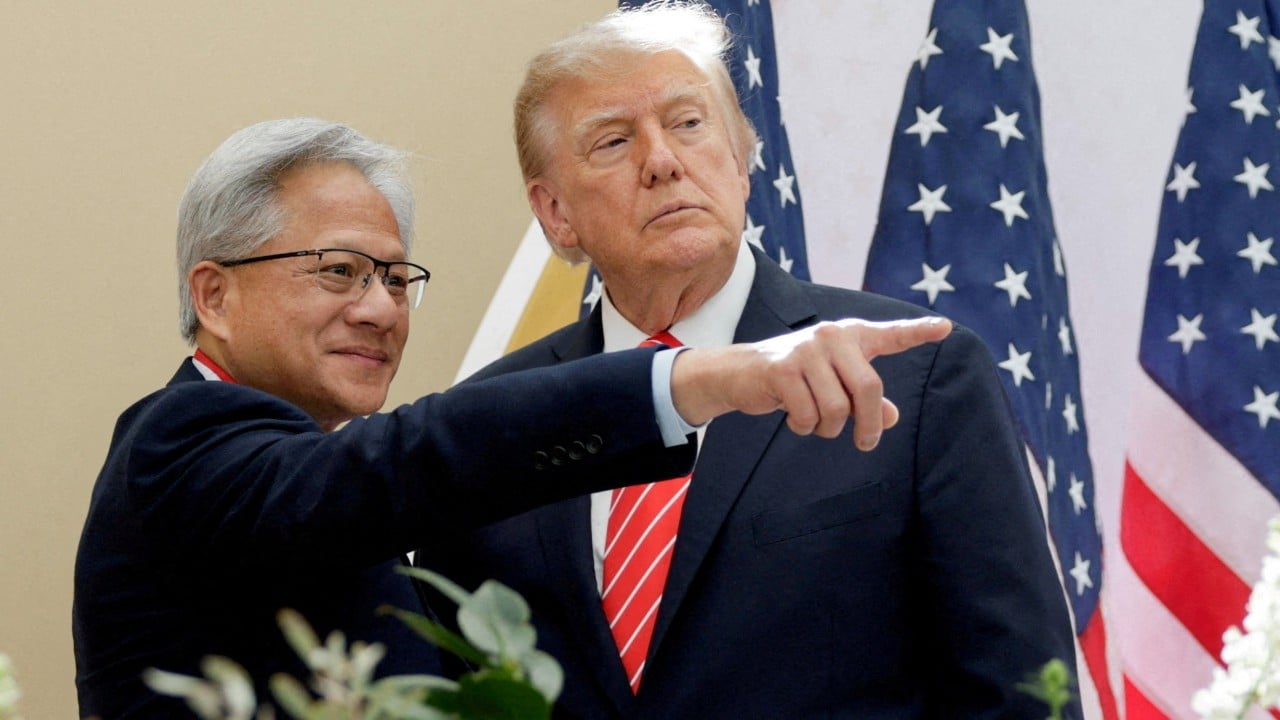
Washington just threw a massive curveball into the global semiconductor standoff. President Donald Trump publicly backed Nvidia CEO Jensen Huang against intensifying espionage allegations, even suggesting that Chinese President Xi Jinping might bring up the case directly in diplomatic talks.
If you've been following the tug-of-war over artificial intelligence hardware, you know how rare this is. Usually, when national security hawks in Washington start throwing around words like "spy allegations" in connection with Beijing, the White House distances itself fast. Not this time. Trump stepped right into the crossfire to defend the leader of the world's most valuable chipmaker, signaling that trade leverage and AI dominance might matter more to the administration than appeasing Capitol Hill hardliners.
Let's be honest about what's happening here. Nvidia sits squarely at the center of the modern economy, and Jensen Huang has spent the better part of three years walking an impossible tightrope between American export controls and Chinese market demand. Now, that tightrope is fraying.
What Triggered the Spy Allegations Against Nvidia
To understand why Trump felt compelled to weigh in, you have to look at the mounting pressure facing Nvidia from both sides of the Pacific. Over the last year, scrutiny around how advanced AI processors end up inside Chinese data centers has reached a boiling point. Despite strict U.S. Department of Commerce export bans designed to keep top-tier chips like the H100 and Blackwell series out of Beijing's hands, gray-market smuggling networks and shell companies have repeatedly found workarounds.
Critics in Congress—alongside rival tech lobbyists and national security analysts—have questioned whether Nvidia's compliance protocols are actually meant to stop illicit transfers, or just look good on paper. Some lawmakers went further, raising alarms about potential espionage risks tied to Nvidia's engineering offices in China and the deep talent pool the company maintains in Shanghai and Beijing.
Here is the core tension nobody wants to say out loud. Nvidia employs thousands of engineers in China. Those teams work on everything from autonomous driving software to chip verification and customer support. To security hawks in Washington, having that kind of R&D footprint inside an adversary's borders looks like a massive intelligence vulnerability. They worry about intellectual property bleeding out, or worse, backdoors and compromised supply chains creeping in.
Huang has consistently pushed back against these claims, arguing that isolating American tech companies from global talent and markets only accelerates China's domestic chip independence. Until now, he was largely fighting that PR battle alone.
Why Trump Stepped In to Back Jensen Huang
Trump's public defense of Huang isn't just a random off-the-cuff remark. It reflects a very specific, transactional view of American industrial power.
In Trump's eyes, Nvidia is an American crown jewel. The company single-handedly powers the AI boom, props up major U.S. stock indices, and gives Washington an unmatched technological advantage over every other nation on earth. Letting domestic regulators or congressional investigations kneecap Nvidia over alleged security lapses doesn't fit his playbook.
More importantly, Trump views high-end semiconductors as the ultimate bargaining chip—literally—in negotiations with Beijing. When he mentioned that Xi Jinping might raise the case directly, he revealed how tightly intertwined corporate legal troubles and superpower diplomacy have become. In Washington, an espionage probe is a matter for the Justice Department and intelligence agencies. In Beijing, there is no separation between state security, corporate regulation, and diplomatic leverage.
By backing Huang early, Trump accomplished three things at once:
- He signaled stability to Wall Street. Markets hate uncertainty, especially when it targets a multi-trillion-dollar tech bellwether. A presidential vote of confidence immediately cools fears of crippling federal sanctions or forced divestitures against Nvidia.
- He claimed ownership of the China tech narrative. Rather than letting congressional committees dictate U.S.-China tech policy through endless hearings, Trump positioned himself as the sole decision-maker who will handle these disputes directly with Xi.
- He protected domestic AI momentum. Slowing down Nvidia right now gives competitors—and Chinese state-backed firms like Huawei—breathing room to catch up.
The Beijing Angle and What Xi Jinping Wants
Why would Xi Jinping bring up Jensen Huang or Nvidia in high-level talks with Trump? Because from Beijing's perspective, the company is caught in a regulatory vice that China itself has been tightening.
While Washington worries about Chinese spies infiltrating Nvidia, Beijing has launched its own antitrust probes and cybersecurity reviews into the company. Chinese regulators have openly discouraged domestic tech giants—like Alibaba, Tencent, and ByteDance—from buying Nvidia's watered-down, export-compliant chips, pushing them instead to adopt domestic alternatives from Huawei and Cambricon.
It's a classic geopolitical squeeze. Washington accuses Nvidia of being too cozy with China; Beijing punishes Nvidia for complying with Washington's export bans.
If Xi raises the issue with Trump, it won't be out of sympathy for Jensen Huang. It will be to extract concessions. Beijing wants relief from U.S. semiconductor export restrictions, access to high-bandwidth memory, and an end to the extraterritorial reach of American trade rules. Putting Nvidia's operational status in China on the negotiating table gives Xi a high-profile hostage to trade against U.S. tariffs or chip bans.
Trump knows this game inside and out. By preemptively defending Huang, he's telling Beijing that attacking Nvidia won't drive a wedge between the company and the White House.
What Most People Miss About Corporate Espionage in the Chip Industry
If you've ever worked around semiconductor supply chains or enterprise hardware security, you know that "spy allegations" usually sound like a thriller novel in the press, while the reality is much messier.
True state-sponsored espionage in the chip sector rarely looks like a rogue executive handing over blueprints in a parking garage. Instead, it happens through mundane, systemic leaks:
- Talent poaching and overlapping research. Engineers move between U.S. subsidiaries in China and local startups backed by state funds. Even without stealing proprietary code, architectural know-how walks out the door every time someone changes jobs.
- Third-party distributor blind spots. Nvidia doesn't sell every chip directly to the end user. Hardware flows through original equipment manufacturers (OEMs), cloud service providers, and regional distributors across Southeast Asia and the Middle East. Once a server rack leaves a warehouse in Malaysia or Taiwan, tracking its final destination becomes a nightmare.
- Software and telemetry disputes. Regulators on both sides scrutinize diagnostic tools baked into modern GPUs. Washington worries about remote access vulnerabilities; Beijing worries that U.S. chips contain hidden kill-switches or tracking beacons.
Blaming Jensen Huang personally for these structural realities misses the forest for the trees. Every major multinational hardware company—from Apple to Intel to Qualcomm—faces the exact same exposure when operating at global scale. Singling out Nvidia happens because Nvidia is winning.
How This Impacts Tech Investors and Enterprise Buyers
You don't need to be a Washington insider to feel the ripple effects of this standoff. If you manage IT infrastructure, invest in semiconductor equities, or build AI products, this political tug-of-war directly affects your roadmap and your wallet.
First, expect continued volatility in GPU pricing and availability. Every time Washington threatens tighter export audits or Beijing retaliates with customs delays, supply chains seize up. Enterprise buyers who assume lead times for next-generation server clusters will stay predictable are setting themselves up for nasty surprises.
Second, watch how Nvidia manages its geographic footprint over the next twelve months. Even with Trump's backing, the political risk of maintaining massive R&D hubs in mainland China has become too high to ignore. Nvidia has already been quietly expanding engineering centers in Taiwan, Vietnam, and Malaysia. That diversification isn't slowing down—it's accelerating.
Third, don't fall for the narrative that U.S.-China tech decoupling is a clean, linear process. It isn't. It's messy, contradictory, and driven by political dealmaking at the highest levels. One week a company is facing national security investigations; the next week the president is defending its CEO on national television ahead of a summit with Xi.
Practical Steps to Navigate the Semiconductor Crossfire
If you're making decisions around AI hardware, supply chains, or tech investments right now, stop reacting to every sensational headline and focus on fundamentals you can actually control.
Audit your hardware supply chain provenance. If your business buys enterprise servers or cloud compute capacity, verify where your hardware is assembled and sourced. Compliance rules around chip origins are tightening fast, and getting caught with unverified gray-market components can trigger massive contractual headaches.
Diversify your compute strategy. Relying 100% on a single hardware vendor leaves your infrastructure exposed to geopolitical shocks. Test your workloads on alternative architectures—whether that's AMD's Instinct accelerators, custom cloud silicon like AWS Trainium and Google TPUs, or optimized inference engines—before a sudden supply crunch forces your hand.
Separate political noise from financial fundamentals when evaluating stocks. Presidential endorsements move share prices in the short term, and congressional subpoenas trigger panic selling. Neither changes the underlying reality that global demand for AI compute still outstrips supply. Track capital expenditure budgets from major hyperscalers rather than cable news chatter.
Watch the diplomatic calendar closely. Pay attention to upcoming bilateral trade talks between Washington and Beijing. When high-profile executives like Jensen Huang become talking points between Trump and Xi, export control adjustments and tariff exemptions usually follow shortly after. Position your procurement cycles and portfolio hedges ahead of those summits, not after the press releases drop.