The media is choking on its own outrage.
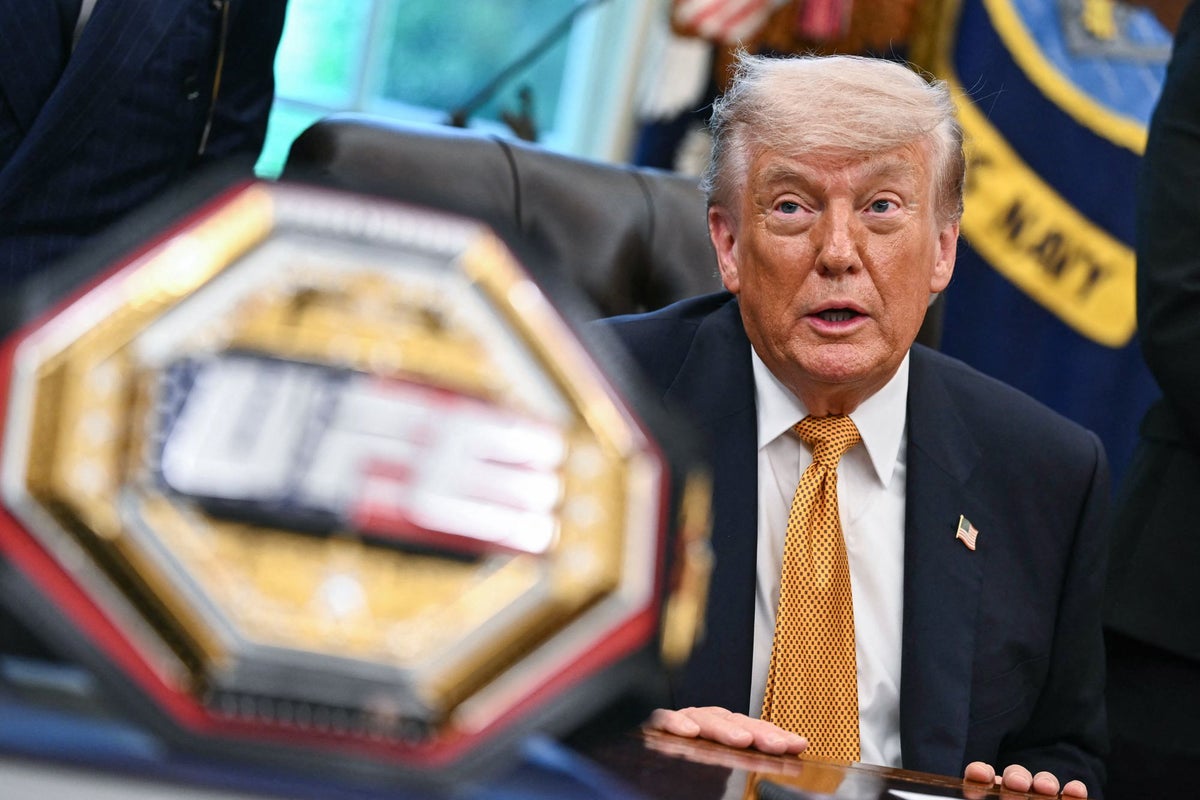
Turn on any major news network or open any mainstream publication, and you will see the same lazy, hand-wringing narrative. They are screaming about Donald Trump celebrating his 80th birthday by hosting a Ultimate Fighting Championship event. They are tying it directly to the escalating economic and human costs of the Iranian conflict. They want you to see an out-of-touch emperor fiddling while Rome burns.
They are completely misreading the room.
Connecting a physical combat spectacle to the grim realities of a modern, multi-front war is a classic midwit trap. It assumes that global leadership is a math problem solved by looking solemn on camera. It ignores how power actually projects in the twenty-first century.
I have spent two decades analyzing political communications and high-stakes crisis management. I can tell you that what the establishment calls a "distraction" is actually a highly sophisticated, deeply deliberate projection of raw sovereignty.
Let us break down the mechanics of why the mainstream analysis is fundamentally flawed, why the UFC is the perfect proxy for modern statecraft, and what the critics are too terrified to admit.
The Flawed Premise of the Somber Commander-in-Chief
The competitor press loves a predictable script. The script dictates that when a nation is engaged in a bruising geopolitical conflict, the executive branch must adopt a posture of perpetual mourning. They want press briefings filled with gray ties, somber podium grips, and carefully curated expressions of bureaucratic anxiety.
That traditional posture is dead. It died the moment the attention economy took over global politics.
When a country is locked in a grinding war of attrition or facing severe economic headwinds from international sanctions and supply chain disruptions, the absolute worst thing a leader can project is exhaustion. The public does not want to see their leader buckling under the weight of the presidency. They want to see resilience. They want to see defiance.
Hosting a UFC event is not an oversight. It is a calculated middle finger to the idea that adversity forces a superpower to hide in a bunker.
The Psychology of Projected Vitality
Consider the optics of an 80-year-old leader leaning into the most visceral, violent, and unapologetic sport on the planet.
- Age Defiance: At 80, the primary political vulnerability is decay. By aligning with elite athletes who trade in broken bones and sheer willpower, the administration subverts the narrative of a fading leadership.
- Cultural Alignment: The UFC represents a massive, intensely loyal demographic that rejects traditional institutional polite speech. It is the counter-culture that became the monoculture.
- The Contrast Principle: While adversaries expect a nation weighed down by conflict to hesitate, a display of chaotic, high-energy celebration signals that the state possesses surplus energy. It says, "We can handle a war, and we can still throw a party."
Is it tasteful? Absolutely not. Is it effective? Unquestionably.
The Economics of War and the Spectacle Economy
The lazy consensus insists that Americans are "paying the price" for foreign policy decisions while the elite enjoy bread and circuses. This argument relies on a fundamental misunderstanding of how modern wartime economies operate.
The financial strain of the Iran conflict is real. Inflation, energy market volatility, and defense spending hikes are squeezing the middle class. But stopping a sporting event does not lower the price of a gallon of gas. Canceling a fight does not re-open shipping lanes in the Strait of Hormuz.
To suggest that a president must halt the cultural engine of a country because macroeconomic indicators are painful is a fundamentally broken economic theory. It is austerity theater.
In reality, the sports entertainment sector is a massive driver of domestic economic activity. The UFC is a multibillion-dollar global enterprise. Blocking or shaming these events under the guise of "national solidarity" does nothing but stifle domestic commerce when you need it most.
Breaking Down the People Also Ask Fallacies
Let us address the questions that dominate the search engines right now, stripped of the usual media spin.
Does hosting an entertainment event during a military crisis disrespect the troops?
No. This is a manufactured correlation. Troops on the ground do not fight harder because a politician looks miserable in Washington. Historically, military personnel are among the highest consumers of combat sports. Projecting american dominance and maintaining domestic normalcy is a core component of maintaining troop morale, not degrading it.
Why is the administration ignoring the economic impact of the Iran war?
They are not ignoring it; they are attempting to overwrite it in the public consciousness. A leader cannot fix a broken supply chain through a press conference. What they can do is prevent a psychological recession. When a population believes their country is winning, spending continues, investments move forward, and economic velocity stabilizes. Fear kills economies faster than inflation.
The Mechanics of Modern Attention Warfare
We no longer live in an era where foreign policy is conducted exclusively through diplomatic cables and backroom deals at state dinners. We live in an era of asymmetric attention warfare.
Dana White and the UFC hierarchy understand attention better than the entire State Department combined. They know how to capture, hold, and monetize human focus in a fragmented digital ecosystem. The political apparatus has simply realized that traditional media channels are obsolete vectors for reaching the public.
By bringing a cage fight into the orbit of executive power, the administration bypasses the hostile editorial filters of legacy media. They create a self-contained cultural moment that dominates algorithms for 72 hours straight.
The Asymmetric Information Playbook
Look at how the information flows around this event:
[Traditional Media] ----> Focuses on War Costs ----> Low Engagement / High Fatigue
[UFC Event Optics]  ----> Focuses on Vitality ----> Massive Engagement / Viral Reach
The legacy press writes a 2,000-word critique on the ethics of the event. The internet responds with millions of short-form videos, memes, and social posts celebrating the sheer audacity of the spectacle. The critique is buried by the sheer volume of the cultural output.
This is not a failure of strategy. It is a total victory over a legacy press corps that still thinks it can dictate what the public cares about.
The Trade-Offs of the Brutalist Approach
To maintain intellectual honesty, we must acknowledge the real risks of this contrarian strategy. It is a high-wire act with zero margin for error.
The downside of projecting invulnerability through hyper-masculine spectacle is that it alienates a significant portion of the electorate that craves traditional institutional decorum. It risks burning bridges with old-school diplomatic allies who view the spectacle as a sign of American erraticism rather than American strength.
If the conflict overseas takes a catastrophic turn while the cameras are rolling on a title fight, the optics flip instantly from defiant to delusional. It is a gamble of the highest order.
But in a polarized, hyper-saturated world, playing it safe is the riskiest move on the board. The traditional, sanitized political playbook has a 0% conversion rate with the modern public.
Stop Demanding Decorum in an Age of Chaos
The critics want a return to an idealized past that never actually existed. They want a presidency of pristine press briefings and predictable platitudes. They want a neat, orderly narrative where foreign policy and domestic entertainment live in separate, sterile boxes.
That world is gone.
The intersection of combat sports, raw political power, and geopolitical conflict is the new baseline. It is vulgar, it is loud, and it is brutally effective at shifting the cultural narrative away from institutional failure and toward raw survivalism.
Stop looking for dignity where power is being brokered. Stop assuming that an 80-year-old president standing in the center of an octagon is a sign of distraction. It is an assertion of dominance in a world that only respects strength. You do not have to like it, but you are a fool if you cannot see why it works.