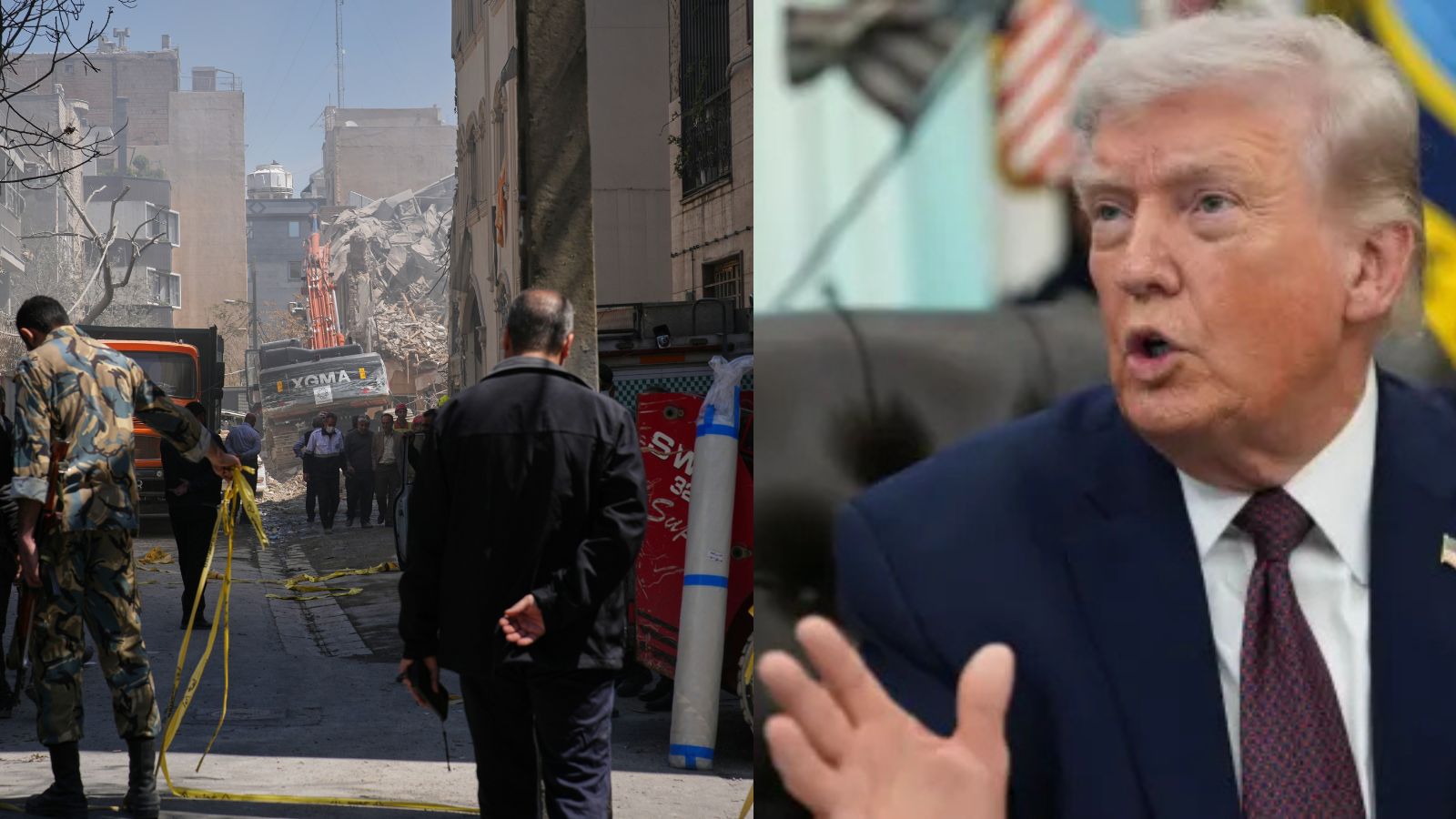
The clock is ticking toward a disaster that nobody seems able to stop. Right now, the world is holding its breath as President Donald Trump and the Iranian leadership engage in a high-stakes standoff that feels more like a movie script than actual diplomacy. We’ve seen deadlines come and go, but the rhetoric coming out of both Washington and Tehran has reached a fever pitch that makes previous escalations look like a schoolyard spat.
You’ve likely heard the headlines about Iran "daring" the U.S. to act, or the terrifying "Stone Age" threats being tossed around. It isn't just tough talk for the cameras. It’s a calculated, dangerous game where one wrong move could trigger a regional collapse or a global energy crisis that hits your wallet at the gas pump tomorrow morning.
The 20 Hour Ultimatum and Why it Matters
At the heart of the current "deadline scare" is a specific demand from the White House: reopen the Strait of Hormuz or face the total destruction of Iran’s energy and power infrastructure. Trump has been blunt, stating he’ll bring the country "back to the Stone Ages" if they don't comply. This isn’t the first time he’s set a clock, but it’s the most aggressive stance we've seen in this 2026 conflict.
Why is everyone so obsessed with 20 hours? Because that’s the window Trump gave before "massive attacks" were scheduled to begin. Iran’s response hasn't been to back down. Instead, they’ve turned the threat on its head, basically telling the U.S. and its allies that any strike will result in the "irreversible destruction" of infrastructure across the entire Middle East. They aren't just talking about military bases. They’re talking about water systems, desalination plants, and the very things that keep modern society running in the Gulf.
Breaking Down the Ceasefire Confusion
Just when it looked like the bombs were about to drop, we saw a sudden shift. On April 7, 2026, reports surfaced that Trump agreed to a two-week ceasefire—contingent on the Strait reopening. This was apparently brokered by Pakistan, acting as the middleman because the U.S. and Iran aren't even on speaking terms right now.
But don’t breathe a sigh of relief just yet. This is actually the fourth time a deadline has been extended.
- March 21: The first 48-hour ultimatum.
- March 23: A five-day extension "for negotiations."
- March 26: Another 10-day delay.
- April 7: The current two-week "conditional" ceasefire.
This pattern tells us two things. First, nobody actually wants the total war they're threatening. Second, the "deadline" is a tool for leverage, not a fixed point in time. Trump wants the "unconditional surrender" he’s been posting about on Truth Social, while Iran is trying to prove they can’t be bullied into a regime change.
The Reality on the Ground
While the leaders trade insults, the actual cost is being paid by people on both sides. In Lebanon, the conflict has already displaced over a million people. In Iran, strikes on Kharg Island and other energy hubs have already started to cripple their economy.
Don't think the U.S. is immune either. If you’ve noticed gas prices creeping past $4.00 or $5.00 a gallon, this war is why. The S&P 500 has been taking hits every time a new "deadline" is announced. Analysts at major banks like UBS have already slashed their year-end targets because the uncertainty is just too high. We're looking at a scenario where a local conflict in the Persian Gulf is dictating whether or not an American family can afford their grocery bill.
What Iran is Really Risking
Iran’s leadership is playing a weak hand very aggressively. Their Navy and Air Force have been significantly degraded by joint U.S.-Israeli strikes over the last few months. They’ve lost key figures, including former Supreme Leader Ayatollah Ali Khamenei. Yet, they continue to use the Strait of Hormuz as a metaphorical noose around the neck of the global economy.
They know that if they lose the Strait, they lose their only real "deterrent" against a full-scale ground invasion. That’s why you see them calling for young people to form "human chains" around potential targets. It's desperate, but in their eyes, it's the only way to survive.
The "Stone Age" Rhetoric vs Strategy
When Trump says he’ll send Iran back to the "Stone Age," he’s not just using a colorful phrase. He’s referencing a specific military strategy of targeting "dual-use" infrastructure. This means hitting power plants that supply both the military and civilian hospitals. It means hitting bridges that carry both tanks and food trucks.
Experts like Leon Panetta have criticized this approach, calling it "naive." The risk is that if you actually destroy a nation's ability to function, you don't get a "Great Future" or a "Make Iran Great Again" outcome. You get a failed state, a massive refugee crisis, and a vacuum that usually gets filled by even more radical groups.
What Happens Next for You
If you're watching this from the sidelines, there are a few concrete things to keep an eye on over the next 48 hours.
- Watch the Oil Markets: If Brent crude stays above $110, the market doesn't believe the ceasefire will hold. If it drops, there’s real hope for a deal.
- The "Pakistan Channel": Watch for statements from Islamabad. They are currently the only ones keeping the two sides from total kinetic war.
- Domestic Impact: Expect continued volatility in tech and energy stocks. If you’re an investor, this isn't the time for "all-in" bets on either side of the recovery.
The "deadline" might be a moving target, but the tension is real. We’re in a cycle of "escalate to de-escalate," and eventually, one side is going to stop blinking. Keep your eyes on the Strait of Hormuz—the world’s most important 21 miles of water.
Stay informed by checking primary sources like the latest White House press releases or direct statements from the Iranian Foreign Ministry via state media, as the narrative changes by the hour. Don't rely on single-source headlines; the truth is usually buried somewhere between the "Stone Age" threats and the "Peace of our Time" promises.