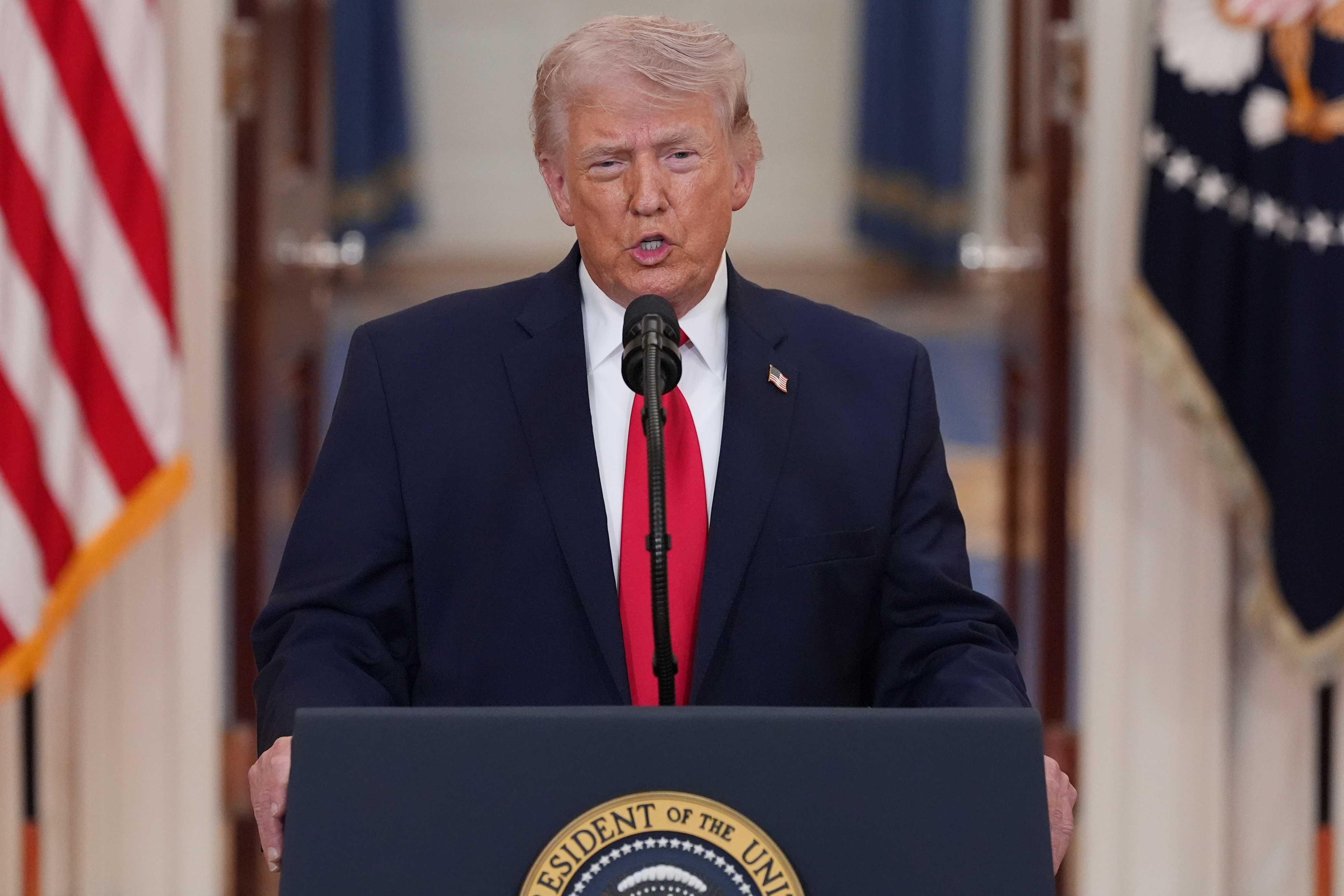
Donald Trump just gave us another reason for the war in Iran, and it looks nothing like the one he gave last week. During a prime-time address from the White House on April 1, 2026, he looked into the camera and said, "We’re there to help our allies." He thanked Israel, Saudi Arabia, the UAE, and Qatar. He promised we won't let them "get hurt or fail." It sounds noble. It sounds steady. But if you’ve been paying attention to the last month of "Operation Epic Fury," you know the script changes faster than the weather in D.C.
First, it was about an "imminent threat" that nobody could quite prove. Then it was about "obliterating" a nuclear program that the IAEA said wasn't even structured for a bomb yet. Now, as gas prices blast past $4 a gallon and the Strait of Hormuz sits choked with tension, the narrative has shifted to a rescue mission for regional friends.
The vanishing oil excuse
For years, the argument for Middle East intervention was energy security. Trump just lit that argument on fire. He told reporters on Tuesday that if allies like France want oil, they should "go get your own" and "fend for themselves" in the Strait of Hormuz. He’s essentially saying the U.S. is "energy independent" and doesn't need a drop of what's under the Persian Gulf.
It’s a bizarre flex. On one hand, he claims we’re only there to protect allies. On the other, he’s telling those same allies that the most vital waterway for their survival isn't our problem anymore. "That's not for us," he said. "That’ll be for whoever’s using the strait." If we aren't there for the oil, and we aren't there for the waterway, the "helping allies" line starts to feel like a convenient placeholder for a war that lacks a clear exit ramp.
What actually happened to the imminent threat
When the bombs first dropped on February 28, the White House called it defensive. They hinted at "intelligence" showing Iran was about to strike. But fast forward to private congressional briefings, and the story crumbled. Administration officials admitted the data didn't show an immediate Iranian attack.
So what was it? It looks more like a preemptive decapitation strike that took out the leadership in Tehran, including reports regarding Ayatollah Khamenei. Secretary of War Pete Hegseth says it isn't "regime change," but Trump is simultaneously telling the Iranian people to "take over" their government. You can't have it both ways. You're either defending against a specific attack or you're pulling the plug on a government you don't like.
The shifting goalposts of victory
If you're confused about when this ends, you're not alone. Trump says the military could wrap things up in "two to three weeks." He claims the Iranian navy is gone and their air force is in ruins. If the "job" is finished, why are we still hitting Isfahan with fireballs that light up the night sky?
The goals keep moving:
- Neutralizing the nuclear threat: Trump says he's already "obliterated" it, yet the strikes continue.
- Protecting Israel: Israel is already striking Iran on its own, often with more aggression than the U.S.
- Helping the protesters: Trump promised to "rescue" the 45,000 protesters he says were killed by the regime.
By jumping between these reasons, the administration avoids being held to any single metric of success. If one goal is met, they just point to another one that requires "two more weeks." It’s a classic move: keep the mission vague so you can never technically fail.
The reality for the American voter
Here is what we know for sure. The war has left over 3,000 dead in a little over a month. Markets are roiling. While Trump brags about being the number one producer of gas and oil, the average person at the pump is feeling the squeeze of a closed Strait of Hormuz.
He’s even threatening to pull out of NATO because European allies won't jump into the cockpit with him. This isn't just a war against Iran; it’s a stress test for every alliance the U.S. has built since 1945. When the President says "we're there to help our allies," he seems to mean the ones who follow his lead without question—specifically Israel and the Gulf monarchies. Everyone else is on their own.
Don't expect a formal peace treaty or a signed document anytime soon. Trump has already said a deal is "irrelevant." He’s fine with leaving Iran in the "stone ages" and walking away. If you're looking for a consistent foreign policy doctrine here, stop. This is about raw power and tactical whims, not a long-term map for the Middle East.
If you're tracking this, watch the fuel prices and the movement of the second aircraft carrier. That'll tell you more about the "next two weeks" than any White House presser. Keep your eyes on the backchannel talks in Pakistan; that's the only place where a real end-game might actually be forming, regardless of the rhetoric coming out of the Oval Office.