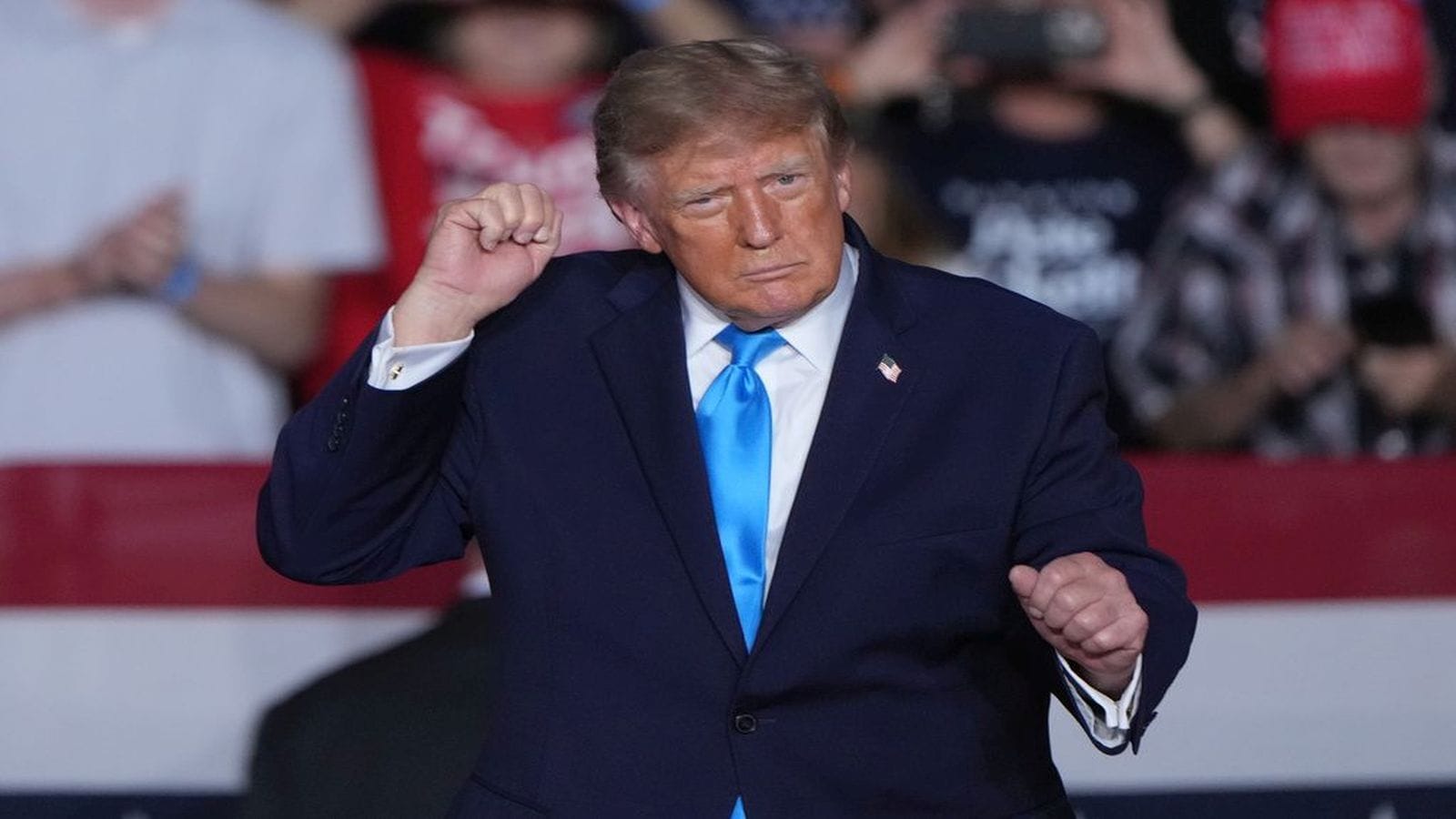
Donald Trump sitting down with Vladimir Putin and Xi Jinping in China isn't just another diplomatic photo op. It's a high-stakes stress test of great-power politics at a moment when global alliances feel remarkably brittle.
When Trump signaled his readiness to meet both leaders around the Asia-Pacific Economic Cooperation summit in Shenzhen, the headline sounded simple enough. Three of the world's most consequential figures in the same orbit. Big cameras, big claims, big expectations. Yet if you read that moment purely as a friendly reset or a neat three-way deal, you're missing how messy the real leverage is.
Look closely at the staging and the subtext. Xi Jinping greeting Trump on the tarmac in Shenzhen—returning the gesture Trump made when Xi visited Washington in September—while Putin arrived to a quieter reception says plenty about protocol and hierarchy. Seating charts and reception lines don't decide wars or rewrite treaties on their own, sure. Still, in diplomacy, small visual cues often expose who holds the cards in a room.
Why Trump Wants a Seat With Both Xi and Putin
Let's be honest about Trump's playbook. He has long preferred personal, leader-to-leader negotiation over slow multilateral committees. With two years left in his current White House term, sitting across from Xi and Putin offers a chance to chase sweeping deals on nuclear arms, trade, and regional flashpoints like Ukraine.
There's also a domestic angle you can't ignore. Heading into the Shenzhen gathering after a rough stretch back home—marked by Republican losses in the November midterm elections and disruptive U.S. technical and aviation outages that had Washington scrambling—projecting commanding authority abroad is an obvious political play. When domestic headlines get loud, dramatic foreign summits give a president a bigger stage.
Does personal chemistry work when core strategic interests clash? Sometimes it buys breathing room. Often it runs straight into hard realities. A handshake doesn't erase competing security fears, and a warm greeting doesn't automatically resolve disputes over Taiwan, the South China Sea, or the war in Ukraine.
The Subtle Power Shifts Inside the Room
Most coverage treats a Trump-Putin-Xi gathering as a single bloc or a classic Cold War-style triangle. That framing is a little lazy. Each leader walks into the room with a different balance sheet.
China Holds the Hosting and Economic Cards
China isn't just a neutral venue. Hosting APEC in a tech showcase like Shenzhen lets Beijing spotlight its economic weight, artificial intelligence ambitions, and diplomatic centrality. Xi has spent years building influence across Asia and the Global South, and his talks with Trump touch everything from tariffs and supply chains to AI rules and regional security.
At the same time, Beijing has its own constraints. Analysts at institutions like the Center for Strategic and International Studies have repeatedly pointed out how sensitive nuclear arms discussions are for China, whose arsenal is much smaller than those of the United States and Russia. Trump may push for broader nuclear talks involving Beijing, yet Xi has strong reasons to move cautiously on caps that could lock in disparities or constrain China's modernization.
Russia Needs Relevance More Than Flattery
For Moscow, simply appearing alongside the U.S. and Chinese presidents carries massive symbolic value. Russian state media loves images that suggest Russia remains an indispensable pillar of a "multipolar world". Putin has argued that sanctions and pressure haven't broken Russia's economy and has framed talks as a way to address "turbulent" global issues.
Even so, Russia's economic weight is dwarfed by China's and America's. Putin can still disrupt, spoil, or bargain hard on security issues—especially Ukraine and regional flashpoints—but his room to maneuver isn't unlimited. Having separate bilateral time with Trump alongside broader talks gives Moscow a channel to test where Washington stands without conceding everything to Beijing.
What Most People Get Wrong About Great-Power Summits
Here's the biggest misconception whenever three heavyweights share a frame: people assume a summit means a grand bargain is around the corner. In reality, great-power meetings rarely produce instant breakthroughs. More often, they clarify boundaries.
- A meeting isn't an alignment. Sitting in the same room doesn't mean Trump, Xi, and Putin share a vision for global order. Their interests overlap in narrow spots and collide in plenty of others.
- Sanctions and tariffs don't vanish overnight. Even when leaders talk about trade, de-escalation, or easing friction, underlying disputes over export controls, critical minerals, and security guarantees take years—not hours—to untangle.
- Allies are watching every word. While the spotlight hits the big three, partners in Asia and Europe—from the Philippines to Japan, South Korea, and beyond—watch closely to see whether Washington is reinforcing alliances or cutting side deals.
I've watched plenty of high-profile summits get hyped as turning points only for the real work to stall in working groups weeks later. That doesn't mean talks are pointless. Talking beats flying blind. Still, seasoned observers know better than to confuse diplomatic theater with durable policy.
How to Read the News Without Getting Played
When major summits hit your feed, sensational framing is everywhere. You don't need a security clearance to cut through the noise.
- Separate optics from outcomes. Notice who got greeted where, who smiled for cameras, and who spoke first—then look for actual policy shifts, signed agreements, or concrete troop and trade moves.
- Check what allies say next. Watch reactions from regional partners and neighbors. Their responses often tell you whether assurances felt solid or shaky.
- Follow implementation over the next 90 days. Real diplomatic traction shows up weeks later in tariff enforcement, diplomatic channels, sanctions policy, and security posture—not on day one.
- Cross-check multiple perspectives. Compare reporting from U.S., European, and Asian outlets alongside independent policy analysis from groups like CSIS or major wire services such as PBS News to spot spin early.