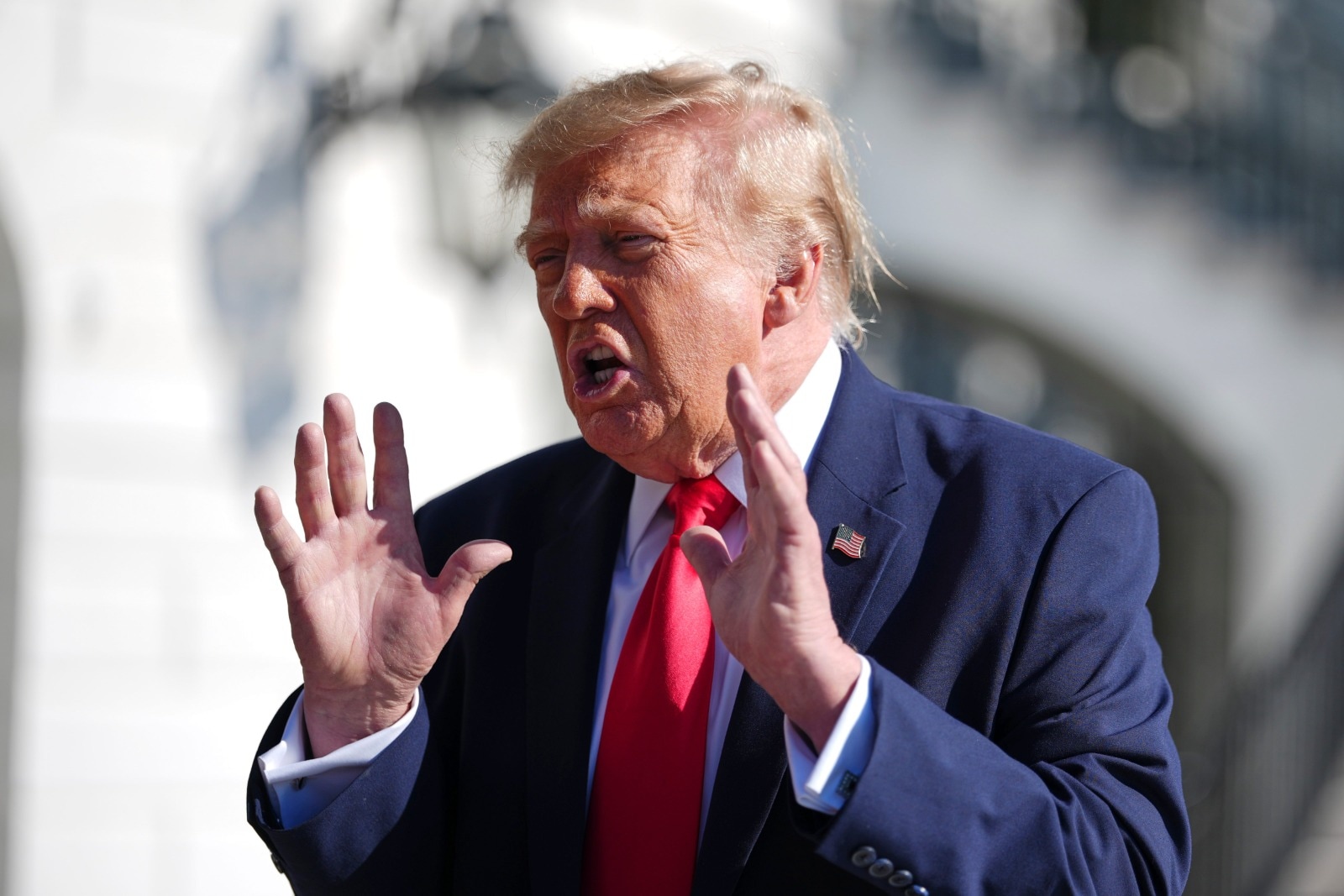
"I wasn't on the Ballot and if I was, we would have won IN A LANDSLIDE!"
That single Truth Social post from Donald Trump on November 4, 2026, sparked a thousand predictable headlines. Legacy media outlets ran with the surface-level drama, framing it as classic ego-driven deflection after Democrats swept the House and flipped the Senate. Meanwhile, conservative commentators nodded along, blaming weak down-ballot candidates and low-propensity GOP voters who stayed home because their favorite leader wasn't listed at the top of the ticket.
Both sides fell for the exact same trap. They treated the 2026 midterm elections as a referendum on candidate quality and voter turnout mechanics.
They are wrong. Dead wrong.
If you spent the last decade inside political war rooms watching campaign managers burn hundreds of millions of dollars on turnout modeling, you know how seductive this excuse is. When a party gets wiped out—losing Senate seats in North Carolina and even South Carolina, a state that hadn't sent a Democrat to the Senate since 1998—strategists scramble for an easy scapegoat. Blaming the absence of a charismatic top-of-ticket draw lets everyone off the hook. It tells Republican operatives their messaging worked, tells donors their money was well spent, and tells the White House its policies weren't the problem.
Here is the reality nobody in Washington wants to admit: Donald Trump was on the ballot in 2026. He put himself there, he campaigned like his own name was printed in bold at the top of every state ledger, and the electorate voted directly on his presidency. The landslide happened—it just went the other way.
The Myth of the "Missing" Draw
To understand why the "if I was on the ballot" theory collapses under scrutiny, look at the timeline of the final 48 hours before Election Day.
On Monday, November 2, standing near the Lincoln Memorial Reflecting Pool, Trump explicitly instructed his supporters to treat the midterms as his personal race. He urged voters to "pretend I'm on the ballot" and warned that a Republican loss would mean his legislative agenda gets "wiped out". He nationalized every single House and Senate contest from Maine to Texas.
Twenty-four hours later, once the projections showed Democrats seizing control of both chambers of Congress, the narrative flipped overnight. Suddenly, he wasn't on the ballot, and the losses belonged entirely to Republican candidates who failed to inspire the base.
Politically, that pivot makes total sense as a survival mechanism. Analytically, it is pure fiction.
In modern American politics, midterm elections are never local affairs. Political scientists call this nationalization—the structural reality that voters cast ballots for Congress based almost entirely on their approval of the sitting president rather than the local representative's constituency service. When a president dominates every news cycle, commands total loyalty from party nominees, and tells the public that a vote for a Republican senator is a vote for him, the distinction between the president and the party vanishes.
What the Data Actually Shows About 2026
The lazy consensus claims Republicans lost because MAGA voters didn't show up without Trump on the line. The actual voter data tells a much darker story for the GOP.
Over 57 million Americans cast early ballots before Election Day even arrived—hardly the hallmark of a sleepy, disengaged electorate. More importantly, look at why voters pulled the lever for Democrats, according to the AP Voter Poll:
- The Check-and-Balance Mandate: Roughly 7 in 10 voters said Congress was failing to provide adequate checks and balances on the president. That figure wasn't just angry progressives; it included roughly 4 in 10 self-identified Republicans.
- The Priority Gap: About two-thirds of the electorate stated flatly that Trump did not have the right priorities. Those voters broke overwhelmingly for Democratic House candidates.
- The Loyalty Penalty: In North Carolina, where Trump-endorsed former RNC chair Michael Whatley lost to Democrat Roy Cooper, roughly 6 in 10 voters said Whatley was "too supportive" of Trump.
Read that third bullet again. Republican nominees didn't lose because they distanced themselves from Trump and alienated his base. They lost because voters viewed them as rubber stamps for an administration whose policies were hitting their wallets.
The Economic Reality Check Nobody Could Spin
You cannot message your way out of grocery and gas prices.
Throughout 2026, two policy pillars defined the administration's second term: aggressive tariffs and military conflict with Iran. Both drove up consumer costs—specifically fuel and food—at the exact moment working-class families were begging for relief.
When voters feel squeezed every time they swipe a debit card at the pump or the supermarket, they do not care whether the president's name is physically printed on the ballot paper. They look at the party holding the White House and the unified Republican Congress, and they hit the eject button.
Even in states where voters respected individual Republican incumbents, the desire for a course correction overpowered everything else. In Maine, voters who prioritized "the right experience" backed Republican Senator Susan Collins—yet she still went down to Democrat Troy Jackson because a larger bloc of the electorate demanded "needed change".
Meanwhile, Democrats didn't win because voters suddenly fell in love with their platform. Only about half of voters even held a favorable view of the Democratic Party, barely edging out the roughly 4 in 10 who viewed the GOP positively. The 2026 midterms were not a Democratic lovefest. They were a blunt-force instrument used by an exhausted public to restore friction in Washington.
The Structural Trap of Personality Politics
There is a hard truth that political movements built around a single charismatic figure refuse to learn until it destroys them: you cannot transfer personal magnetism to a proxy, but you always transfer personal baggage.
Imagine a scenario where a beloved founder steps back from day-to-day operations of a massive retail brand, hands the stores over to regional managers, and insists every store keep his face on the billboard while raising prices by twenty percent. When customers stop shopping there, the founder blames the store managers for lacking his charisma.
That is the exact trap the Republican Party walked into in 2026.
For years, GOP strategists treated Trump's unique ability to turn out low-propensity voters in presidential years (2016, 2020, 2024) as a permanent structural advantage for the party. They ignored the warning signs from 2018 and 2022, convincing themselves that better candidate recruitment or slightly sharper ground-game tech would solve the midterm drop-off.
It never works because the incentive structure is broken:
- Primary Purity Tests: To survive a Republican primary, candidates must pledge absolute fealty to the president. Any deviation invites a primary challenge backed by White House endorsements.
- General Election Poison: That exact same fealty becomes a fatal liability in swing districts and purple states during a midterm, where independent voters are explicitly looking for an independent voice rather than an echo.
- Zero Accountability: When the general election ends in defeat, the leader claims victory would have been guaranteed if only he had been running, absolving the top of the ticket from examining why independents bolted.
Answering the Questions Voters Are Actually Asking
If you look at what people are searching for in the wake of the 2026 elections, the questions reveal how badly pundits have muddied the waters.
Did Republicans lose because of low turnout?
No. Early voting surged past 57 million ballots, proving voters were highly motivated. The problem wasn't an empty stadium; it was that swing voters and frustrated independents showed up specifically to put a check on unified GOP control.
Why do sitting presidents almost always lose the midterms?
Historically, the president's party loses seats in almost every midterm cycle because governing requires making hard choices that inevitably alienate slices of the coalition that elected you. In 2026, that historical gravity was supercharged by inflation tied to tariffs and foreign conflict, turning a normal midterm correction into a wave that flipped both chambers.
Could Trump actually run again in 2028 to "fix" it?
Stop entertaining this fantasy. The 22nd Amendment to the U.S. Constitution bars any person from being elected to the presidency more than twice. Musings about finding a loophole aren't a strategy; they are a distraction that prevents the Republican Party from grooming a viable 2028 successor who can win on policy rather than nostalgia.
The Downside of Facing Reality
To be fair, dismantling the "if I was on the ballot" myth carries real risk for Republican operatives. Admitting that the 2026 loss was a direct rejection of administration policies—rather than a fluke of ballot mechanics—triggers immediate civil war inside the party.
It forces GOP lawmakers to break with the White House on tariffs, rethink foreign entanglements, and start acting like an independent branch of government before 2028 arrives. That kind of internal friction is messy, expensive, and guaranteed to draw fire from the base. It is infinitely easier for consultants to nod along, blame weak candidates, and keep cashing checks while the ship takes on water.
How Political Parties Actually Survive a Midterm Wipeout
If GOP leaders want to avoid an electoral college blowout in 2028, they need to throw out the current playbook immediately and execute four non-negotiable shifts:
- Decouple the Brand: Congressional Republicans must establish an identity separate from the Oval Office. When 70% of the country wants checks and balances, running as a loyal deputy is political malpractice.
- Ruthlessly Audit Economic Messaging: Stop telling voters they are living in a "golden age" while fuel and grocery bills are climbing. Validate the pain first, then offer concrete cost-cutting legislation—even if it means rolling back unpopular tariffs.
- Stop Nationalizing Local Races: Let candidates in Maine, North Carolina, and Ohio run campaigns tailored to their specific states instead of forcing every race through a single national ideological filter.
- Build a Post-Trump Bench Now: The 2028 nominee will not have Donald Trump on the ballot either. Waiting until 2027 to figure out how to win without him guarantees another defeat.
Belief in a hypothetical landslide changes zero votes in the House and seats zero senators. Democrats now hold the gavels, the subpoena power, and the ability to block judicial and Cabinet confirmations for the next two years.
The voters already rendered their verdict on November 3. The only question left is whether Republicans will keep pretending they lost a game they weren't playing—or finally wake up and read the scoreboard.


