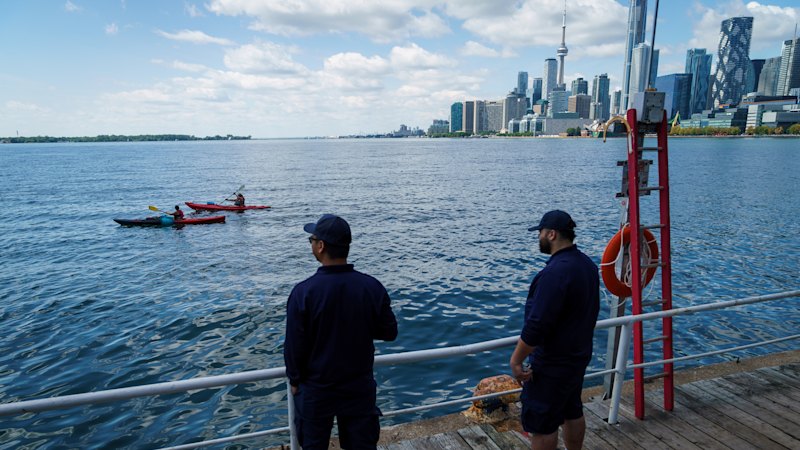
Geographic name-calling won't fix a broken trade policy, but it sure makes for chaotic headlines. President Donald Trump recently signed an executive order demanding that the United States federal government officially refer to Lake Ontario as Lake America. This follows his earlier crusade to rebrand the Gulf of Mexico. It is a classic piece of political theater designed to sting America's northern neighbor during an escalating tariff war.
Behind the Sharpie signature and the Oval Office props, reality tells a completely different story. You cannot simply legislate away centuries of history, international boundaries, and shared geography just because trade negotiations collapsed.
The Anatomy of a Trade Feud
The timing of this naming stunt is anything but accidental. High-stakes trade talks between Washington and Ottawa completely fell apart after three days of tense negotiations. In response, the White House slammed a steep 50 percent tariff on roughly $20 billion worth of Canadian imports. Canada hit back immediately, planning retaliatory tariffs ranging from 15% to 50% on roughly 700 American goods.
Instead of cooling tensions, the administration opted for maximalist provocation. Trump complained that Canadian officials were playing hardball and treating the U.S. unfairly. Changing a map overlay on federal geographic databases is supposed to project dominance. In practice, it highlights how personal and vindictive modern trade disputes have become.
Legal Realities Versus Oval Office Orders
Can the U.S. president actually rename a shared international lake? Technically, yes and no.
Under American law, the executive branch holds broad authority over how domestic federal agencies and mapping systems label geographic landmarks. The U.S. Board on Geographic Names will update its records. That changes what federal employees see on their screens.
That authority stops dead at the international border. Roughly 52 percent of Lake Ontario sits within Canadian territory under a treaty dating back to 1909. Ottawa doesn't recognize the decree. International mapmakers won't adopt it. Even local U.S. leaders are rolling their eyes. New York Governor Kathy Hochul bluntly stated that her state won't be adopting the new moniker. When domestic state governments sharing a shoreline refuse to play along, federal executive orders become empty gestures.
Why the Name Ontario Still Wins
Canadian Prime Minister Mark Carney and provincial leaders wasted no time pushing back against the stunt. They pointed out that the name Ontario carries deep historical roots. It stems from the Indigenous Huron and Wendat word oniatarí:io, which translates cleanly to "lake of shining waters". That linguistic heritage predates the United States Declaration of Independence and the Canadian Confederation by centuries.
Trying to replace an indigenous hydronym with a nationalistic buzzword feels hollow. It ignores the reality of integrated regional economies. Fishery management, environmental protection of the Great Lakes basin, and cross-border shipping require actual cooperation, not cartographic petulance.
The Broader Fallout
This name change is part of a wider pattern. Trump has repeatedly needled Canada, even floating the provocative idea that the sovereign nation should become the 51st U.S. state. Canadians are not laughing. Premiers across the country are urging citizens to boycott U.S. travel and prioritize domestic goods. Tourism metrics and cross-border spending are already suffering collateral damage from these political games.
When leaders treat international relations like a reality TV show, supply chains suffer. Businesses dealing with heavy tariffs don't care what a lake is called on a Washington database. They care about predictability, cost, and moving goods across an open border. Until policymakers stop focusing on theatrical rebrandings and return to serious economic diplomacy, the real cost will be paid by consumers on both sides of the water.