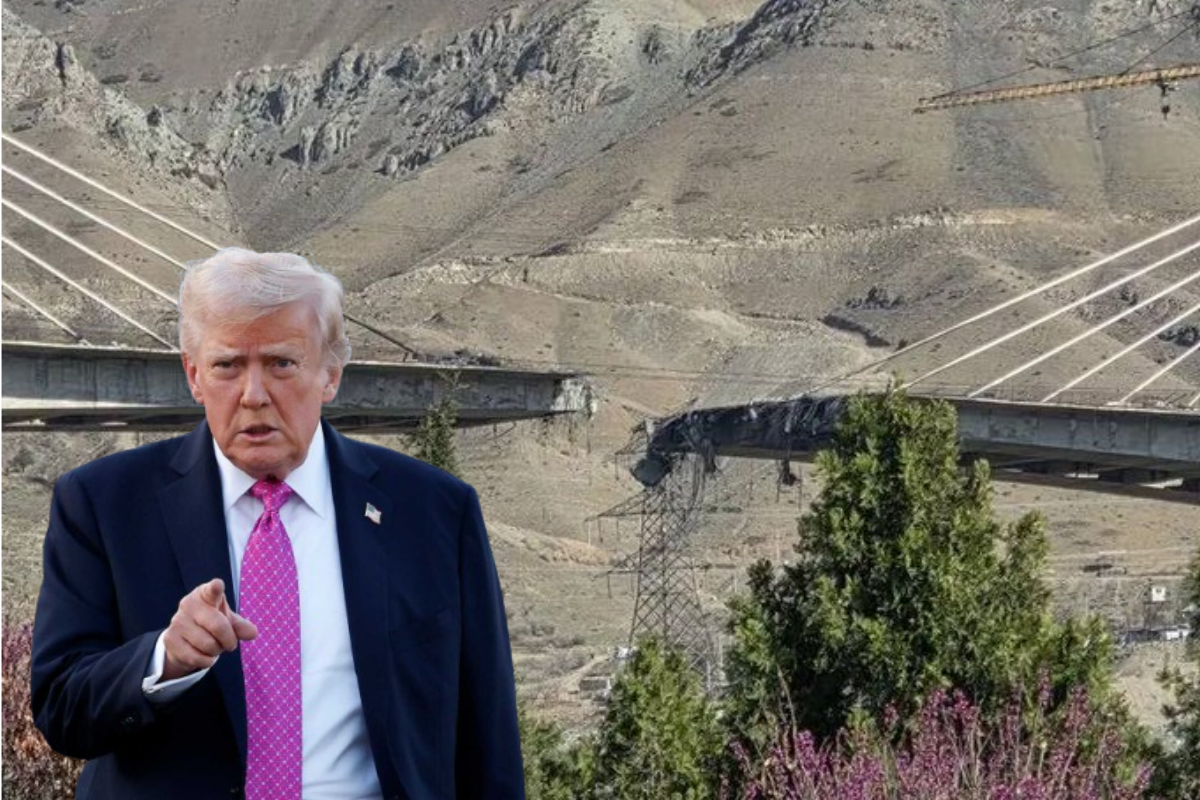
Don't be fooled by the headlines. When Donald Trump says the US "doesn't need" the Strait of Hormuz, he isn't just blustering for the sake of a campaign speech. He’s pointing to a massive, tectonic shift in how the world gets its energy. For decades, the mere thought of Iran closing that narrow strip of water—a 21-mile wide choke point—was enough to send the global economy into a tailspin. Now, with the 2026 US-Iran conflict at a fever pitch, the script has flipped.
The reality is that the US has transformed from a desperate customer into the world’s biggest landlord. We aren't just energy independent; we're the ones everyone else is calling when the lights go out.
The $4 a gallon reality check
On Wednesday, Trump dropped a bombshell in his televised address. He basically told the rest of the world that if they want the oil flowing through Hormuz, they’d better be the ones to go in and get it. "We haven't needed the Hormuz Strait and we don't need it," he said. It’s a gut punch to decades of US foreign policy that treated the Persian Gulf like a 51st state.
But look at the numbers. In March 2026, US gas prices jumped past $4 a gallon. You’d think that would make us more protective of the Middle East, right? Wrong. The reason prices are up isn't because we’re short on oil—it’s because we’re exporting record amounts to everyone else. US exports of clean petroleum hit 3.11 million barrels per day this month. While Iran tries to choke the world's supply, American producers are laughing all the way to the bank.
Why the Persian Gulf lost its grip on DC
If you look at the data from the US Energy Information Administration, the trend is undeniable. Back in 2017, the US was importing over 64 million barrels of oil from the Persian Gulf every month. By January 2026? That number plummeted to 25 million.
- Self-Sufficiency: The US is pumping 13.6 million barrels a day domestically.
- New Friends: We get more oil from Canada and Mexico now than we ever did from the Middle East.
- The Export Game: We’ve become the "swing supplier." When Hormuz closes, Europe and Asia don't look to Riyadh; they look to Texas.
This is why Trump feels he can take such a hard line. He’s betting that the US can weather the storm while Iran’s economy—already decimated by strikes on its power plants and bridges—simply collapses. It's a high-stakes game of "chicken" where the US has a much bigger engine.
The 20% problem everyone is ignoring
Even if the US doesn't "need" the oil for its own cars, the global economy is still hitched to that wagon. About 20% of the world's daily oil supply and 25% of its liquefied natural gas (LNG) pass through that tiny strait. If it stays closed until Trump's April 6 deadline, we're looking at the biggest energy disruption since the 1970s.
The risk isn't just about oil. It’s about everything else that hitches a ride on those tankers. Aluminum, fertilizer, even helium prices are spiking. When shipping giants like Maersk and Hapag-Lloyd pull their boats, insurance costs don't just go up—they vanish. Nobody wants to insure a billion-dollar cargo in a war zone.
What happens if Iran doesn't budge
Trump’s latest ultimatum is clear: open the strait or watch your infrastructure turn into a "Stone Age" relic. He’s already claimed the Iranian Navy is "gone" and their Air Force is in ruins. The strategy now is hitting "dual-use" targets. We're talking about the bridges and power plants that keep a modern nation-state functioning.
There's a lot of debate among military analysts about whether this "maximum pressure" actually works. Some say it just backs a desperate regime into a corner, making them more likely to do something crazy, like mining the entire strait. Others, like the current administration, argue that Iran only understands strength and that their "new regime" (as Trump calls it) is already looking for an exit strategy.
Your next moves in a volatile market
If you're watching your 401(k) or just wondering why your grocery bill is climbing, here's the deal: this isn't ending tomorrow. Even if a ceasefire happens by next week, the "risk premium" on energy is here to stay for a while.
- Don't panic-buy fuel. The US has plenty of reserves. The price spikes are driven more by global fear than actual local shortages.
- Watch the April 6 deadline. That’s the line in the sand. If the strait isn't open by then, expect the US military to transition from "containment" to "clearing operations."
- Diversify your energy exposure. If you're invested in traditional energy, look at US-based producers rather than international firms with heavy Middle East exposure.
The "America First" energy policy isn't just a slogan anymore; it’s a shield. Trump is betting that by the time the dust settles, the Strait of Hormuz won't be a weapon Iran can use against us ever again. Honestly, he might be right. We've spent forty years worrying about that water. It might finally be time to stop.