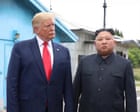
Donald Trump just pulled the rug out from under the Pentagon's standard playbook. Hours before the massive Ulchi Freedom Shield exercises were scheduled to kick off, the White House announced a sharp reduction in joint military training with South Korea. The reason? A self-described "very good relationship" with North Korean leader Kim Jong Un, paired with a sharp grievance over Seoul's refusal to back Washington's push in Iran.
If you're trying to figure out how foreign policy pivots on a social media post, this move is a masterclass. Trump took to his platform to declare that ongoing training exercises send an "inappropriate and hostile" signal to a regime he views as respectful. It's a jarring shift that leaves military planners scrambling and regional allies questioning long-term defense commitments.
The Real Trigger Behind the Drill Cutbacks
The timing of this announcement caught international observers completely off guard. The exercises involve roughly 18,000 South Korean troops, alongside American personnel and international observers, designed specifically to counter modern threats like cyberattacks, drone warfare, and ballistic missile provocations.
Trump admitted it was too late to call off the multi-day deployment entirely, so he directed Defense Secretary Pete Hegseth to substantially slash the scope of the operations. But the justification goes beyond personal diplomacy with Pyongyang. In the same breath, Trump aired frustration over asking South Korean President Lee Jae Myung for assistance regarding the denuclearization of Iran—only to be met with a polite refusal.
While the White House framed the friction with Seoul as a separate issue, tying allied defense cooperation to transactional policy agreements sends a loud message. You don't get full-scale security guarantees if you aren't willing to align on broader geopolitical crusades.
What This Means for Indo-Pacific Security
Seoul's presidential office responded by stating they are closely reviewing the statements and hoping to maintain robust alliance coordination, but regional analysts are sounding alarms. Critics argue that scaling back readiness drills compromises joint deterrence capabilities just as North Korea modernizes its tactics. Pyongyang has spent months adapting combat strategies drawn from modern conflicts, making joint preparation more critical than ever on paper.
Yet, Trump's calculus relies entirely on personal rapport rather than conventional deterrence theory. By reviving the friendly rhetoric of his first term—complete with throwback photos highlighting his bond with Kim—the president is betting that unilateral concessions will jumpstart stalled nuclear negotiations.
History suggests Pyongyang won't stop its weapons development just because American war games get downsized. North Korean state media routinely pans these exercises as aggressive war rehearsals, and experts note that Kim's regime typically demands total cancellation, not just a haircut, to shift its posture.
Watch how Seoul manages its domestic political pressure as the reality of a scaled-back American nuclear umbrella sets in. Expect more sudden diplomatic shifts if Washington decides to bypass traditional alliances for a shot at a marquee summit.