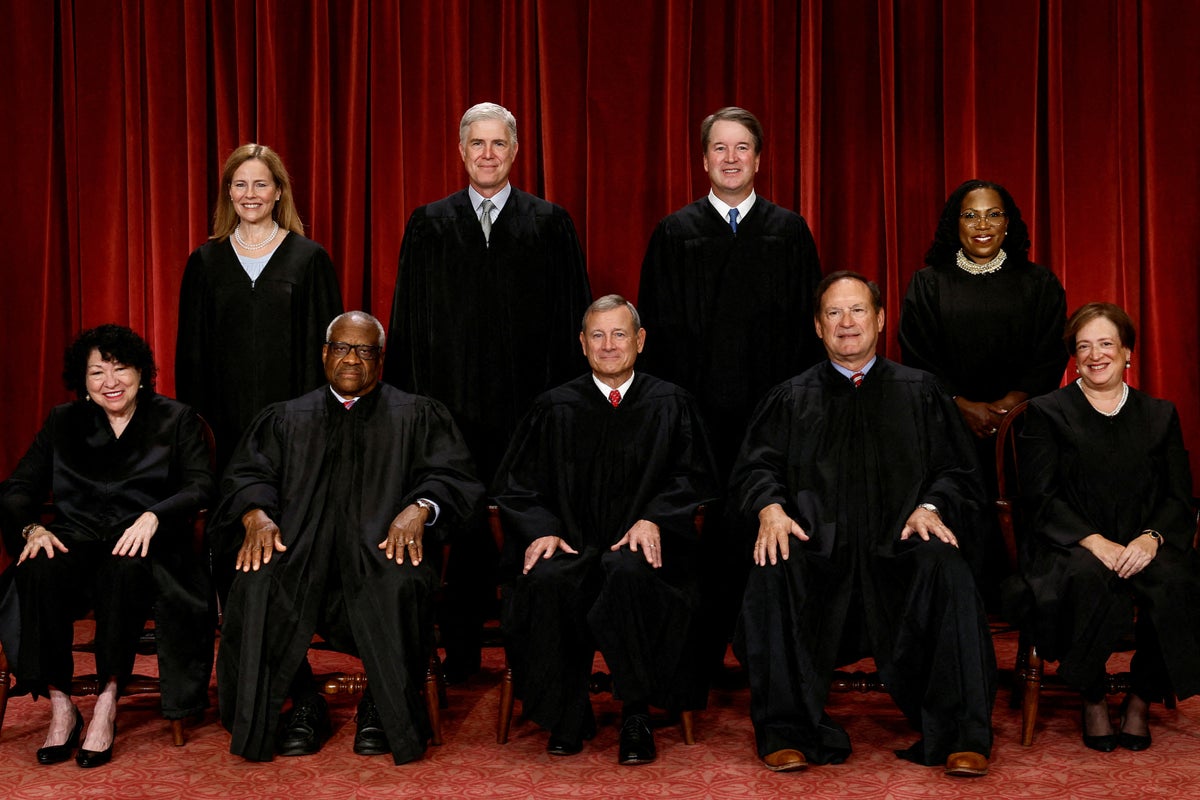
Everyone is losing their minds over the headlines. Donald Trump took to his digital soapbox, venting fury at Supreme Court justices he handpicked, complaining about the personal price tag and political blowback of his high-stakes legal defeats. The conventional narrative writes itself: it is a story of ingratitude, institutional decay, and a man turning on the very judicial architecture he constructed.
The mainstream press wants you to clutch your pearls. They want you to see this as a constitutional crisis, a sign that the judiciary is under unprecedented siege by an ungrateful architect.
They are missing the entire point.
Trump raging at his own appointed judges is not a constitutional crisis. It is a masterclass in why lifetime tenure actually works.
I have spent decades watching political actors try to treat the bench like a patronage system, expecting loyalty payoffs decades down the line. When reality crashes into that delusion, the shockwaves are violent. But beneath the noise of a grievance-filled social media post lies a profoundly encouraging reality: the system cannot be bought, rented, or permanently leased.
The Myth of the Quid Pro Quo Bench
Let us clear away the naive consensus that a presidential appointment equals a lifetime voting block. Political commentators love to traffic in crude reductionism. They look at a conservative majority and assume a monolithic voting bloc that takes marching orders from Mar-a-Lago or the Federalist Society.
That is not how elite legal minds operate, and it misunderstands the psychology of lifetime appointment.
When you give a judge article III status—meaning lifetime tenure and a protected salary—you strip away their primary incentive for obedience: self-preservation. They do not need the president anymore. They do not need the party anymore. They do not even need public approval.
Imagine a scenario where a CEO hires an executive, only for that executive to immediately ignore the CEO's quarterly growth hacks in favor of strict corporate governance bylaws. The CEO would scream bloody murder. That is precisely what is happening here. Trump expected loyal soldiers; he got strict textualists and institutional preservationists who care more about their historical legacy in the case law reporters than a temporary political win.
The frustration Trump feels is the sound of the guardrails holding. The moment a justice realizes that pleasing a populist base compromises the internal logic of jurisprudence, self-preservation of their own intellectual reputation takes over.
The Economics of Losing in Court
Let us talk about the financial and political cost of these losses, because the media frames them as a uniquely punitive measure against one man.
I have seen organizations burn through tens of millions of dollars on vanity litigation, mistaking courtroom stamina for strategic victory. Legal strategy is often treated by political campaigns as a marketing expense. You file the motion, you lose the motion, you fundraise off the outrage.
Trump’s complaint is that his losses are expensive. Fine. Litigation is a market. If you flood the market with poorly conceived arguments that fail to survive scrutiny at the highest level, you pay the market rate.
When the Supreme Court declines to hear an appeal or rules against an executive action, it establishes a ceiling. It forces political actors to realize that executive overreach has a deflationary penalty. By whining about the cost, Trump is inadvertently validating the deterrent effect of judicial review. If losing were cheap, every administration would bypass Congress entirely and govern via executive fiat and emergency dockets.
The high cost of these losses is the exact friction that keeps the republic from sliding into an unchecked autocracy. We should want the price of failing at the highest court to be astronomical. It forces discipline. It forces actual legislative work instead of shortcut lawmaking.
The Federalist Society Fallacy
Critics of the current court structure love to blame the Federalist Society for engineering this dynamic. The critique goes that a conservative legal movement spent forty years plotting a hostile takeover of the judiciary, only for the resulting monster to turn around and bite its creator.
This is a category error.
The Federalist Society did not engineer a loyalty cult; they engineered a methodology. Originalism and textualism are intellectual frameworks, not loyalty oaths. When you train lawyers to look exclusively at the original public meaning of a text, you run the risk that the text will not support your preferred political outcome.
I have watched brilliant legal scholars abandon preferred policy outcomes because the statute simply did not permit it. That is not betrayal. That is integrity to a method.
When Trump attacks the justices for not bailing him out, he is demonstrating a fundamental misunderstanding of the tool he was handed. He wanted a hammer to smash his political opponents; he was given a scalpel designed to dissect statutory language. Naturally, he cut himself.
The irony is delicious. The very institutional safeguards that critics claim Trump has destroyed are the ones currently frustrating his ambitions. If the court were truly corrupt, partisan, and subservient, the rulings would bend to the political winds of the appointing authority. The fact that they do not—the fact that Trump is left screaming into the void about the cost of his losses—proves the independence of the judiciary is functioning precisely as designed.
What the Pundits Get Wrong About Accountability
The media wants a simple villain and a simple victim. They want to frame the judiciary as either a compromised partisan tool or a besieged sanctuary of virtue under attack by a populist mob.
Both views are juvenile.
Judges are insulated elites making high-stakes calls based on legal theory, precedent, and their own judicial philosophies. They do not care about your campaign contributions, your rallies, or your late-night social media rants once they slip into their black robes.
When a politician attacks the Supreme Court, it is usually a sign of weakness, not strength. It signals that their legal team exhausted their intellectual capital and are now appealing to the court of public opinion because the actual court of law shut the door in their face.
Stop treating these tantrums as constitutional tremors. They are merely the predictable death rattles of the transactional view of government. Every time a president realizes that lifetime appointments mean they cannot control the output, democracy wins a quiet, unglamorous victory.
Let them complain about the bills. Let them vent about the betrayal. The friction is the point. The pushback is the proof that the system works when everything else is burning.