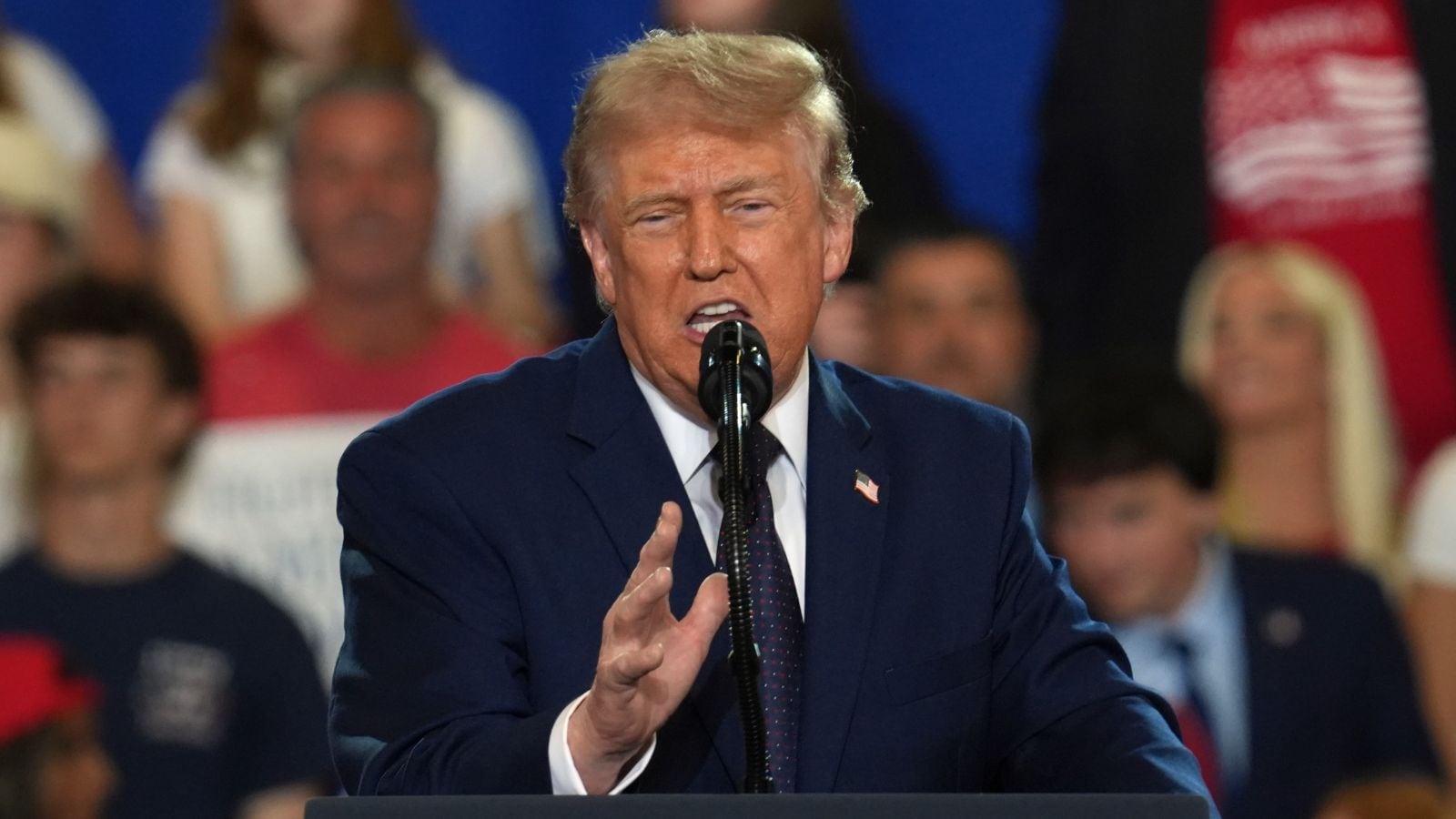
Donald Trump wants everyone to know he isn't desperate. After catching serious flak from his own party over a rumored ceasefire, the president hit back on Truth Social, telling his negotiators to take their time because "time is on our side." This comes less than 24 hours after he confidently declared a Memorandum of Understanding was "largely negotiated" to wrap up the months-long military conflict with Tehran.
The whiplash is classic Trump. One minute a deal is practically done, and the next, he's claiming he's in no hurry whatsoever. But behind the standard bluster lies a brutal reality. The United States and Iran are locked in a high-stakes staring contest, 95% of the way to a framework, yet completely stuck on the remaining 5%.
The Backlash from the Republican Hawks
The immediate reason for Trump's sudden pivot to a more patient tone isn't pressure from Tehran. It's mutiny at home. Sparing no feelings, GOP hawks like Ted Cruz and Lindsey Graham went public this weekend with blistering critiques of what they suspect the administration is about to sign off on.
Roger Wicker, chair of the Senate Armed Services Committee, openly labeled the rumored 60-day ceasefire a disaster. The fear among Washington conservatives is that the White House is hunting for an easy exit ramp from a war that started back in February 2026, a conflict that hasn't actually achieved its core objectives.
Consider the reality on the ground. Iran still holds its highly enriched uranium. Its missile infrastructure is actively being rebuilt. Hardliners in Tehran are acting jubilant, sensing that the heavy economic toll of the conflict is making Washington blink first.
Cruz put it bluntly on social media, arguing that leaving the same Islamist regime in power, flushing them with billions in unfrozen assets, and letting them keep control over global shipping lanes would be a catastrophic mistake.
To quiet the noise, Trump fired back at his critics, calling them "losers" who are whining about a text they haven't even laid eyes on. He insists the deal will be "good and proper," but the internal friction shows that selling this peace agreement at home might be tougher than hammering it out abroad.
What is Actually on the Table
If you strip away the political spin from both capitals, the actual framework being mediated through Pakistan and regional allies is an explicit trade-off. It’s an economic lifeline for maritime security.
According to leaks detailed by Axios and various administration officials, the core of the 60-day temporary agreement hinges on two massive logistical moves.
- The Reopening of the Strait of Hormuz: Iran would agree to actively clear the naval mines it dumped into the chokepoint and allow international shipping to pass completely free of tolls or harassment.
- Lifting the Naval Blockade: The U.S. military would end its strict blockade of Iranian ports, which has choked the country’s economy since mid-April.
The draft also hints at unfreezing a portion of restricted Iranian assets held in overseas accounts, specifically a contentious $12 billion pot sitting in Qatar from older South Korean oil sales. Iranian negotiators are demanding access to those funds as an absolute precondition before signing any formal Memorandum of Understanding.
The Tricky Nuclear Sticking Point
Here is where things get incredibly messy. The White House wants the public to believe that this deal tames Tehran’s nuclear ambitions. Senior officials have leaked that Iran has agreed "in principle" to dispose of its highly enriched uranium stockpile.
But if you look at what’s coming out of Tehran, the narrative changes completely. Iranian Foreign Ministry spokesperson Esmail Baghaei stated flatly that nuclear issues are completely excluded from the current framework. Their sole focus is lifting the blockade, saving their economy, and ending the war on all fronts, including Lebanon.
Secretary of State Marco Rubio tried to manage expectations on Sunday. He told reporters that a highly technical nuclear deal cannot be whipped up in 72 hours on the back of a napkin. The current plan seems to be a classic stall tactic. Use a 60-day ceasefire to get the oil flowing again, and push the incredibly complex nuclear negotiations into that window.
It is a massive gamble. Israel is already raising red flags, warning that a temporary truce merely gives Iran the breathing room it desperately needs to recover financially and militarily, making it twice as hard to counter them later.
Moving Beyond the Bluster
There is a glaring disconnect between the reality of these negotiations and how they are being communicated to the public. Trump's sudden directive to "not rush" is a calculated political defense mechanism. By projecting absolute leverage, he is trying to neutralize the narrative that he's settling for a weak agreement just to end a messy war before midterms.
Meanwhile, intelligence reports suggest that Iran's supreme leadership is operating out of highly secure, undisclosed locations, communicating almost exclusively through a slow web of physical couriers. This internal paranoia in Tehran explains why finalizing even basic language has been an agonizingly slow process.
For anyone tracking global energy markets or geopolitical stability, the next step isn't waiting for a grand ceremony. Watch the Strait of Hormuz. If commercial tankers begin moving without incident and the U.S. Navy eases its posture around Iranian ports, the deal is functional, regardless of what the politicians claim on social media. The paperwork can say whatever it wants, but the real test of this negotiation will be measured in oil barrels and shipping insurance rates.