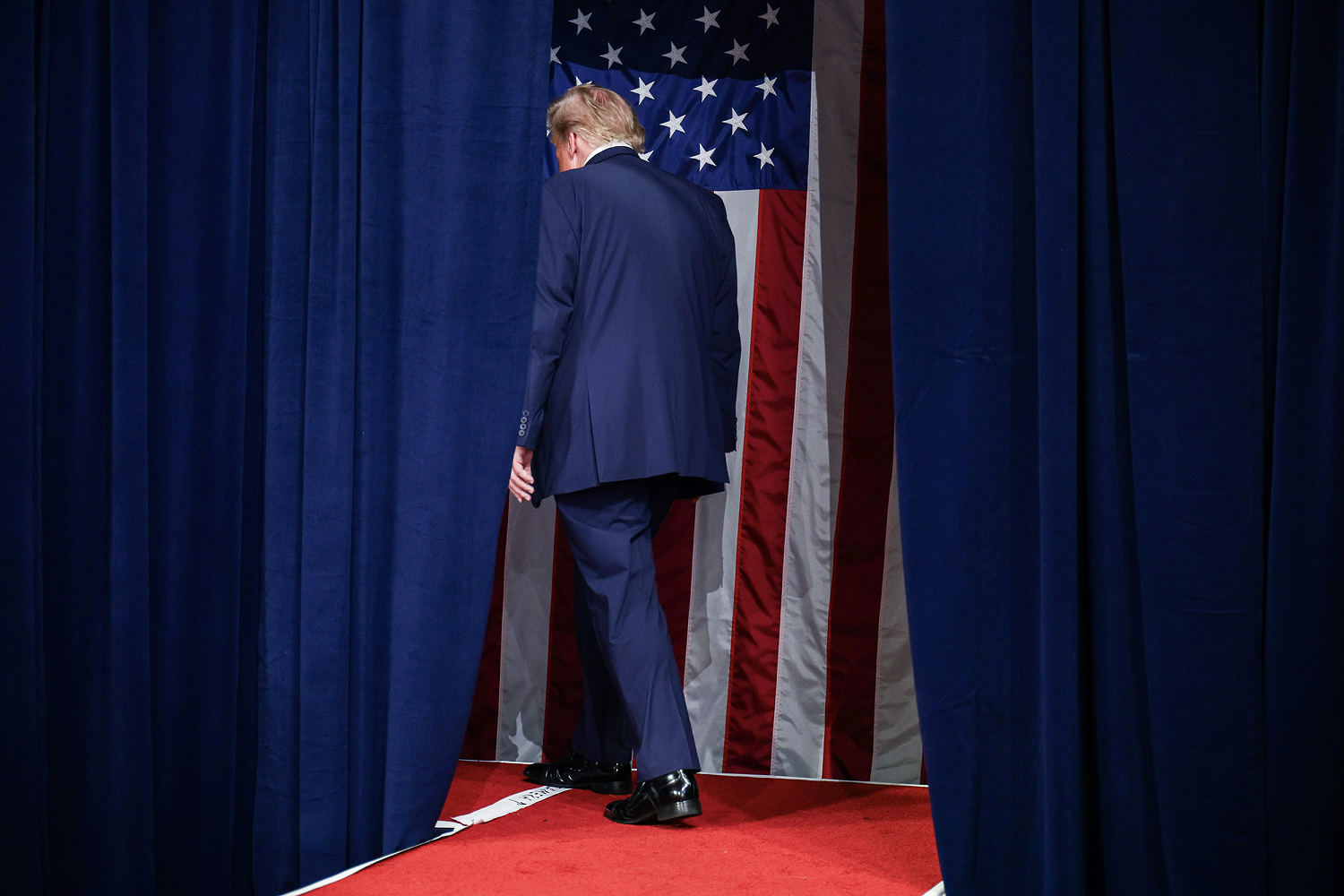
Imagine Dana White standing behind the James S. Brady Press Briefing Room podium, glaring at a White House correspondent from The New York Times and telling them they aren't even a real journalist. For about forty-eight hours in late 2024, political junkies and fight fans alike genuinely wondered if that fever dream might become reality. Donald Trump had floated the idea of making the UFC CEO his next White House press secretary, and the internet lost its mind. Then came the walk-back. Trump clarified he was "only kidding" about giving Dana White the press secretary gig, putting an abrupt end to one of the wildest cabinet rumors of the post-election transition.
Honestly, anyone who has watched the relationship between Donald Trump and Dana White over the last two decades knew this was never going to happen. It wasn't a serious staffing consideration. It was classic political theater, a loyalty nod wrapped in a headline-grabbing joke that did exactly what Trump always wants his off-the-cuff remarks to do—dominate the news cycle while rewarding a fierce ally.
How the Dana White Press Secretary Rumor Started
To understand why the joke landed so hard, you have to look at how tightly intertwined Trump's political rise and the Ultimate Fighting Championship have become. During the 2024 presidential campaign, UFC pay-per-view events turned into unofficial campaign rallies. Trump didn't just attend fights at Madison Square Garden or in Newark; he walked out to Kid Rock's "American Bad Ass" alongside White, soaking up deafening cheers from crowds that skewed heavily toward young male voters—a demographic his campaign aggressively courted.
Right after the November 2024 election, while speculation swirled around high-profile cabinet picks like Marco Rubio, Pete Hegseth, and Robert F. Kennedy Jr., Trump suggested in a conversation that Dana White would be an incredible press secretary. The logic, on the surface, had a certain chaotic appeal to his base. White is combative, unfiltered, and famously despises mainstream sports media. He routinely spars with reporters at post-fight press conferences, calling out questions he thinks are stupid and defending his business with zero corporate polish.
Media outlets ran with it immediately. Pundits debated whether White would even take a massive pay cut to work in the West Wing. Spoiler alert. He wouldn't.
When pressed on whether the UFC boss was actually being vetted for the podium, Trump quickly shut it down. He explained that he was just joking around, noting that White has a massive, wildly successful business to run and wouldn't want the headache of dealing with the White House press corps every single day. White himself echoed that sentiment. He has stated repeatedly over the years that he has zero interest in politics as a career, preferring to stay in his lane running TKO Group Holdings' flagship MMA promotion.
Why Dana White Would Never Take a White House Job
If you look at the actual mechanics of the White House press secretary role versus what Dana White does for a living, the idea falls apart in ten seconds. The two jobs share almost nothing in common except a microphone.
The Financial Reality of Running the UFC
Let's talk numbers. A White House press secretary makes roughly $180,000 a year, give or take depending on senior advisor titles. That's a solid government salary, sure. Dana White, on the other hand, pulls in tens of millions of dollars annually in salary, bonuses, and equity incentives through Endeavor and TKO Group Holdings. Walking away from a multi-billion-dollar combat sports empire to take a 99% pay cut so you can argue with Peter Doocy and Kaitlan Collins over tariff policy makes zero business sense.
Beyond the paycheck, there's the divestment nightmare. Federal ethics rules require senior White House officials to untangle themselves from massive conflicts of interest. White isn't just an employee of the UFC; he is the face of the brand, deeply involved in matchmaking, broadcast rights negotiations with partners like ESPN, and international expansion deals in Saudi Arabia and Abu Dhabi. Stepping into a federal communications role would force him to sever ties with the very empire he spent twenty-five years building from a bankrupt $2 million purchase by the Fertitta brothers into a global juggernaut.
The Grind of the Briefing Room vs. Fight Night
People love the idea of a pugnacious CEO "destroying" reporters at the podium, mostly because they only see thirty-second viral clips of press briefings. They don't see the other fourteen hours of the day.
Being press secretary is a brutal, thankless administrative grind. You spend your mornings in intelligence and policy briefings so you don't accidentally trigger an international incident when someone asks about NATO troop deployments or Federal Reserve interest rates. Every single word is parsed by foreign governments, bond markets, and legal teams. One sloppy ad-lib can tank a stock sector or derail a bill on Capitol Hill.
Dana White thrives precisely because he doesn't have to care about diplomatic precision. If a fighter misses weight or a reporter asks a question he hates at a UFC Apex event in Las Vegas, White can drop three f-bombs, call the guy a moron, and walk off stage. You can't do that when answering questions about Middle East ceasefire negotiations. Even Trump's most combative press secretaries—think Sean Spicer, Sarah Huckabee Sanders, or Kayleigh McEnany—had to operate within the rigid guardrails of federal messaging. White hates guardrails.
What Trump Actually Gains From Joking About White
If Trump knew White would never take the job, why bring it up at all? Because in modern media ecosystems, floating a ridiculous trial balloon costs nothing and yields massive attention.
First, it reinforces loyalty. Trump values personal loyalty above almost every other trait, and White stood by him when almost no other major sports executive would. Back in 2016, when Trump was widely treated as political poison by corporate America, White spoke at the Republican National Convention in Cleveland. He showed up again in 2020. And in 2024, White introduced Trump at the RNC in Milwaukee with a prime-time speech framing him as the ultimate fighter. Publicly teasing a high-profile White House role is Trump's way of saying, "This guy is in my inner circle, and I trust him completely."
Second, it acts as a media distraction. Whenever a transition team is making controversial, consequential picks for the Department of Justice, the Pentagon, or intelligence agencies, throwing a shiny object like "Dana White for Press Secretary" into the bloodstream eats up precious airtime. Cable news panels spend two segments laughing or hyperventilating about the UFC boss at the podium instead of digging into the regulatory backgrounds of actual cabinet nominees. It's basic communications strategy, and Trump has used it since his real estate days in Manhattan.
Who Actually Ended Up in the Role
While the internet was busy making memes of Dana White throwing spinning backfists at the White House press corps, the actual transition team was staffing the communications shop with seasoned political operatives. Trump tapped Karoline Leavitt, his 2024 campaign national press secretary and a former assistant press secretary during his first term, to take the podium—making her the youngest press secretary in U.S. history at 27.
That choice tells you everything you need to know about the difference between Trump's jokes and his actual operational hires. Leavitt knows how to handle rapid-response media, understands congressional messaging, and spent years working inside the Capitol Hill and campaign machinery. She brings the aggressive, confrontational tone Trump wants against legacy outlets, without the liability of a billionaire sports promoter who has no interest in reading State Department talking points at 6 a.m.
Meanwhile, Steven Cheung, who actually did come out of the UFC communications department before becoming Trump's longtime campaign communications director, took on the role of White House Communications Director. That's the real UFC-to-White-House pipeline. Cheung learned how to run aggressive, counter-punching PR in the trenches of MMA media before adapting those tactics to presidential politics. It wasn't Dana White making the jump; it was the guy who used to manage White's press coverage.
How to Spot a Political Trial Balloon Before You Fall for It
Whether you follow political news closely or just catch headlines on your phone, you're going to see plenty more stories like the Dana White rumor over the next few years. Presidents and campaign teams constantly float names that sound too wild to be true—because usually, they are.
Next time a shocking cabinet or staffing rumor blows up your feed, run it through three quick filters before taking it seriously:
- Follow the money and divestment rules. If a billionaire CEO or active sports executive would have to sell off assets or take a massive financial hit to serve, check whether they've made any actual legal moves to unwind their business. No filings, no job.
- Look at the source of the leak. Serious cabinet picks usually leak through transition insiders to outlets like Punchbowl News, Politico, or Axios with specific details about vetting and FBI background checks. Jokes happen on podcasts, at rallies, or in casual off-the-record banter.
- Watch the principal's calendar. When someone is genuinely up for a West Wing role, they clear their schedule, fly to Mar-a-Lago or Washington for formal interviews, and go quiet on social media. Dana White never stopped promoting UFC cards, hosting Power Slap events, or running his daily business in Las Vegas.
Trump's walk-back wasn't a change of heart or a failed negotiation. It was simply the punchline to a joke that had already served its purpose. Dana White stays in Las Vegas running the world's biggest fight promotion, Trump keeps his favorite ringside ally in his corner, and the White House briefing room stays firmly in the hands of actual political operatives.