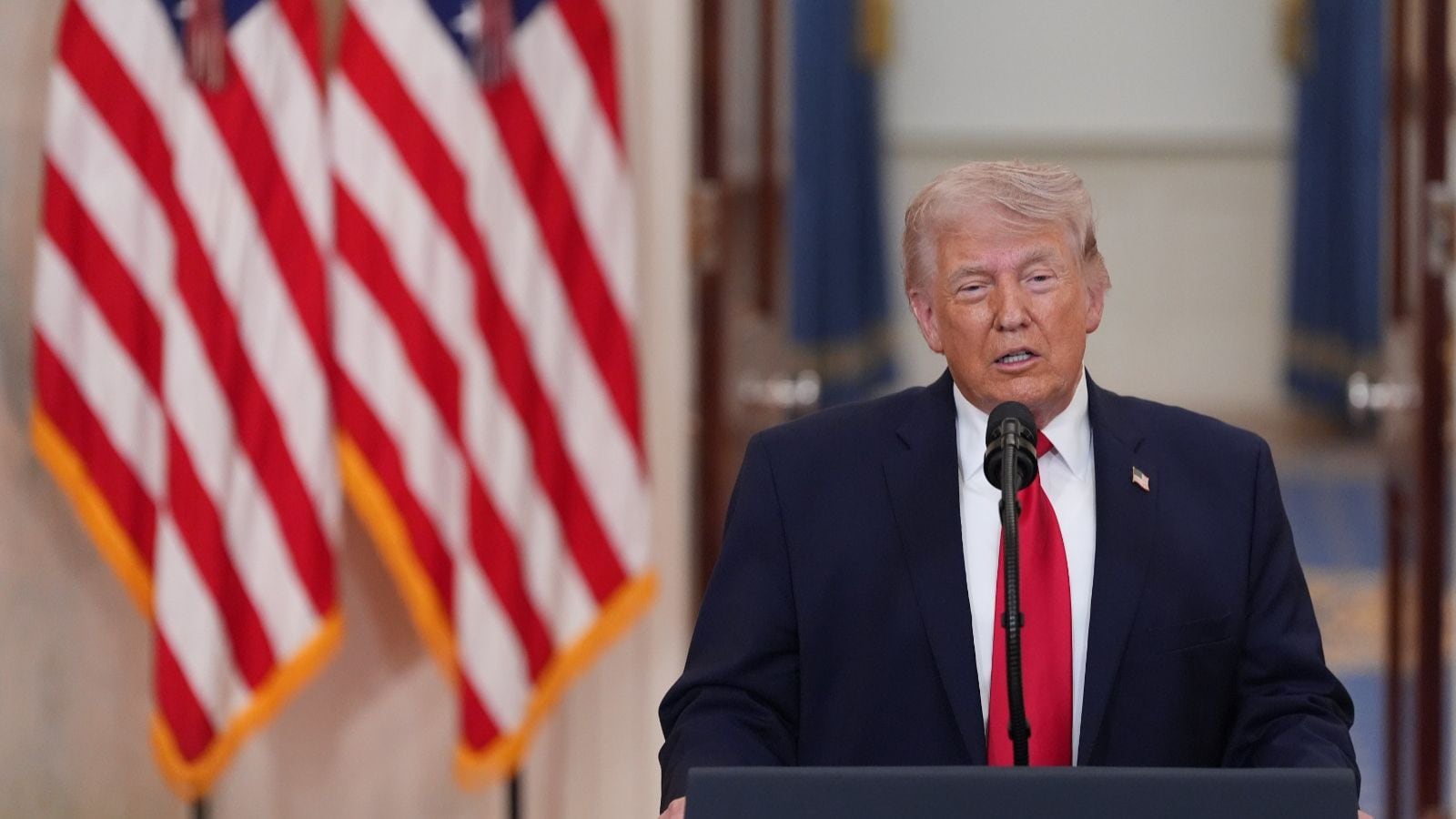
Donald Trump just tossed a geopolitical hand grenade into the laps of America's closest allies. During a nineteen-minute address from the White House, he didn't just suggest that nations dependent on Middle Eastern oil start paying their own way—he told them to "grab" the Strait of Hormuz and "cherish it." It's a blunt, aggressive shift that signals the end of the US acting as the world’s unpaid maritime security guard.
If you're wondering why global oil prices are swinging like a pendulum, this is the reason. The President's message was simple: if you want the oil, you go get it. He's tired of the US military doing the heavy lifting for countries that, in his view, haven't shown enough "courage" to join his offensive against Tehran.
The Hormuz Ultimatum
The Strait of Hormuz is a twenty-one-mile-wide choke point. Usually, about one-fifth of the world’s oil flows through it. Right now, it's a mess. Iran has tightened its grip, and shipping insurance rates have skyrocketed four to six times in a single week.
Trump’s stance is that the US doesn't actually need that oil anymore. He's right on the numbers. Thanks to the "drill, baby, drill" domestic push, the US is sitting on a surplus. He’s now using that leverage to force a choice:
- Option A: Build up some "delayed courage," send your own warships, and "grab" the strait.
- Option B: Buy your oil directly from the United States.
It’s a classic sales pitch wrapped in a military threat. He’s basically saying, "We have plenty. We have so much. Why are you risking your neck in a war zone when you can just buy from us?"
Breaking the NATO Paper Tiger
The tension between the White House and European allies has reached a boiling point. Trump didn't hold back, calling out countries that refused to participate in Operation Epic Fury, the US-led strikes against Iran. He’s labeled NATO a "paper tiger" and called allies "cowards" for their reluctance to get involved in the "decapitation" of the Iranian regime.
This isn't just a heated argument over dinner. It's a fundamental restructuring of how alliances work. For seventy years, the deal was: the US protects the sea lanes, and everyone else trades. Trump is tearing that contract up.
German Defense Minister Boris Pistorius fired back, saying, "This is not our war." But Trump’s response is even colder. He’s essentially telling Europe and Asia that if they won't fight to keep the strait open, they shouldn't expect the US to do it for them. The US will hit the targets it wants to hit, but it won't stay behind to police the water for everyone else’s tankers.
The Reality of American Energy Leverage
Don't mistake this for mere isolationism. It’s "Energy Dominance" in its purest form. By telling allies to buy American oil, Trump is attempting to turn a logistical nightmare—the closure of Hormuz—into a massive windfall for US energy producers.
But there's a catch.
While the US has a lot of oil, it’s mostly "Light Sweet" crude. Many refineries in Asia are built to handle the "Medium and Heavy" grades that come out of the Persian Gulf. You can't just flip a switch and swap them. If the strait stays closed, global prices will keep climbing by $10 to $15 a barrel every month it remains blocked.
What Happens When the US Walks Away
Trump predicts the strait will "open up naturally" once the conflict ends because Iran will be so decimated they'll have nothing left to sell but oil. It's a bold gamble. He’s betting that the "hard part" is done and that the IRGC (Islamic Revolutionary Guard Corps) is effectively broken.
He’s already signaled that US objectives are nearing completion. He’s given Iran a forty-eight-hour ultimatum to open the waterway or face strikes on their power plants—starting with the biggest ones.
The Immediate Fallout for Markets
- Gas Prices: They’re up 38% from pre-war levels. Trump blames "deranged terror attacks" by Iran, but the market is mostly reacting to the uncertainty of who—if anyone—will guard the tankers.
- Force Majeure: Major producers like Qatar, Kuwait, and the UAE have already declared force majeure. They’ve cut production by millions of barrels because they can't get the stuff out of the Gulf.
- Shipping Reroutes: Everything is going around Africa’s Cape of Good Hope now. That adds weeks to transit times and piles on the costs.
Your Next Moves
If you’re watching the markets or managing a business that relies on fuel, don't wait for a "multilateral naval coalition" to save the day. The UK and France are trying to put one together, but Trump has already made it clear he won't be the one leading it.
- Watch the Forty-Eight-Hour Window: If Iran doesn't blink, expect the US to hit energy infrastructure. This will spike prices in the short term but might be the "final blow" Trump is looking for.
- Hedge Your Energy Costs: If you haven't locked in fuel prices, do it now. The $100+ per barrel range is the new floor as long as the "grab Hormuz" rhetoric continues.
- Diversify Suppliers: If you’re an industrial buyer, start looking at US-based contracts. Even if the shipping is more expensive, the security of supply is now the only thing that matters.
Trump is betting that he can force the world to choose between American oil or military confrontation. He’s gambling that the allies will eventually "grab" the strait because they simply have no other choice. It's a high-stakes play that changes the map of global energy forever.