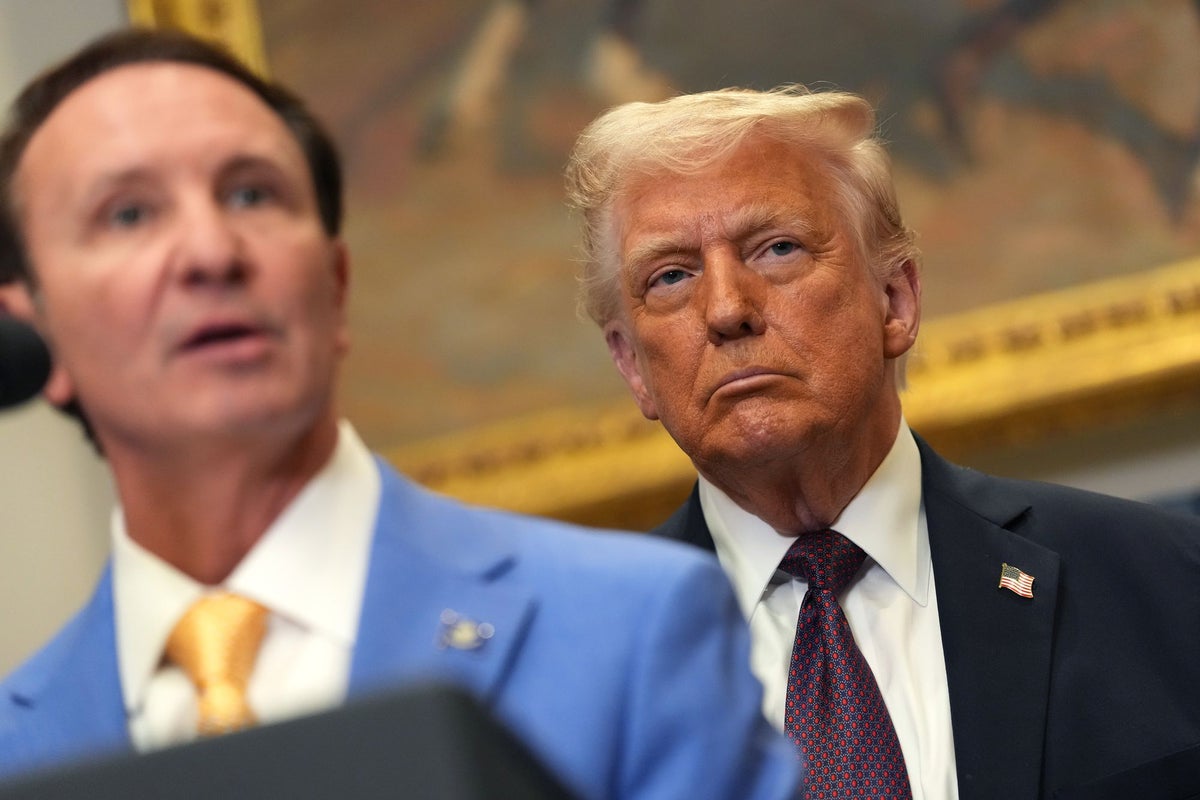
The headlines are screaming about a "three-day" countdown to an Iranian industrial meltdown. Donald Trump recently doubled down on his claim that a total naval blockade will cause Iran’s oil industry to "explode from within." The theory is that if you stop the flow of crude, the pressure builds, the old pipes fail, and the whole system basically self-destructs under the weight of its own unmoving product.
It sounds like a blockbuster movie plot. It's also probably not going to happen.
I’ve looked at the technical realities of "shut-ins" and the shadowy logistics of the global oil trade. While the pressure on Tehran is real, the idea of a literal mechanical explosion across their entire infrastructure is a massive stretch. Here is why the "explosion" rhetoric doesn't match the engineering or the economics of the 2026 energy market.
The myth of the exploding pipeline
Trump’s argument centers on the idea that oil pipelines can’t just stop. He told Fox News that without constant movement, these systems fail mechanically. In reality, oil fields aren't like a kitchen faucet you can’t turn off.
Engineers use a process called a "shut-in." When you can't ship oil, you stop pumping it out of the ground. It’s not fun, and it can damage the long-term productivity of a well, but it doesn't lead to a spontaneous explosion. Iran has been dealing with fluctuating export levels for decades. They know how to choke back production.
The real risk isn't a fireballs-in-the-desert scenario. It's a "waxing" problem. When crude sits still in a cold pipe, it thickens. It becomes like sludge. Restarting that system later is a nightmare and costs a fortune. But that's a slow, expensive headache, not a sudden catastrophe.
China is the ultimate safety valve
You can't have a total blockade when the world’s biggest oil importer refuses to play along. In 2025, China was taking roughly 90% of Iran's oil exports. Think about that. Beijing has spent years building a "dark fleet" of tankers that don't use Western insurance or US dollars.
- 900,000 barrels per day: That’s what China averaged from Iran throughout 2025.
- Teapot refiners: Small, independent Chinese refineries love Iranian crude because it comes at a massive discount.
- The Yuan factor: By trading in local currency, they bypass the entire US financial blockade.
As long as China needs cheap energy to fuel its recovery, there’s always a destination for that oil. A naval blockade at Kharg Island—which handles 90% of Iran's exports—would be a massive escalation. It would mean the US Navy physically stopping Chinese-bound tankers. That’s not just a blockade; that's the doorstep of a much larger war.
What happens to global prices
The markets are already jittery. Brent crude has been hovering around $66, but Goldman Sachs and BloombergNEF are already modeling what happens if those 3.3 million barrels per day truly vanish.
If the US actually managed a "perfect" blockade, we’re looking at $91 a barrel by the end of 2026. You’d feel that at the pump within a week. The political irony is thick here. A successful blockade that "explodes" the Iranian economy would likely "explode" US gas prices just as fast. It’s a double-edged sword that usually keeps the White House from going all the way.
The Kharg Island bottleneck
Is there a grain of truth in the threat? Yes. Iran’s infrastructure is old. Kharg Island is their weak point. If you take out the loading terminals there, the system backs up.
But "backing up" means Iran has to burn off excess gas (flaring) or store crude in massive tankers sitting in the Gulf. They currently use "floating storage" to hold tens of millions of barrels when they can't find a buyer. It’s an economic disaster for them, surely. It drains their foreign currency reserves and weakens their grip on power. But it doesn't make the ground shake.
The peace proposal on the table
Tehran isn't waiting for the pipes to burst. They’ve already floated a two-stage plan. They want to reopen the Strait of Hormuz first to get the oil flowing, leaving the nuclear talks for later. This shows the blockade is hurting, but it’s a diplomatic hurt.
Don't expect a spectacular mechanical failure this week. Expect more "dark fleet" tankers, more back-channel deals with Beijing, and a lot of posturing. The Iranian oil industry is a survivor. It’s held together by duct tape and Chinese demand, but it’s not about to blow up just because someone set a three-day clock.
If you're watching the energy markets, keep your eyes on the "war premium" in Brent prices rather than the countdown clocks on the news. The real explosion is more likely to happen in your local gas station's pricing display than in an Iranian pipeline.
Watch the shipping data coming out of the Strait of Hormuz over the next 72 hours. If tanker traffic holds steady, the "explosion" was just another headline.