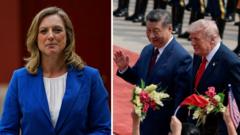
Donald Trump just wrapped up his two-day "State Visit-Plus" in Beijing, and the optics were exactly what you'd expect. Red carpets, military parades, and a private dinner in the Forbidden City. It’s the kind of high-stakes theater Trump loves and Xi Jinping excels at staging. But if you're looking for a massive, world-altering treaty signed in blood, you won't find it.
The real story isn't about a single "big bang" deal. It's about how two of the world's most powerful men are trying to stop a global economic tailspin without looking like they're backing down. With the Iran war and the Strait of Hormuz blockade sending oil prices through the roof, this meeting was less about "winning" and more about keeping the lights on.
The Flattery and the Friction
Xi Jinping knows Trump’s playbook. By rolling out the "State Visit-Plus" treatment—a level of hospitality higher than any other world leader—China aimed to soften the edges of a president who built his brand on "America First." Trump, for his part, leaned into the personal chemistry. He called the visit "world-renowned and unforgettable."
But don't let the tea in the Zhongnanhai Garden fool you. Underneath the smiles, the friction is real. While Trump touted "fantastic trade deals" and massive agricultural purchases, Beijing remained notably quiet on the specifics. We’ve seen this movie before. Back in 2017, Trump walked away from Beijing with $250 billion in "signed" deals. Years later, many of those—like the $83 billion memorandum in West Virginia—turned out to be little more than vaporware.
The big takeaway from 2026? We're moving away from simple tariffs and toward a battle over the "guts" of the modern economy.
Why the Board of Trade is a Big Deal
The most practical outcome of this summit is the proposed creation of a "Board of Trade" and a parallel "Board of Investment." This sounds like boring bureaucracy, but it’s actually a response to past failures. Trump knows the "Phase One" trade deal from his first term didn't hit its targets. By setting up a permanent oversight body, the administration is trying to force accountability.
- Agricultural Wins: China is likely to buy a massive amount of U.S. soybeans and Boeing aircraft. This isn't just about trade; it’s about shoring up the U.S. economy before the midterm elections.
- Critical Minerals: This is the new frontline. China currently dominates the rare earth elements used in everything from iPhones to the missiles the U.S. is burning through in the Middle East. Any agreement that keeps these minerals flowing is a quiet win for the Pentagon.
- The Iran Factor: Both leaders want the Strait of Hormuz reopened. High energy prices hurt Trump at the pump and Xi in the factory. They have a shared interest in de-escalation, even if they disagree on how to get there.
What Most People Get Wrong About the Visit
The media loves to talk about "breakthroughs." Honestly, in a relationship this complex, "no news" is often "good news." If the two largest economies in the world are talking instead of shooting at each other—or launching a full-scale trade war during a global energy crisis—that's a victory in itself.
China isn't going to change its entire economic model because of a two-day visit. They aren't going to stop subsidizing their tech industry or give up their claims on Taiwan. But they are willing to buy stability. They need to reignite their own faltering economy, and they can't do that if the U.S. is constantly tightening the screws.
The Taiwan Shadow
Taiwan remains the elephant in the room. Reports suggest Trump and Xi didn't make any breakthroughs here, and that’s probably by design. Trump has signaled he might be willing to negotiate on arms sales if the price is right, which has Taipei nervous. Xi, meanwhile, is happy to keep the "steady cadence" of meetings going. The more time they spend talking about trade, the less likely they are to clash over the island.
Your Next Moves to Stay Informed
You shouldn't take the $250 billion headlines at face value. Instead, watch the following metrics over the next six months to see if this visit actually mattered:
- The "Board of Trade" Formation: If this body actually meets and publishes data on Chinese purchases, the deal is real. If it’s never mentioned again, it was just PR.
- Oil Prices and the Strait of Hormuz: Watch for any joint diplomatic pressure on Iran. If oil prices stabilize, the Trump-Xi "shared desire" for peace actually has teeth.
- Rare Earth Export Quotas: See if China loosens its grip on critical minerals. This is the ultimate barometer of how much Xi actually trusts the current administration.
Don't get distracted by the gold-leafed dinners. The real work is happening in the fine print of the commodity contracts. Keep your eye on the "Board of Trade" and the oil tankers. That’s where the real power lies.
This video provides an expert breakdown of why the Beijing summit focused on stability over structural reform and how the power shift between the U.S. and China influenced the talks.