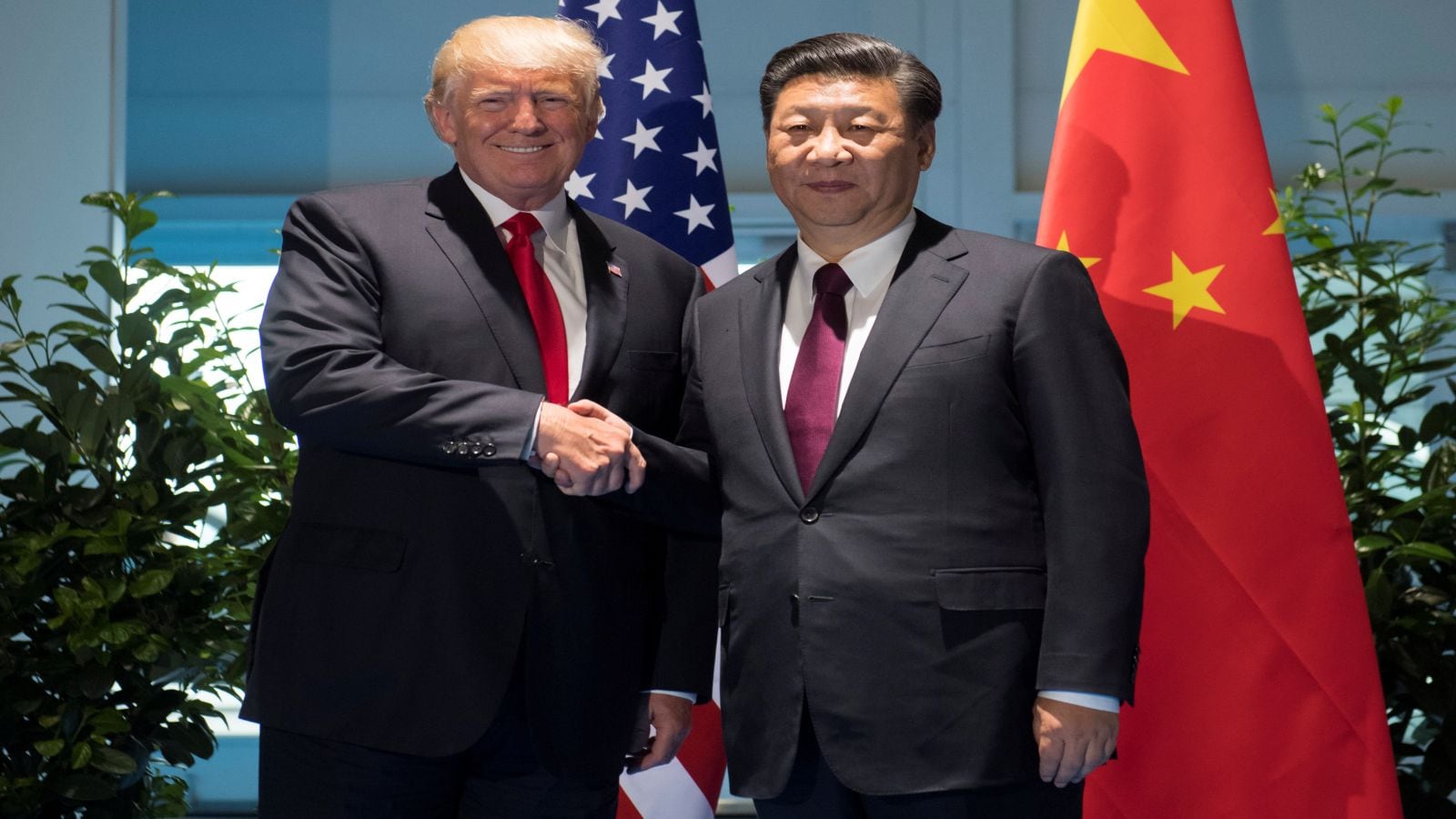
The handshakes in Beijing look great on camera. You've got Donald Trump and Xi Jinping trading compliments, talking about "balanced" trade outcomes, and acting like two old friends catching up. But don't let the friendly optics fool you. Behind the closed doors of the Great Hall of the People, the vibe is a lot more tense. Taiwan isn't just a talking point anymore; it’s become the absolute breaking point for this relationship.
While the world watches to see if they’ll fix the global economy or stop the fighting in the Middle East, the real story is the high-stakes game of chicken happening over a small island in the Pacific. Jonathan Cheng and the team at the Wall Street Journal have been tracking this shift, and the reality is pretty simple: the "red line" Xi keeps talking about is glowing brighter than ever.
The Problem with Transactional Diplomacy
Trump loves a deal. We know this. He’s been pressuring Taipei to pay what he calls an "insurance premium" for American protection. He’s complained that Taiwan "stole" the US semiconductor business. He even slapped a 15% tariff on them back in February just to prove a point. To Trump, everything has a price tag.
The danger is that Xi Jinping knows this.
Xi is facing a brutal economic slump at home. Deflation is sticky, and people aren't spending. He needs predictability from Washington to keep his own house in order. But he also sees Trump’s transactional style as an opening. If Trump views Taiwan as a business expense rather than a strategic necessity, Xi thinks he can buy—or bully—his way into a concession.
What China is Fishing For
Beijing isn't just looking for fewer tariffs. They want a fundamental shift in how the US talks. For decades, the US has said it "does not support" Taiwan's independence. It's a subtle linguistic dance. Now, Xi is pushing Trump to go one step further and say the US "opposes" it.
- The Symbolic Win: Changing that one word would signal the end of "strategic ambiguity."
- The Arms Deal: Trump has an $11.1 billion weapons package for Taiwan sitting on his desk. Xi wants that killed, or at least gutted.
- The Access: China wants the US to ease up on high-end chips and AI tech.
Beijing is Playing Hardball
Don't think for a second that China is just asking nicely. While the leaders talk, the People’s Liberation Army (PLA) is keeping the pressure on. We’ve seen "joint combat readiness patrols" and incursions into Taiwan’s air defense zone becoming a weekly routine.
It's a classic squeeze. Beijing is trying to show Trump that protecting Taiwan carries "manageable diplomatic costs" but high military risks. They’re betting that Trump, who’s currently obsessed with ending wars in the Persian Gulf and Ukraine, doesn't want another headache in the South China Sea.
The Semiconductor Factor
You can't talk about Taiwan without talking about chips. Most people think the US protects Taiwan out of the goodness of its heart. Honestly, it’s about the hardware. If Taiwan's foundries go dark or fall under Beijing's control, the global economy doesn't just slow down—it stops.
Trump knows this. He’s been prodding Taipei to move more manufacturing to US soil. But you can't just rebuild a 40-year-old ecosystem in Arizona overnight. This creates a weird paradox: Trump resents Taiwan's tech dominance but can't afford to let it go.
Why This Meeting is Different
In 2017, Trump sat in the Forbidden City and ate dinner like a king. Back then, it was all about the "art of the deal." In 2026, the stakes are existential.
The US Chamber of Commerce recently warned that the window to respond to China’s industrial strategy is "narrowing." The US isn't just competing for trade anymore; it's competing for the future of technology. This makes Taiwan more than just a "flashpoint"—it's the trophy in a winner-take-all race.
Strategic Instability is the New Normal
Some analysts argue that Trump’s unpredictability is a good thing because it keeps Xi off balance. But there’s a thin line between "keeping them guessing" and "inviting a miscalculation."
If Taipei feels abandoned, they might do something drastic. If Beijing thinks Trump is bluffing, they might push too hard. We're seeing a condition where friends fear they're being sold out and enemies think they can act without consequences. That’s a recipe for disaster.
The Bottom Line for Your Portfolio
If you're looking at this from an investment or business perspective, don't get distracted by the "all-is-well" press releases.
- Watch the Arms Deliveries: If Trump starts delaying the $11 billion package he already authorized, it’s a sign he’s trading security for trade favors.
- Monitor the Language: Look for any shift from "does not support" to "opposes" regarding independence. That’s the ultimate red flag.
- Hedge for Tech Volatility: Semiconductor stocks are going to swing wildly based on every leaked comment from this summit.
The optics are friendly, but the foundation is cracking. Trump and Xi might manage to kick the can down the road for another year, but they aren't solving the Taiwan problem. They're just making it more expensive.
Taiwan Tensions Loom Over High-Stakes Trump-Xi Summit
This video provides a breakdown of the specific military and diplomatic pressures surrounding the current summit in Beijing.