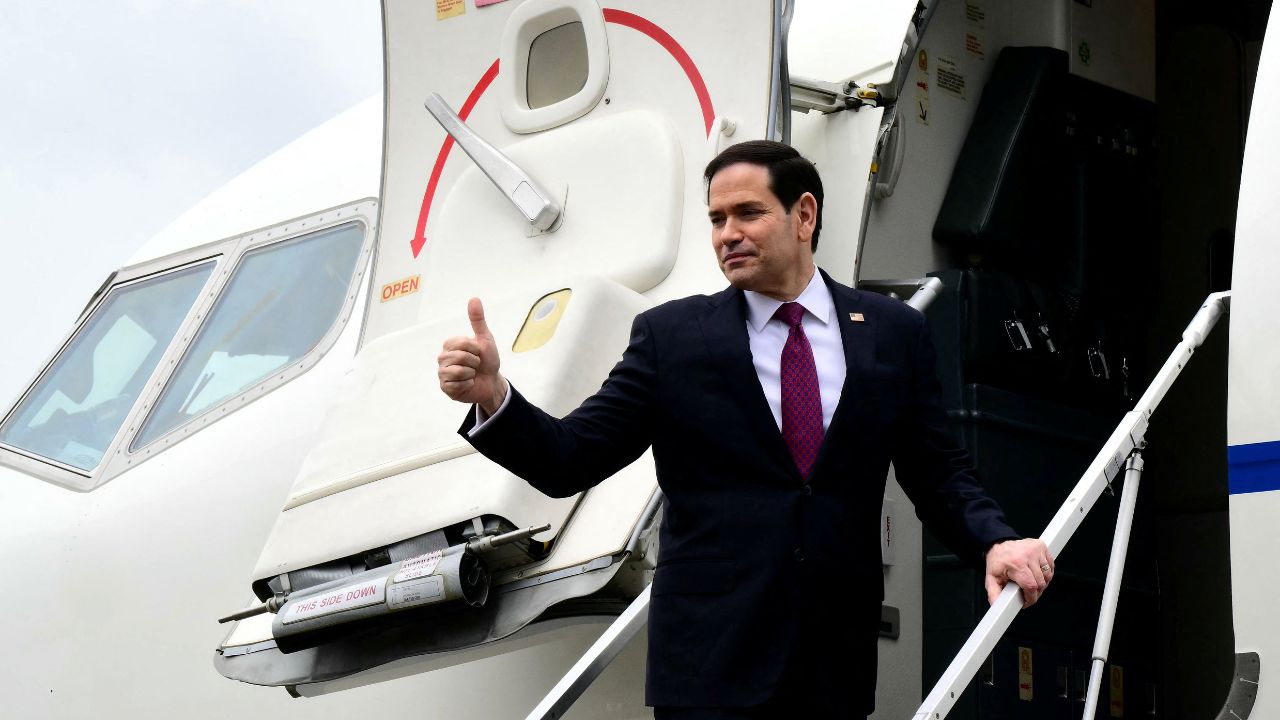
Don't let the handshakes and the "great leader" compliments fool you. When Donald Trump sat down with Xi Jinping in Beijing this week, the atmosphere looked cozy, but the underlying tension regarding Taiwan remains a powder keg. While the cameras captured smiles, Secretary of State Marco Rubio spent his time on the sidelines doing damage control. He’s been adamant that despite the high-level optics, U.S. policy toward Taiwan is exactly where it was before the plane touched down in China.
It’s a classic diplomatic dance. You have a President who loves the art of the deal and a Chinese leader who has made "reunification" his legacy project. Naturally, people are nervous. They're asking if Taiwan is being used as a bargaining chip for better trade terms or cooperation on the conflict in Iran. Rubio’s job right now is to look the world in the eye and say, "Nothing has changed."
Rubio Tries to Steady the Ship
During an interview with NBC News while traveling with the President, Rubio was blunt. He confirmed that the Chinese side brought up Taiwan—because they always do—but he insisted the U.S. response was a standard reiterate-and-move-on. For Rubio, the American stance is a fixed point. He’s signaling to Beijing that while Trump might talk about Xi being a "friend," the institutional commitment to Taiwan’s defense isn't up for grabs.
Rubio didn't just stop at policy jargon. He warned that any attempt by China to take the island by force would be a "terrible mistake." It’s a sharp contrast to the President’s more conciliatory tone. While Trump focuses on "productive conversations" and "expanding market access," Rubio is the one reminding everyone of the "terrible repercussions" that would follow a military move in the Taiwan Strait.
The High Stakes of the Beijing Summit
The meeting at the Great Hall of the People was the first time a U.S. president visited China in nearly a decade. That’s a long time for grievances to simmer. Xi Jinping didn't mince words, even if the White House readout tried to scrub the mention of Taiwan from its official summary. According to Chinese state media, Xi told Trump that Taiwan is the "most important issue" in the entire relationship. He basically gave an ultimatum: handle it right, and we have stability; handle it wrong, and we have conflict.
It's a tough spot for the U.S. administration. On one hand, you have an $11 billion arms package for Taiwan that's already been approved but not yet delivered. On the other, you have a President who wants to secure "concrete results" on trade, like getting China to buy more American soybeans, beef, and aircraft.
- Trade vs. Security: Can Trump get the trade wins he wants without making concessions on Taiwan?
- The Iran Factor: Both leaders agreed the Strait of Hormuz must stay open, but that kind of cooperation requires a level of trust that the Taiwan issue constantly undermines.
- Strategic Ambiguity: This has been the U.S. playbook for decades. We don't say exactly what we'll do if China attacks, and that uncertainty is supposed to keep the peace. Rubio is sticking to that script, even if the President’s personal style makes people think the script is being rewritten.
What Beijing Really Wants
Rubio offered an interesting perspective on China's long-game strategy. He thinks Beijing’s "preference" isn't a bloody invasion. Instead, they want Taiwan to "willingly, voluntarily join them." In a perfect world for Xi, there would be a referendum where Taiwan agrees to fold back into the mainland.
But anyone who follows Taiwanese politics knows that’s a fantasy. The gap between the two sides is widening, not closing. This makes the "unusually harsh admonition" from Xi during the summit even more significant. If they can't get what they want through a vote, the pressure to use "coercive means" grows.
The Reality of the "Unchanged" Policy
When Rubio says the policy is "unchanged," he’s leaning on the Taiwan Relations Act and the Six Assurances. These aren't just suggestions; they’re the legal framework for how the U.S. interacts with the island. Even if a President wanted to pivot overnight, they’d run into a wall of Congressional support for Taiwan.
The U.S. Congress has a huge say in arms sales, and Rubio knows that better than anyone. He’s basically telling Beijing—and the nervous folks in Taipei—that the U.S. system is designed to prevent a single meeting from flipping the script.
- Arms Sales: These are ongoing and, according to Rubio, remain a presidential and congressional decision that didn't "feature prominently" in the private talks.
- Regional Stability: The goal is to manage risks from "authoritarian expansion," a phrase the Taiwanese government used when expressing gratitude for Washington’s "long-term support" following the summit.
Your Next Steps in Monitoring the Situation
If you're trying to figure out where this is actually going, stop looking at the state banquets and start looking at the shipping manifests. Watch for the actual delivery of that $11 billion arms package. That’s the real litmus test. If those weapons start moving, you know the "unchanged" policy is more than just talk.
Keep an eye on the upcoming visit Trump invited Xi to make to Washington in September. If the trade wins don't materialize by then, the "friendship" might hit a rocky patch, and that's when the Taiwan rhetoric usually gets dialed up. For now, take Rubio’s word for it—the status quo is holding, but the tension underneath hasn't moved an inch.
Understanding US-Taiwan Relations
This video provides an expert breakdown of why the Taiwan Strait remains one of the world's most sensitive flashpoints and how U.S. officials like Marco Rubio manage these diplomatic tensions.