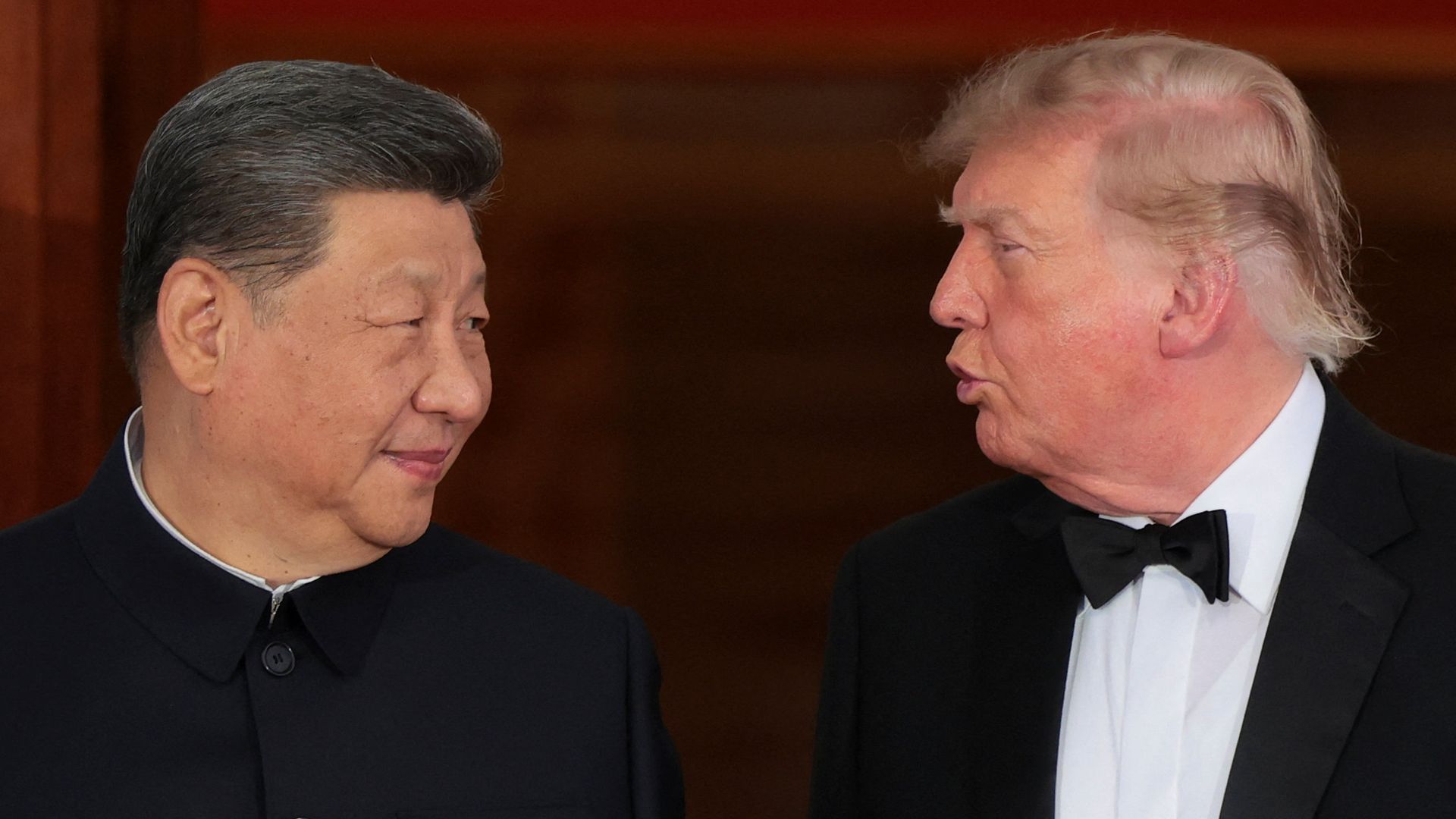
The White House announcement that President Donald Trump, Chinese President Xi Jinping, and Russian President Vladimir Putin are preparing to hold an unprecedented trilateral summit marks the sharpest break from post-Cold War diplomacy in three decades. Rather than relying on multilateral alliances or traditional statecraft, the three leaders are moving toward direct, high-stakes bargaining over nuclear arms control, global trade corridors, and spheres of influence. For Washington, Beijing, and Moscow, the meeting represents an explicit acknowledgment that the international rules-based order has fractured beyond routine repair, leaving only the world’s three heaviest military and economic weights to negotiate the terms of coexistence.
Diplomacy rarely announces its own obituary so loudly. For years, foreign policy establishments in Western capitals treated bilateral friction between the United States and China as an issue to be managed separately from Russian aggression in Eastern Europe. That firewall is gone. By bringing all three leaders into the same room, the administration is betting that personal leverage and transactional dealmaking can break deadlocks that conventional diplomats have spent years failing to untangle.
The Architecture of a Trilateral Gamble
To understand why this summit is happening now, you have to look at the exhaustion of every alternative. Sanctions have reshaped global supply chains without collapsing the Russian economy. Export controls on advanced semiconductors have slowed Beijing’s technological ascent without halting its military modernization. Meanwhile, Washington faces mounting fiscal pressure at home and growing resistance among voters to open-ended foreign entanglements.
In classical diplomacy, summits are the final stage of months of painstaking groundwork by sherpas, foreign ministers, and technical working groups. Agreements are drafted in advance, commas are argued over at midnight, and leaders arrive primarily to sign documents and pose for cameras. The Trump approach flips that sequence entirely. The meeting itself is the mechanism. The theory is simple: when the ultimate decision-makers sit across from one another without bureaucratic filters, they can trade concessions across completely unrelated domains.
Consider how a hypothetical trade-off might look behind closed doors. Washington wants verifiable limits on nuclear warhead expansion and an end to protracted regional conflicts that drain Western treasuries. Moscow wants relief from financial isolation, recognition of its security perimeter, and reintegration into global energy markets. Beijing wants tariff reductions, predictable access to Western consumer markets, and restraint on American military deployments in the Indo-Pacific. In separate bilateral tracks, each of these demands hits a wall. Put all three men at the same table, and suddenly a concession on European security can be weighed against a tariff rollback in Asia or a new strategic arms framework.
The risks of this format are enormous. Without pre-negotiated guardrails, a single miscalculation or public slight can harden positions overnight. Career diplomats routinely warn that leader-to-leader summits without a safety net turn complex national security interests into personal ego contests. Yet from the perspective of the Oval Office, the status quo carries a higher cost. Letting China and Russia deepen their strategic alignment unchecked creates a unified bloc that is far harder for Washington to counter than dealing with both powers directly in a triangular dynamic.
Breaking the Beijing-Moscow Axis
One of the clearest strategic drivers behind the White House push is the desire to drive a wedge between Xi and Putin. Over the past several years, Western pressure pushed Moscow into an increasingly lopsided dependence on Beijing. China became the primary buyer of discounted Russian energy and the indispensable supplier of dual-use industrial goods that kept Russian factories running.
Publicly, Xi and Putin have celebrated a partnership without limits. Privately, the relationship is riddled with historical suspicion and diverging long-term goals. Russia views itself as a sovereign great power, not a junior partner or a resource colony for a rising Asian superpower. China, meanwhile, relies heavily on Western consumer markets and global financial stability to sustain its domestic growth, making Moscow’s appetite for geopolitical disruption an occasional liability for Beijing.
A trilateral summit forces those underlying tensions into the open. When Trump engages both leaders simultaneously, Beijing and Moscow can no longer present a seamless united front against Washington. Each must calculate its own national interest in real time.
What Beijing Stands to Gain and Lose
For Xi Jinping, sitting as an equal alongside the American and Russian presidents validates China’s status as a co-architect of global order. It feeds directly into Beijing’s domestic narrative that the East is rising while the West is declining. More practically, it gives Xi a direct channel to negotiate economic stability at a moment when China’s domestic economy is wrestling with sluggish consumer demand, local government debt, and an aging workforce.
The danger for Xi is getting caught between Washington’s demands and Moscow’s expectations. If Trump offers meaningful economic relief or stability in the Taiwan Strait in exchange for Chinese pressure on Russia, Xi faces an agonizing choice. Backing away from Putin undermines Beijing’s credibility as a reliable partner to nations outside the Western orbit. Refusing to deal leaves China exposed to escalating trade barriers and technology blockades.
Putin’s Seat at the High Table
For Vladimir Putin, the invitation alone is a diplomatic triumph. After years of Western efforts to isolate Moscow from international forums, a three-way summit restores Russia’s coveted image as an indispensable global power on par with the United States and China. Putin thrives in environments where great powers carve up spheres of influence over the heads of smaller nations.
Yet Putin enters the room holding a weaker economic hand than either of his counterparts. Russia’s economy has been heavily militarized, creating distortions that cannot be sustained indefinitely without external capital and technology. Putin needs an off-ramp that allows him to claim victory at home while easing the structural strain on his country. A trilateral framework offers him the chance to frame any compromise not as a retreat before Western pressure, but as a grand settlement among equals.
The Silent Audience in Brussels and Tokyo
While the cameras will focus on the three men in the room, the most anxious observers will be sitting in allied capitals. From Brussels and Warsaw to Tokyo and Seoul, the prospect of a three-way great power summit triggers an old, deeply rooted fear: being bargained away without a seat at the table.
American alliances in Europe and Asia were built on the promise of collective security and consultation. European leaders have spent years aligning their sanctions regimes and defense budgets with Washington’s strategic priorities. Asian allies have absorbed economic risks to cooperate on semiconductor supply chains and regional deterrence. When Washington moves unilaterally to convene a summit with the primary adversaries of both blocs, it sends an unmistakable signal that transactional bilateralism trumps alliance consensus.
This dynamic creates an immediate dilemma for allied governments. If they publicly criticize the summit, they risk alienating the White House and losing whatever influence they retain over the negotiating agenda. If they stay silent, they appear passive while fundamental questions about European borders and Indo-Pacific security are put up for negotiation.
Historical precedent offers plenty of reasons for allied unease. During the Cold War, summits between Washington and Moscow frequently sparked panic in Western Europe over fears that the United States might trade away continental defense commitments for bilateral arms control treaties. The difference today is scale. A three-way deal involving Washington, Beijing, and Moscow touches every major theater of global commerce and military competition at once.
Nuclear Stability in a Three-Body Problem
Beyond trade tariffs and regional borders lies a cold mathematical reality that forces these three leaders to talk: the collapse of global nuclear arms control. For decades, nuclear stability rested on bilateral treaties between the United States and the Soviet Union, and later Russia. Those agreements capped warhead numbers, mandated on-site inspections, and created predictable communication channels to prevent accidental escalation.
Almost all of that architecture has crumbled. Treaties have expired or been suspended, inspection regimes have halted, and new technologies—from hypersonic glide vehicles to autonomous underwater drones—have outpaced old definitions.
At the same time, China has embarked on a rapid expansion of its nuclear arsenal, moving away from its decades-old posture of minimum deterrence toward a force structure capable of rivaling Washington and Moscow. For the first time in history, the world is entering a tripolar nuclear era.
Traditional arms control experts point out that a three-way nuclear balance is inherently unstable. In a two-player game, parity is easy to measure and verify. In a three-player game, if the United States builds enough warheads to deter both Russia and China simultaneously, Moscow and Beijing view that buildup as an existential threat to their own second-strike capabilities and respond in kind. The result is an accelerating arms race with no natural ceiling.
Bringing Trump, Xi, and Putin into the same room does not magically solve the technical nightmares of trilateral verification. Negotiating a formal treaty among three powers with wildly different force structures could take a decade. However, only the top leaders have the authority to establish basic political guardrails—such as mutual transparency commitments, hotline protocols, or freezes on specific destabilizing weapons systems—that can pull the world back from an unconstrained nuclear buildup.
The Flaws in Transactional Statecraft
Supporters of the summit argue that breaking diplomatic taboos is the only way to achieve breakthroughs in a frozen geopolitical environment. They point out that conventional multilateral diplomacy has produced endless communiques while wars rage and trade barriers multiply. In their view, putting three strongmen in a room cuts through the noise and forces real decisions.
That argument ignores a fundamental weakness of purely transactional diplomacy: deals struck between individuals without institutional backing tend to evaporate the moment political winds shift.
International agreements endure when they are anchored in domestic laws, treaty ratifications, alliance buy-in, and verifiable compliance mechanisms. When deals rely primarily on personal rapport or executive discretion, they remain fragile. A change in administration in Washington, an economic shock in Beijing, or a succession crisis in Moscow can unravel years of informal understandings overnight.
There is also the problem of asymmetric compliance. Democracies operate under public scrutiny, legislative oversight, and judicial review. Authoritarian systems operate with opaque budgets, state-controlled media, and centralized command. If a summit produces vague promises rather than airtight verification rules, open societies face immediate domestic pressure to uphold their end of the bargain while closed regimes retain wide latitude to cheat in the gray zones.
What Actually Happens Behind Closed Doors
Strip away the diplomatic pageantry, and the mechanics of a three-way summit come down to leverage, timing, and pain tolerance. None of the three leaders is attending out of idealism. Each is calculating how much pressure he can apply to the other two before his own domestic constraints force a compromise.
Trump brings the unmatched weight of the American consumer market, the global dominance of the dollar, and the world’s most capable expeditionary military. His primary vulnerability is time. American election cycles and shifting public sentiment mean he needs visible, tangible wins—whether in the form of lower inflation, trade deals that protect domestic manufacturing, or foreign policy breakthroughs that allow him to reduce overseas military commitments.
Xi brings control over the world’s manufacturing base, dominance in critical mineral processing, and immense patience. His vulnerability lies in China’s structural economic slowdown and its reliance on external markets to absorb industrial overcapacity. Xi cannot afford a total decoupling from the West without risking severe domestic unemployment and social unrest.
Putin brings vast energy and raw material reserves, a society conditioned to endure hardship, and a willingness to use military force that Western democracies find difficult to match. His vulnerability is long-term economic stagnation and the danger of becoming permanently subordinate to Beijing.
When these three sets of leverage collide, the outcome will not be a grand, harmonious peace treaty. The world is far too divided for that. Instead, the realistic ceiling for this summit is a series of hard-edged, cynical accommodations—a rough division of responsibilities and red lines designed to prevent direct military clashes among the three nuclear powers while allowing fierce economic and technological competition to continue.
The End of the Post-Cold War Illusion
For over thirty years, Western foreign policy operated on the assumption that economic integration and international institutions would gradually pull authoritarian states into a liberal global order. Trade would foster democracy, treaties would tame nationalism, and great power conflict would become a relic of the past.
The announcement of a Trump, Xi, and Putin summit is the final nail in the coffin of that worldview. It confirms that we have returned to a nineteenth-century model of international relations armed with twenty-first-century weapons. In this world, rules are not universal; they are negotiated by the strong and endured by the weak.
Whether this unprecedented meeting produces a temporary stabilization of global tensions or merely clarifies the fault lines of a new cold war, the underlying reality has already changed. The era of automatic American global policing is over, the era of seamless globalization is dead, and the future of international security now rests on the unpredictable chemistry of three men sitting around a single table.