The foreign policy establishment is predictable. They love "stability." They worship "norms." They treat the Middle East like a delicate clock that only they are qualified to wind. When Donald Trump disrupts that clock, the pundits scream "blunder" because they cannot fathom a strategy that doesn't involve a thirty-year roadmap and a mountain of pointless white papers.
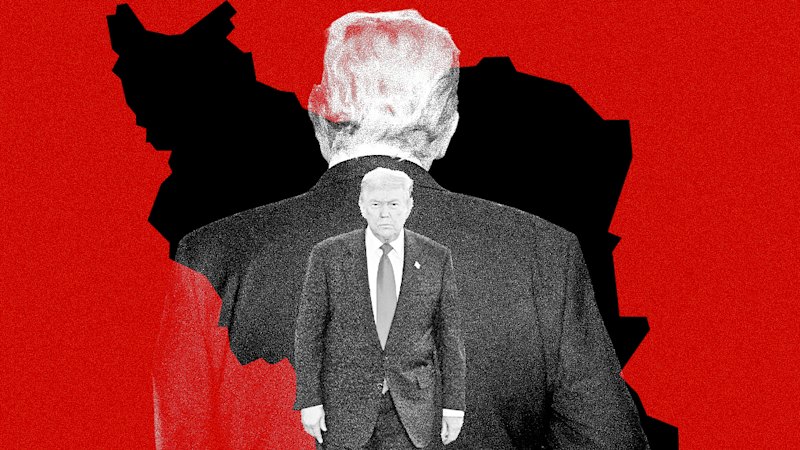
The prevailing narrative suggests Trump is stumbling toward a catastrophic war with Iran. They claim his withdrawal from the Joint Comprehensive Plan of Action (JCPOA) was a "strategic mistake" and that his erratic "maximum pressure" campaign lacks a coherent goal. Learn more on a related subject: this related article.
They are wrong.
What the "experts" call a blunder is actually the systematic dismantling of a failed status quo. The "biggest mistake" isn't what Trump might do next; it was the decades of polite, structured failure that preceded him. More analysis by Reuters delves into related views on the subject.
The Myth of the Rational Actor
The core flaw in most analyses of Iran is the assumption that Tehran responds to "logical" diplomatic incentives. The JCPOA was built on the hope that if we gave the regime enough cash and legitimacy, they would naturally pivot toward being a responsible regional player.
I have spent years watching bureaucrats try to bribe ideologues. It doesn't work. When you give a revolutionary regime a windfall, they don't build schools; they fund militias in Lebanon, Yemen, and Iraq.
Trump’s "blunder" of exiting the deal didn't create the current tension—it exposed the reality that the tension never left. By cutting off the financial oxygen, Trump forced the regime into a corner where they had to show their hand. Stability is easy when you’re paying your adversary to behave. Real strategy starts when the money stops.
Maximum Pressure is Not a Gimmick
Critics argue that maximum pressure has failed because Iran hasn't returned to the negotiating table on our terms. This is a shallow metric.
Strategy isn't always about a signature on a piece of paper. Sometimes, strategy is about degradation.
- Economic Attrition: The Iranian rial didn't just stumble; it plummeted. When a regime can't pay its proxies, its influence wanes.
- Internal Friction: Sustained economic pressure forces the regime to choose between domestic stability and foreign adventurism. For the first time in decades, the Iranian leadership is looking over its shoulder at its own people.
- Removal of Ambiguity: For years, the West played a game of "strategic patience." Trump replaced it with "tactical unpredictability."
The establishment hates unpredictability. It makes their fancy degrees feel useless. But in a theater like the Middle East, being predictable is a death sentence.
The Suleimani Strike Was a Paradigm Shift
Remember the hysteria after the Qasem Suleimani strike? The talking heads predicted World War III. They said the region would go up in flames. They called it the ultimate blunder.
Instead, the sky stayed up.
By removing the architect of Iran’s regional proxy network, Trump proved that the "untouchable" status of high-ranking Iranian officials was a myth. He shattered the Iranian deterrent without starting a full-scale ground war. This wasn't a reckless move; it was a calculated risk that paid off by resetting the boundaries of engagement.
If you want to stop a bully, you don't send a strongly worded letter. You punch the bully in the nose and wait for him to realize the cost of fighting back is higher than the reward of his bullying.
The Wrong Question: "Is This Leading to War?"
People always ask, "Is Trump’s next move going to start a war?"
This is the wrong question. It assumes we aren't already in a state of conflict. Iran has been at war with Western interests for forty years. They use proxies to kill soldiers, they seize tankers, and they fund terror.
The real question is: "Who is winning the existing conflict?"
The status quo crowd wants a "managed" conflict where we lose slowly but politely. Trump opted for a disruptive conflict where we might actually win. The "next mistake" the media warns about—whether it’s further sanctions or a naval blockade—is usually just the next phase of tightening the screws.
Why the "Experts" Are Terrified
The fear isn't that Trump will fail. The fear is that he might succeed through methods they despise.
If Trump manages to contain Iran through economic strangulation and targeted strikes rather than a 500-page treaty, it invalidates the entire industry of professional diplomats. It proves that raw power and economic leverage are more effective than "soft power" and cocktail parties in Davos.
Is there a risk? Of course. Every significant geopolitical move carries the risk of escalation. But the risk of doing nothing—the risk of returning to the JCPOA and letting Iran become a nuclear-armed regional hegemon—is infinitely higher.
The Actionable Truth
We need to stop viewing foreign policy as a series of "mistakes" vs. "successes" based on daily headlines.
- Accept Friction: Peace is not the absence of tension; it’s the management of it.
- Ignore the "Blowback" Narrative: Every time the U.S. asserts itself, critics scream about blowback. Usually, the blowback is a temporary tantrum from a weakened adversary.
- Value Leverage Over Agreements: A piece of paper with a dictator's signature is worthless. A crippled economy is a tangible asset.
The next "blunder" will likely be more of the same: more pressure, more unpredictability, and more disruption of the Iranian regime's comfort zone. To the establishment, it’s a mistake. To anyone paying attention to the actual balance of power, it’s the only way forward.
Stop listening to the people who have been wrong about the Middle East for thirty years. They are mourning a world that only existed in their spreadsheets.
The chaos is the point. The disruption is the strategy.
Stop trying to fix the old system and start realizing it’s already been replaced.