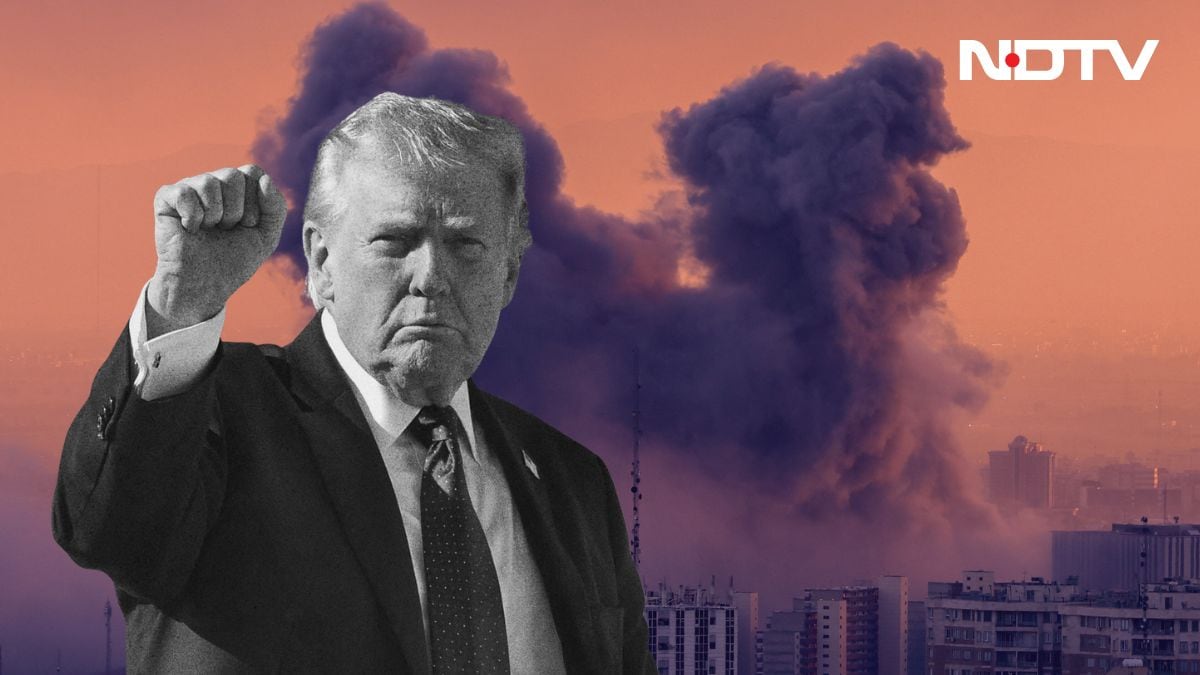
Donald Trump just tossed a hand grenade into the fragile glass house of Middle Eastern diplomacy. By calling Iran the loser of the Middle East, he didn't just insult a sovereign nation. He signaled a total shift in how the United States intends to handle Tehran moving forward. This isn't the carefully worded, sanitized language of a State Department briefing. It’s a direct provocation backed by a warning of a big strike that has the entire region holding its breath.
If you're trying to figure out if this is just campaign trail bluster or a legitimate precursor to war, you have to look at the history of the "Maximum Pressure" campaign. Trump's rhetoric isn't accidental. It’s designed to devalue Iran’s standing among its own proxies—Hezbollah in Lebanon, the Houthis in Yemen, and various militias in Iraq. When the leader of the world’s most powerful military calls you a loser, it’s a psychological play to show your allies that your protection is a myth.
The Strategy Behind The Insult
Calling a regional power a loser sounds childish to some, but in the world of geopolitical signaling, it’s a high-stakes move. Trump is betting that Iran is overextended. For years, Tehran has spent billions of dollars to project power through the "Axis of Resistance." They’ve built a land bridge to the Mediterranean and threatened global shipping lanes in the Red Sea.
Trump’s "loser" label suggests that despite all that spending, Iran is actually weaker than ever. Their economy is reeling from sanctions. Their internal security has been breached multiple times, most notably with the assassination of high-ranking officials and nuclear scientists. By framing them as losers, Trump is telling the world that the Iranian "Boogeyman" is actually a paper tiger.
It’s a classic negotiation tactic. You devalue the opponent before you sit down at the table—or before you flip the table over entirely.
What A Big Strike Actually Looks Like
When Trump warns of a big strike, he isn't necessarily talking about a full-scale invasion like Iraq in 2003. Nobody wants that. Not the American public, and certainly not a Pentagon that’s already stretched thin. A "big strike" in the 2026 context likely means something much more surgical but devastatingly effective.
We're talking about high-value targets that would cripple Iran’s ability to function as a regional threat. This includes:
- Nuclear Infrastructure: Facilities like Natanz or Fordow are always at the top of the list. Even a temporary setback to their enrichment capabilities would be a massive win for Washington.
- Energy Exports: Iran’s economy lives and dies by its oil. Striking the Kharg Island terminal or other key refineries would essentially bankrupt the regime overnight.
- Command and Control: Taking out the leadership of the Islamic Revolutionary Guard Corps (IRGC) would leave their regional proxies headless and confused.
The reality is that a "big strike" would likely be a combination of kinetic missiles, stealth drone operations, and massive cyberattacks. We've seen previews of this before. Remember the Stuxnet virus? Or the 2020 strike on Qasem Soleimani? Those weren't just random acts. They were calculated moves to show Iran that their red lines don't exist in the eyes of the U.S. military.
Why The Region Is Terrified
The Middle East isn't a vacuum. Every action has a massive, often messy reaction. If Trump follows through on his "big strike" warning, the fallout won't stay within Iran’s borders.
Israel is already on a permanent war footing. A strike on Iran would almost certainly trigger a massive retaliation from Hezbollah in the north. We're talking tens of thousands of rockets raining down on Tel Aviv and Haifa. Meanwhile, the Houthis would likely ramp up their attacks on commercial shipping, potentially closing the Bab el-Mandeb Strait and sending global oil prices to $150 a barrel.
Saudi Arabia and the UAE are in a tough spot too. On one hand, they’d love to see Iran’s wings clipped. On the other, they know they’re the easiest targets for Iranian drones. They remember the 2019 Abqaiq–Khurais attack that temporarily knocked out half of Saudi oil production. They don't want a repeat of that.
The Misconception Of Iranian Stability
People often think the Iranian regime is a monolith. It’s not. There’s a massive gap between the aging clerics in power and a young, tech-savvy population that’s tired of being a global pariah. When Trump calls the leadership "losers," he’s also talking to the Iranian people. He’s highlighting that their leaders are failing them.
However, this is where it gets tricky. History shows that external threats often cause a population to "rally 'round the flag." If the U.S. strikes, it might actually give the regime the excuse it needs to crush internal dissent under the guise of national security. It’s a gamble. Trump thinks the regime is so brittle that one big push will make it shatter. Others fear it will only make them more desperate and dangerous.
Moving Past The Rhetoric
You can't just look at the tweets or the rally speeches. You have to look at the troop movements and the carrier strike groups. If the U.S. begins moving more assets into the Persian Gulf, the "loser" talk stops being an insult and starts being a countdown.
The Iranian leadership is currently weighing two options. They can double down, increase their enrichment of uranium, and hope that their proxies can deter a U.S. attack. Or, they can try to find a back channel to negotiate before the "big strike" becomes a reality.
Honestly, the window for negotiation is closing fast. Trump has made his position clear. He doesn't want "strategic patience." He wants results. He wants a deal that covers not just nuclear weapons, but also ballistic missiles and regional interference. And he’s willing to use the "loser" tag to make sure everyone knows he’s the one holding all the cards.
Keep a close eye on the price of Brent Crude and the movement of the USS Abraham Lincoln. Those are much better indicators of what’s coming next than any official press release. If you see the U.S. pulling non-essential personnel from embassies in the region, that's your sign that the warning is about to become an action. Prepare for a volatile market and a total realignment of Middle Eastern power dynamics. The era of playing it safe is over. It's time to watch how the "loser" responds to being backed into a corner.