Diplomats love a warm handshake. Foreign policy pundits love it even more.
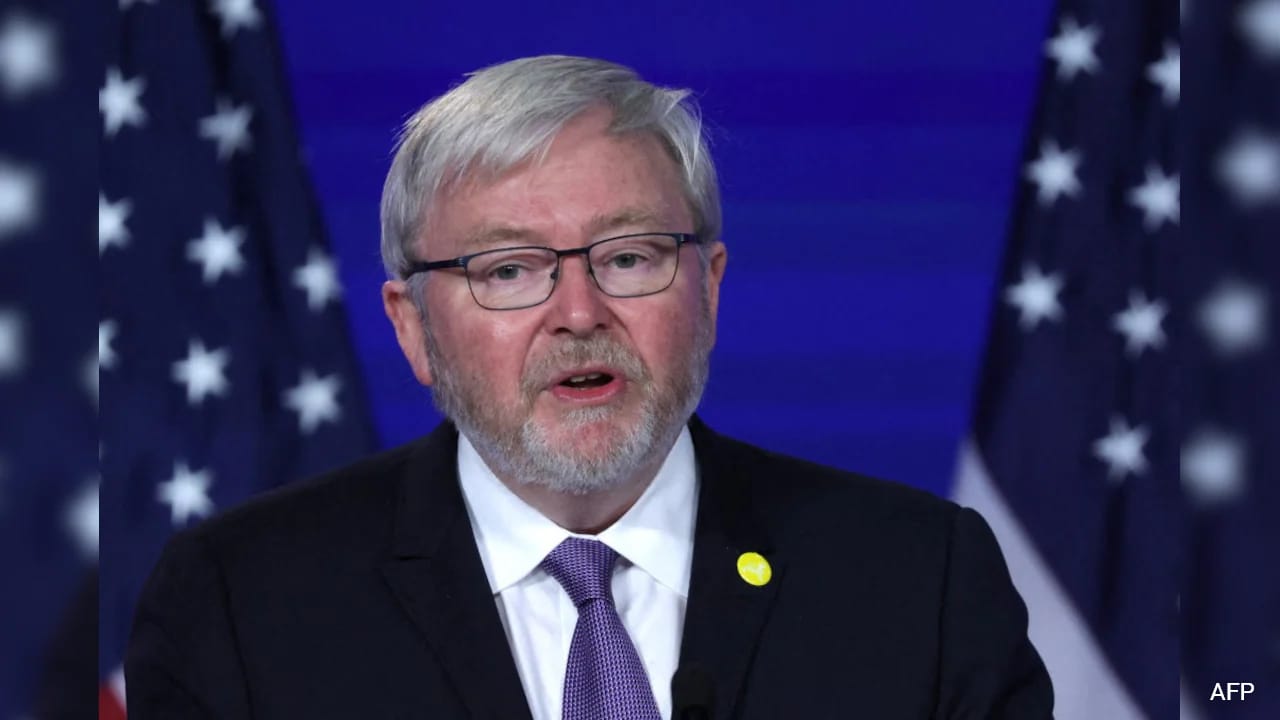
Whenever a former Australian Prime Minister steps up to a microphone and declares that Donald Trump holds an "extraordinarily positive" view of Narendra Modi and India, the mainstream media swoons. They treat personal chemistry like a binding security treaty. They print breathless headlines about natural allies, shared democratic values, and an unstoppable Indo-Pacific partnership. Building on this theme, you can also read: The Anatomy of Matrimonial Discord and the Mechanics of Alimony Discontent.
It is complete nonsense.
Confusing Trump’s personal flattery of Modi with a guaranteed geopolitical win for New Delhi is the single most dangerous blind spot in modern foreign policy analysis. I have watched trade delegations and diplomatic corps burn years of political capital chasing the illusion of personal warmth in Washington, only to get blindsided by a 3:00 AM tariff announcement. In international relations, affection is cheap. Balance sheets are permanent. Observers at Reuters have also weighed in on this situation.
If you are looking at the US-India relationship through the lens of stadium rallies in Houston and Ahmedabad, you are asking the wrong question entirely. The real question is not whether Trump likes Modi. The real question is what Trump expects in return for that affection—and whether India can afford the price tag.
The Myth Of The Strongman Bromance
To understand why the "extraordinarily positive view" narrative is a trap, you have to strip away the ceremonial theater.
The lazy consensus in Canberra, Washington, and New Delhi relies on a simple, comforting syllogism: Trump respects strong leaders. Modi is a strong leader. Both men want to contain China. Therefore, India gets a free pass.
That logic falls apart the moment you examine how transactional realism actually operates in the Oval Office.
Trump does not view alliances as mutual defense pacts or ideological brotherhoods. He views them as protection rackets and commercial joint ventures. When he praises a foreign leader—whether it is Modi, Xi Jinping, or Kim Jong Un—he is rarely issuing a blank check. He is softening the target before a negotiation. Flattery is the opening bid. It costs zero dollars, requires zero congressional approval, and disarms the opposition before the real demands hit the table.
During his first term, Trump called Modi a "true friend" and a "great gentleman." Yet, in the exact same timeframe, his administration stripped India of its Generalized System of Preferences (GSP) trade status, slapped punitive tariffs on Indian steel and aluminum, and relentlessly pressured New Delhi to slash import duties on everything from Harley-Davidson motorcycles to American dairy products.
Affection did not save Indian exporters from Section 232 tariffs. Warmth did not stop Washington from labeling India the "tariff king."
Defining Transactional Bilateralism
Most commentators confuse strategic alignment with transactional bilateralism.
- Strategic alignment means two nations absorb short-term economic pain for each other because they share a long-term security horizon. Think of the post-WWII US-Europe relationship.
- Transactional bilateralism means every single interaction is settled on a standalone ledger. There is no credit line. Yesterday’s diplomatic favor does not buy tomorrow’s tariff exemption.
Washington under a Trump doctrine operates strictly on transactional bilateralism. New Delhi, meanwhile, operates on strategic autonomy—a polite diplomatic term for refusing to pick a side while extracting benefits from everyone.
These two operating systems are fundamentally incompatible over the long haul. When you mix transactional nationalism with strategic autonomy, you do not get a golden era of cooperation. You get a high-stakes game of chicken.
Why Canberra Is Cheering From The Sidelines
Notice who delivered this glowing assessment of the Trump-Modi dynamic: a former Australian Prime Minister.
Consider the source and the incentives. Australia is deeply embedded in the US security architecture through AUKUS and the Quad. Canberra’s biggest geopolitical nightmare is an isolationist United States retreating from the Indo-Pacific and leaving Australia alone to face an assertive Beijing.
Therefore, Australian leaders have a vested interest in projecting confidence. They need India to stay locked into the anti-China containment ring, and they need Washington to stay engaged. By hyping up Trump’s personal affinity for Modi, Canberra is trying to speak a stable Quad alliance into existence. It is diplomatic wishful thinking disguised as insider analysis.
Australia can afford to cheerlead because Australia runs a trade deficit with the United States. The US sells more to Australia than it buys. Consequently, Canberra rarely finds itself in the crosshairs of Washington’s trade hawks.
India does not have that luxury. India runs a massive, growing goods trade surplus with the United States—surpassing $35 billion annually. In the eyes of a zero-sum trade warrior, a $35 billion surplus is not a sign of a healthy partnership. It is a sign that America is getting ripped off.
The Three Collision Courses Nobody Wants To Discuss
If you look past the photo ops, three structural collisions are barreling toward the US-India relationship. Personal chemistry will not stop a single one of them.
1. The Tariff Hammer And Make In India
Modi’s signature economic policy is "Make in India"—a protectionist push to build domestic manufacturing by raising import barriers and subsidizing local production.
Trump’s signature economic policy is "America First"—a protectionist push to bring manufacturing back to the US by punishing countries that sell to America while blocking American goods.
You do not need an economics degree from the University of Chicago to see the math problem here. Both leaders are playing the exact same mercantilist game. Both want to hoard industrial capacity. Both want to run trade surpluses.
When Apple shifts iPhone assembly from Shenzhen to Tamil Nadu, Wall Street celebrates it as "friend-shoring." A strict economic nationalist in Washington views it differently: jobs still left America, and now the trade deficit is just moving from Beijing to New Delhi. Expect brutal, uncompromising demands from Washington for India to gut its agricultural and industrial tariffs, accompanied by the threat of universal baseline tariffs if Modi refuses.
2. The Russian Oil And Defense Hangover
For the past few years, Washington has largely looked the other way while India gorged on discounted Russian crude oil, refining it and selling the products back to Western markets. The Biden administration tolerated this because they wanted India’s diplomatic backing in Asia.
A transactional White House will not offer that grace for free.
India still relies on Russia for roughly 35% to 40% of its military hardware, down from over 60% a decade ago, yet still massive. Furthermore, New Delhi remains a founding member of BRICS—a bloc openly discussing alternatives to the US dollar for cross-border trade.
Trump has explicitly threatened 100% tariffs on countries that attempt to de-dollarize. If India continues to settle trade in rupees, dirhams, or rubles to bypass Western financial networks, Modi’s personal popularity in Mar-a-Lago will evaporate overnight. Washington will demand that India buy expensive American defense hardware—F-21s, drones, artillery—not because it fits India's tactical needs, but to balance the trade ledger.
3. The Immigration And H-1B Squeeze
Indian tech giants—TCS, Infosys, Wipro—built their empires on the back of the US H-1B visa program. Tens of thousands of Indian engineers flow into Silicon Valley and Wall Street every year, generating billions in remittances and corporate revenue.
Economic populism in the United States is fiercely hostile to foreign white-collar labor. During his first term, Trump severely restricted H-1B approvals, driving denial rates up to 24% in 2018 before courts intervened.
To an American populist base, an Indian software engineer taking a $140,000 job in Texas is just as politically toxic as a factory closing in Ohio. Modi cannot afford a crackdown on Indian tech mobility without facing a domestic political backlash from India’s aspirational middle class. Trump cannot afford to look soft on immigration without alienating his core voters. Someone has to blink.
Dismantling The "China Factor" Fallacy
The standard rebuttal from foreign policy experts goes like this: "None of the trade or visa friction matters because both countries fear China. The enemy of my enemy is my friend."
This is lazy Cold War thinking applied to a 21st-century multipolar world.
Yes, India and China have a bloody, unresolved border dispute in the Himalayas. Yes, the US views China as its primary pacing threat. However, Washington and New Delhi have radically different definitions of what "containing China" actually looks like.
Washington wants a coalition of allies willing to decouple economically and confront Beijing militarily if a crisis erupts over Taiwan or the South China Sea.
India has zero intention of fighting America’s war over Taiwan.
New Delhi shares a 2,100-mile land border with China. If a shooting war starts in the Taiwan Strait, US aircraft carriers can pull back to Guam or Hawaii. India cannot move the Himalayas. If India joins an American-led military blockade against China, Beijing will immediately punish New Delhi along the Line of Actual Control in Ladakh and Arunachal Pradesh—and Washington will not send a single infantry division to freeze at 15,000 feet to help them.
Smart strategists like former Indian Foreign Secretary Shyam Saran and current External Affairs Minister S. Jaishankar understand this asymmetry intimately. India will happily take American intelligence, American jet engine technology, and American capital. It will never become a treaty ally that takes orders from the Pentagon.
When Washington realizes that India will not pull the trigger in a Taiwan contingency, the enthusiasm for "extraordinarily positive" relations will cool rapidly.
The Brutal Truth About People Also Ask
Let’s cut through the diplomatic spin and answer the questions people are actually typing into search bars—without the sanitized think-tank jargon.
Will Trump give India a free trade deal?
No. Anyone telling you a comprehensive US-India Free Trade Agreement (FTA) is around the corner is selling you a fantasy. Washington hasn't signed a major traditional FTA in over a decade, and Trump fundamentally opposes multilateral and bilateral trade deals that reduce US tariff leverage. At best, India might scrape together a narrow, sector-specific mini-deal—and even that will require New Delhi to make painful concessions on American medical devices, dairy, and tech data localization laws.
Does Trump actually respect Modi?
Yes, in the same way a heavyweight boxer respects another heavyweight who commands a massive crowd. Trump admires leaders who dominate their domestic political landscapes and project nationalist strength. He sees a reflection of his own political style in Modi’s mass rallies and centralized authority.
However, respect is not charity. In Trump’s worldview, a strong leader is someone you have to hit harder in negotiations because they won't fold easily. Modi’s strength actually invites tougher demands from Washington, not softer ones.
Is the Quad alliance safe under Trump?
The Quad (United States, India, Japan, Australia) will survive in name, mostly because it serves as a useful diplomatic photo-op to irritate Beijing. Do not expect it to evolve into an "Asian NATO." Trump deeply dislikes multilateral groupings where the US bears the primary security burden while partners free-ride. Unless India, Japan, and Australia dramatically ramp up joint naval patrols and defense spending, the Quad will remain a talking shop.
The Downside Of The Contrarian View
Before we write off the US-India partnership entirely, let’s be intellectually honest about the flaws in a purely cynical reading.
Structural forces are massive, and right now, the structural tide is pushing Washington and New Delhi together regardless of who sits in the White House. Western supply chains must diversify away from China, and India is the only country on earth with the demographic scale to absorb even a fraction of China’s manufacturing output.
Furthermore, the Indian-American diaspora has evolved into one of the wealthiest, most politically active donor classes in US politics. Both parties are aggressively courting their votes and their checkbooks. Even a fiercely transactional administration has to calculate the domestic political cost of alienating Indian-American voters in swing states like Pennsylvania, Michigan, and Georgia.
So, the relationship will not collapse. Trade will still grow. Defense sales will still climb.
The danger isn't a total rupture. The danger is mispricing the risk.
How Strategists And Investors Should Play This
If you are a corporate executive, an institutional investor, or a policy analyst relying on warm quotes from former Australian politicians to guide your capital allocation, stop immediately. Sentiment is not a strategy.
Here is how you actually navigate a transactional US-India era:
- Hedge against tariff volatility. Do not build a supply chain in India that relies solely on duty-free access to the US consumer market. If your business model collapses under a 10% to 20% universal US import tariff, your business model is broken. Build for India’s domestic consumption first, and treat US exports as upside, not the baseline.
- Follow defense procurement, not diplomatic speeches. Ignore every speech about "shared democratic values." Watch the Pentagon’s Foreign Military Sales (FMS) notifications. Whenever India signs a multi-billion-dollar check for GE jet engines, MQ-9B drones, or P-8I surveillance aircraft, that is India buying six months of diplomatic insurance in Washington. That is the real currency of the relationship.
- Expect sudden, noisy crises followed by quiet settlements. Transactional diplomacy thrives on manufactured leverage. Do not panic when headlines scream about trade wars, visa bans, or currency manipulation labels. These are opening gambits designed to force New Delhi to the table. Watch what India concedes quietly behind closed doors—usually energy purchases or defense contracts—to make the noise stop.
Stop Buying The Diplomatic Fairy Tale
International politics is not a buddy movie.
When Donald Trump praises Narendra Modi, he is not signing a blood oath to protect India’s economic rise. He is setting the stage for the hardest negotiation New Delhi has faced in thirty years.
The pundits celebrating a "golden era" of personal chemistry are staring at the magician’s left hand while the right hand reaches for the tariff lever. In Washington, flattery is always free—right up until the invoice arrives.