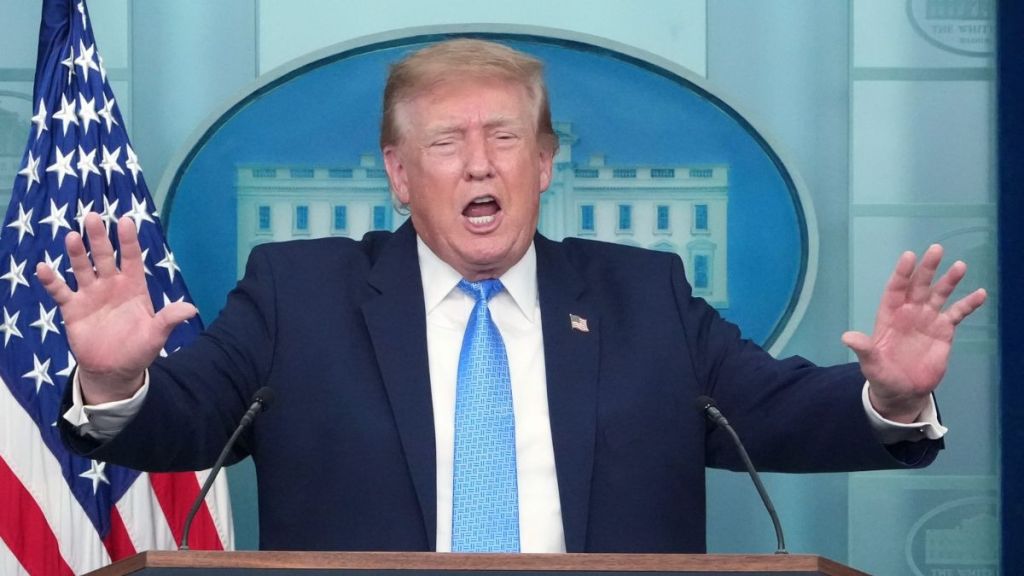
Late in October 2026, days before Americans headed to the polls for the midterm elections, President Donald Trump stood before reporters and called Brazil's presidential runoff "rigged" and "corrupt." He offered zero evidence. He insisted he hadn't endorsed anyone in the race between Luiz Inácio Lula da Silva and Flávio Bolsonaro. Yet he still declared the tabulation process "a terrible look for the world."
If you paid attention to that offhand press gaggle on October 26, nothing that happened in American politics over the following three weeks surprised you. Also making news recently: Inside the LAUSD Transparency Crisis Nobody Is Fixing.
Readers writing into the Los Angeles Times immediately clocked the parallel back in October, warning that Trump's knee-jerk dismissal of Brazil's electronic voting system served as a dress rehearsal for November 3. They were right. Now that the 2026 midterm dust has largely settled—leaving Democrats with commanding majorities in both the House of Representatives and the U.S. Senate—that October moment looks less like a passing comment and more like an exact blueprint.
The Brasília Playbook Tested Live
To understand why Trump's comments about Brazil mattered so much to U.S. voters, look at the timeline. Brazil held its two-round presidential election in October 2026, pitting incumbent leftist President Luiz Inácio Lula da Silva against Senator Flávio Bolsonaro, son of former President Jair Bolsonaro. More information regarding the matter are detailed by The Washington Post.
Lula won a fourth nonconsecutive term. Almost immediately, Flávio Bolsonaro called for the election to be annulled, claimed victory briefly before facing widespread mockery, and left the country for Miami.
Meanwhile, in Washington, the Trump administration initially froze a prepared State Department statement recognizing Lula's victory. Then Trump stepped up to the microphones.
"Well, it looked terrible to me," Trump told reporters. "It looked like another rigged election, frankly."
Notice the specific mechanics of his complaint. He didn't cite a single documented irregularity. Instead, he zeroed in on routine administrative friction—specifically, an extension in voting hours—and framed normal election logistics as sinister manipulation. "I like Lula. I get along with him very well ... but the extension given was very strange," he said.
Sound familiar? It should.
For years, political scientists have tracked how populist leaders pre-condition supporters to distrust electoral math whenever results break the wrong way. In an analysis published by the European Center for Populism Studies, researchers noted that both the Bolsonaro political dynasty and Trump rely on an identical rhetorical loop: frame any administrative quirk as proof of fraud, cast doubt on the voting machinery itself, and treat defeat as an impossibility rather than a democratic outcome.
Why Letter Writers Spotted the Warning Signs Early
Opinion pages often act as an early warning radar for political shifts that cable news panels overcomplicate. When Los Angeles Times readers connected Trump's Brazil remarks to the upcoming U.S. midterms in late October, they weren't speculating wildly. They were connecting dots in plain sight.
At the exact moment Trump was calling Brazil's vote "corrupt," his own administration was already moving beyond rhetoric on home soil.
- Federal subpoenas in active races. On October 21 and October 24, the Department of Justice issued subpoenas to election officials in California. Days later, federal prosecutors launched probes tied to Alaska's U.S. Senate race.
- Immigration enforcement near voter rolls. Homeland Security Investigations agents arrested a suspect in Commerce, California, on October 19 over alleged illegal voter registration, part of a broader push alleging widespread noncitizen voting.
- Preemptive delegitimization. At campaign rallies in Texas just days before November 3, Trump repeatedly refused to commit to accepting unfavorable midterm results unless he personally deemed the vote "honest."
The Brazil episode exposed a crucial psychological tell. Trump had zero direct skin in Brazil's domestic politics—he even claimed neutrality and praised Lula personally. Still, watching a right-wing populist ally lose a certified election triggered an automatic reflex to attack the legitimacy of the ballot box.
If he couldn't accept a clean loss in Brasília without crying foul, nobody seriously expected him to accept a wave election in Washington.
How the Preview Played Out on November 3
When American voters went to the polls on November 3, the backlash against the administration wasn't subtle. According to Associated Press data and exit polling, roughly four in ten voters cast ballots explicitly to express opposition to Trump, driving the largest congressional swing for either party in half a century.
Democrats flipped dozens of House seats—reaching 257 seats with several contests still wrapping up—and netted nine Senate seats to seize control of both chambers. Even longtime Republican strongholds fell, including Senate races in Kansas, Ohio, Iowa, Maine, and Alaska.
And how did Trump react? Almost word for word like he had after Brazil.
Interestingly, on election night itself, Trump briefly struck a conciliatory tone. He told The New York Times he was "absolutely willing to accept those results" and even complimented the Democratic campaign on Fox News. That restraint lasted less than a week.
By November 9, facing the reality of Democratic subpoena power and legislative gridlock starting in January, Trump posted on Truth Social asking, "Does anybody really believe that this 'Election' was honest. How could the Polls be so wrong???"
He recycled the exact talking points he had road-tested on Brazil. He blamed voting machines ("far more important than the voter!") and attacked early voting tallies as suspicious "dumps." In Alaska, where Democrat Mary Peltola defeated Republican incumbent Dan Sullivan after a chaotic ballot dispute involving a second candidate named Daniel J. Sullivan Jr., Trump demanded on social media that every vote cast against Peltola be awarded to the Republican incumbent instead.
What Most Commentators Miss About Election Denial Rhetoric
Here is where mainstream political coverage usually gets tripped up. Pundits tend to treat election fraud claims either as an unstoppable coup plot or as harmless bluster you can safely ignore. Neither framing captures reality.
Look closely at what actually happened in both Brazil and the United States during the fall of 2026.
First, institutional guardrails held firm when tested in court. In Brazil, the Superior Electoral Court certified Lula's victory smoothly, neighboring conservative governments in Chile, Colombia, and Peru congratulated him promptly, and Flávio Bolsonaro's calls for annulment went nowhere. In the United States, federal judges swiftly dismissed Trump-backed lawsuits attempting to set aside ballots in Alaska, and GOP-run state legal teams themselves called his demands "meritless" and "not even possible."
Second, rhetoric still inflicts real civic damage even when lawsuits fail. You don't need to overturn a single certified vote to erode public trust. When the leader of the free world calls routine tabulation extensions in Brazil "corrupt" or labels standard absentee ballot counting in American states fraudulent, millions of citizens internalize the idea that democracy only works when their side wins.
Third, notice the transactional pragmatism hiding underneath the outrage. Just days after calling Brazil's election "rigged," Trump told reporters he wouldn't impose retaliatory tariffs or sanctions on Brasília, adding, "I'm not running Brazil. I'm running the US." Similarly, after the midterms, Trump openly admitted to reporters that his own administration's aggressive deportation policies "might have been too tough" for swing voters.
The fraud narrative isn't a policy roadmap. It's an emotional shield against political accountability.
How to Read Political Rhetoric Without Getting Played
Watching the Brazil-to-midterms pipeline unfold offers a masterclass in separating political theater from institutional reality. Next time high-stakes election disputes dominate your feed, use these four filters before reacting:
- Watch court filings, not social media posts. Politicians can allege anything at a microphone or on Truth Social without penalty. Lawyers face sanctions if they lie to a judge. Pay attention to what legal teams actually argue under oath—and how fast judges rule on the merits.
- Track local election officials from the losing party. The clearest indicator of an election's integrity isn't what the president says in Washington; it's what county clerks, secretaries of state, and state attorneys general on the ground certify. When GOP attorneys in Alaska publicly reject demands to toss ballots, the system is working.
- Separate administrative friction from fraud. Every major election involves late-reporting precincts, machine calibrations, or extended polling hours due to weather or long lines. Experienced observers expect those hiccups. Bad-faith actors weaponize them as proof of conspiracy.
- Follow international parallels. Authoritarian and populist playbooks rarely stay inside one border. When leaders test out attacks on foreign electoral systems—whether in Brasília, Budapest, or Buenos Aires—they are almost always previewing the exact arguments they plan to deploy at home.
The readers who wrote to the Los Angeles Times in October didn't possess secret intelligence. They simply listened to what Trump said about Brazil, took him at his word, and recognized a pattern playing out in real time. Paying attention to those early signals remains the sharpest defense any voter has against political gaslighting.