Legacy media outlets are hyperventilating over a rubber-chicken dinner.
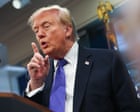
When news broke that Donald Trump hosted a third crypto gala centered around a meme coin, the predictable chorus of ethics watchdogs and Beltway pundits immediately reached for their fainting couches. The headline narrative is identical across every major publication: Conflict of interest. Cash-for-access. Unprecedented ethical breach.
They are completely missing the point.
Obsessing over the optics of a meme coin dinner while ignoring the structural mechanics of what just happened is like complaining about the catering on the Titanic. The "lazy consensus" treats this event as a tacky, low-brow version of traditional political corruption. In reality, it is a brutal, transparent stress-test that exposes the rot at the core of Washington's legalized bribery industrial complex.
If you think a $100,000-a-plate fundraiser hosted by a traditional Super PAC is somehow more virtuous than buying a volatile digital token to get a seat at the table, you don't understand politics, and you certainly don't understand markets.
The Illusion of "Clean" Political Money
To understand why the pearl-clutching over a meme coin gala is intellectually dishonest, you have to look at how access in Washington actually works.
For decades, the price of admission to the inner sanctum of American power has been laundered through a labyrinth of 501(c)(4) dark money groups, opaque Super PACs, bundled corporate donations, and six-figure speaking fees paid to spouses. Under the Supreme Court's Citizens United framework, corporations and billionaires pour hundreds of millions of dollars into shadow entities that never have to disclose their donors until months after an election—if ever.
I’ve sat in rooms where K Street lobbyists brag about routing seven-figure checks through three different non-profits just to buy fifteen minutes with a subcommittee chair. Nobody writes an outrage piece about that. It’s considered "institutional." It’s polite. It’s hidden behind layers of plausible deniability and white-shoe law firms.
Now compare that to a meme coin.
A meme coin is a cryptographic token created with zero intrinsic utility, no underlying cash flows, and value derived entirely from cultural attention, internet humor, and speculative momentum. When a political figure ties access to holding or buying a specific token on a public blockchain, every single transaction is recorded on an immutable, publicly auditable ledger in real time.
- Traditional Lobbying: Secretive, delayed disclosure, mediated by expensive middlemen, and completely inaccessible to the average citizen.
- Tokenized Access: Instantaneous, publicly visible on-chain, peer-to-peer, and open to anyone with an internet connection and a digital wallet.
The mainstream press isn't furious because this is corrupt. They are furious because it strips away the polite fiction of representative democracy and replaces it with raw, unvarnished market mechanics. It turns political influence into a live, 24/7 order book.
What Everyone Gets Wrong About Meme Coin Economics
Most financial commentators treat meme coins as nothing more than digital slot machines for degenerate gamblers. That is a surface-level reading that ignores how modern attention markets function.
In traditional finance, value flows from fundamentals to price. A company builds a product, generates earnings, and the stock price reflects discounted future cash flows. Meme coins invert this equation entirely: price and attention come first, and utility—if it ever arrives—is bolted on afterward.
Chris Dixon, general partner at Andreessen Horowitz, has written extensively about how tokens coordinate communities and align incentives faster than traditional corporate structures ever could. While Dixon focuses primarily on decentralized infrastructure, the exact same coordination mechanism applies to cultural and political tokens. The token acts as a Schelling point—a focal point where people who share a specific worldview or speculative thesis converge without needing prior communication.
When Trump hosts a third gala for top token holders, he isn't just throwing a party. He is creating a recurring sink for token supply.
The Mechanics of the Access Sink
Think about the game theory at play for a crypto whale or a foreign protocol founder looking to bend the ear of a powerful political figure:
- Acquisition: To qualify for the invite list, buyers must acquire a threshold amount of the token on the open market. This creates immediate buy-side pressure.
- Illiquidity: Holders cannot dump their tokens without forfeiting their status or signaling disloyalty before the event. Supply gets locked up.
- Signaling: Attending the gala isn't about the steak; it's about the photo op. That photo becomes social proof that the attendee is an insider, which they then use to raise capital or boost their own project's valuation.
This isn't a bug in the system. It is a self-reinforcing liquidity loop powered by vanity and political ambition. Traditional campaign finance laws—written in the 1970s and patched together with duct tape in the 2000s—were never designed to regulate a bearer asset that trades globally on decentralized exchanges with zero Know-Your-Customer (KYC) friction.
Dismantling the "Conflict of Interest" Outcry
If you search for this story online, the "People Also Ask" sections are flooded with variations of the same anxious questions: Is it illegal for a politician to profit from a meme coin? Does this violate the Emoluments Clause? How can foreign nationals be stopped from buying in?
Let’s address the premises of these questions head-on, because most of them rely on outdated legal assumptions.
"Isn't this a blatant violation of campaign finance laws?"
Not necessarily—and that is precisely why regulators are paralyzed. Under Federal Election Commission (FEC) rules, a contribution is anything of value given for the purpose of influencing a federal election. If a token is structured and marketed as a "collectible" or a commercial product rather than a political donation, it falls into a massive regulatory gray zone. Just as selling a $60 Bible, a pair of gold sneakers, or an NFT trading card is treated as commercial licensing rather than a campaign contribution, a meme coin can be legally walled off from campaign accounts—provided the entity issuing it maintains strict corporate separation.
"Doesn't this allow foreign actors to buy influence?"
Yes. Unquestionably. And anyone telling you otherwise is lying. Because permissionless blockchains do not verify citizenship, a sovereign wealth fund in the Middle East or a tech billionaire in Southeast Asia can buy millions of dollars worth of tokens through a decentralized exchange without ever handing over a passport.
However, pretending this is a new vulnerability created by crypto is pure delusion. Foreign governments have spent decades buying influence in Washington by hiring former U.S. senators as "consultants," funding think tanks that publish favorable policy papers, and booking entire floors of luxury hotels. Crypto didn't invent foreign influence; it just eliminated the middleman's 30% cut.
"Why is this the third gala?"
Because the first two worked. In business and politics, you double down on what converts. Traditional fundraising requires months of call time, endless compliance reviews, and exhausting travel schedules. A token-gated gala turns capital formation into an automated, global, 24/7 operation. Why beg twenty billionaires for $500,000 each over six months when a smart contract can settle $10 million in liquidity over a weekend?
The Real Danger Nobody Is Talking About
Critics are so busy screaming about the ethics of the dinner that they are completely blind to the actual systemic risk: regulatory capture via token alignment.
Imagine a scenario where key policymakers, their families, and their closest advisors hold massive bags of a specific digital asset—or rely on the broader crypto market's euphoria to sustain their financial and political brand. What happens when a major stablecoin issuer faces a liquidity crisis? What happens when a decentralized exchange is hacked for $400 million, or when the SEC has to decide whether a specific token class constitutes an unregistered security?
When the people writing the rules are financially tethered to the speculative upside of the industry they regulate, objectivity dies. You don't get smart, balanced legislation that protects consumers while fostering innovation. You get reckless deregulation designed to pump asset prices in the short term, setting the stage for a catastrophic blowup down the road.
I’ve seen this exact movie play out in the corporate world dozens of times. When an executive team’s compensation is tied entirely to quarterly stock price spikes rather than long-term operational health, they gut R&D, load up on debt, and manufacture artificial momentum until the company collapses under its own weight.
Applying that same short-term, token-pumping mindset to federal economic policy is playing with nitroglycerin.
The Downsides of the Tokenized Politics Model
Even if you love free markets and despise legacy Washington gatekeepers, you cannot ignore the fatal flaws of merging political power with speculative tokens:
- Retail Extraction: Meme coins are zero-sum games. When insiders and whales buy early and dump into the hype generated by a high-profile gala, everyday supporters—the exact people the politician claims to represent—are the ones left holding worthless bags when the music stops.
- Volatility as a Political Liability: Tying a political movement's prestige to a volatile asset means a 70% market drawdown becomes a front-page political scandal. You cede narrative control to offshore derivatives traders.
- Erosion of Institutional Trust: Democracy relies on the perception that the law applies equally to everyone, regardless of net worth. When access to leadership is explicitly auctioned off on a public ledger, cynicism becomes the default state of the electorate.
How to Read the Signal Through the Noise
If you are an investor, a founder, or simply someone trying to understand where power is shifting, stop reading the moralizing op-eds. They are written for clicks, not clarity. Instead, look at the structural incentives.
First, watch the on-chain data, not the press releases. Every major blockchain has block explorers like Etherscan or Solscan that show exact wallet concentrations. If 80% of a political token's supply is held by ten wallets, it isn't a grassroots movement; it's a tightly controlled syndicate. Real decentralization looks like wide distribution and organic trading volume, not sudden spikes timed exclusively around VIP dinner announcements.
Second, separate the signal of crypto policy from the noise of meme coins. A politician hosting a dinner for meme coin holders does not automatically mean they understand monetary policy, decentralized finance, or the technical nuances of self-custody. Often, it means they understand branding and liquidity. Do not confuse a marketing stunt with a comprehensive legislative agenda.
Third, expect every political faction to copy this playbook. History proves that whenever a controversial fundraising tactic works, the opposition denounces it fiercely for one election cycle and quietly adopts it by the next. Barack Obama’s 2008 campaign revolutionized small-dollar online bundling while critics mocked it; within four years, every campaign on earth was using the exact same software. Token-gated access, digital collectibles, and on-chain campaign treasuries will be standard operating procedure across the political spectrum within two election cycles.
The End of Polite Fiction
Washington has always been a marketplace where access is bought and sold. For two hundred years, the unwritten rule was simple: keep it behind closed doors, dress it up in patriotic language, and let the lawyers handle the paperwork.
That era is over.
Trump’s third meme coin gala isn't an aberration. It is the inevitable collision of hyper-financialized internet culture with a political system that was already for sale to the highest bidder. The watchdogs can howl at the moon, and the pundits can write a thousand more columns lamenting the loss of norms.
None of it matters. You cannot put the genie back in the bottle once the market realizes that political access can be fractionalized, tokenized, and traded 24 hours a day. The only difference between the old system and the new one is that now, for the first time in American history, you can actually see the receipt.