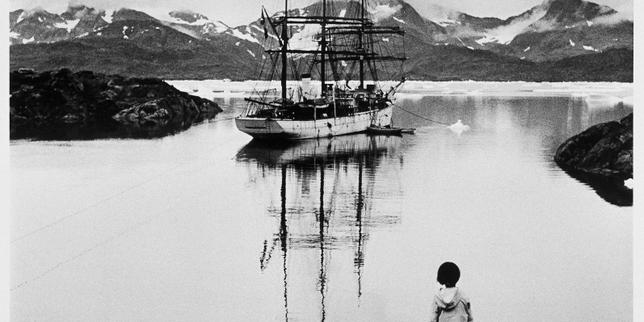
You’ve probably seen the classic paintings of 18th-century French explorers. They’re usually standing on a beach, draped in velvet, looking heroically at a horizon they’re about to "discover." It looks like a noble quest for knowledge. But if you think these voyages were just about collecting plants and mapping stars, you’re missing the real story. French expeditions were high-stakes gambles where science served as a convenient mask for cold, hard imperial ambition.
France didn't pour millions of livres into ships just because they liked botany. They did it because they were losing the global race against Britain. Every "discovery" of a new island or a rare spice was a calculated move on a massive, bloody chessboard. When Bougainville or La Pérouse set sail, they carried secret instructions that would've made a modern corporate spy blush.
Why Science Was the Perfect Cover
During the Enlightenment, science was the ultimate status symbol. If a king sponsored a voyage to observe the Transit of Venus, he looked like a progressive, enlightened leader. This was the "soft power" of the 1700s. While French astronomers were busy setting up telescopes in the Pacific, the naval officers on the same deck were measuring the depth of harbors for future warships.
It’s a pattern that repeats. Take the 1766 voyage of Louis-Antoine de Bougainville. Publicly, it was the first French circumnavigation of the globe. He brought back tales of Tahiti that sounded like paradise. Privately, the mission was a desperate attempt to salvage French pride after the humiliating defeat of the Seven Years' War. France had lost Canada and most of its holdings in India. They needed a win. They needed new routes to the East that the British hadn't choked off yet.
The botanical samples were real, but they weren't the priority. The priority was finding a way to sneak back into the global trade game. If you could find a new spice—like the elusive cloves and nutmeg the Dutch guarded with a literal death penalty—you didn't just help science. You broke a monopoly. You shifted the wealth of nations.
The La Pérouse Mystery and the Economics of Longitude
Jean-François de Galaup, comte de La Pérouse, is the name most people know. Louis XVI was obsessed with him. Legend says the King’s last words before the guillotine were, "Any news of La Pérouse?"
Why the obsession? Because La Pérouse wasn't just a sailor; he was a strategic asset. His 1785 expedition was basically a massive audit of the Pacific Ocean. He was told to check out the Russian fur trade in Alaska, the Spanish missions in California, and the British plans for Australia.
The Real Cost of Knowledge
Mapping the Pacific required solving the longitude problem. Before accurate marine chronometers, sailors were basically guessing their east-west position. This led to shipwrecks and lost cargo. The French investment in precision clocks wasn't just about the love of physics. It was about reducing the "insurance premium" of empire.
- Financial Risk: A single lost merchant ship could bankrupt a French trading house.
- Naval Dominance: The first nation to master longitude could strike faster and hide better.
- Resource Extraction: You can't mine gold or harvest timber if you can't find the island again.
La Pérouse’s disappearance in 1788 near Vanikoro wasn't just a tragedy for science. It was a massive intelligence failure for the French state. They lost the maps, the data, and the eyes on the ground they desperately needed to counter British expansion in the Pacific.
The Spice Wars and Botanical Espionage
We don't usually think of gardeners as spies, but in the 18th century, they were some of the most dangerous people on the planet. The French expeditions were obsessed with "acclimatization." This is just a fancy way of saying they wanted to steal plants from other empires and grow them in French colonies like Mauritius (then Île de France).
Pierre Poivre—his name literally means "Peter Pepper"—is the ultimate example. He was a former missionary turned plant hunter. He spent years trying to smuggle nutmeg and clove seedlings out of the Dutch East Indies. Why? Because the Dutch kept prices high by burning surplus crops to create artificial scarcity.
When French expeditions successfully brought these plants back to the Jardin des Palamistes on Mauritius, they weren't just expanding a garden. They were launching an economic war. They successfully broke the Dutch monopoly, and suddenly, the price of spices in Paris plummeted. This wasn't a "discovery." It was an industrial heist disguised as natural history.
Napoleon and the Militarization of Archaeology
If you want to see the "science-as-conquest" model at its peak, look at Napoleon’s Egyptian Campaign of 1798. He didn't just bring 35,000 soldiers; he brought 167 "savants"—scientists, engineers, and artists.
This resulted in the Description de l'Égypte, a massive multi-volume work that essentially cataloged an entire country. It’s a masterpiece of scholarship. It’s also a manual for how to rule a foreign population. By measuring the pyramids and deciphering (eventually) the Rosetta Stone, the French claimed a moral right to the land. The logic was simple: "We understand your history better than you do, therefore we should run your future."
The British saw right through it. They didn't care about the mummies; they cared about the fact that Egypt was the land bridge to India. The ensuing battles weren't about archaeology. They were about who got to control the shortest route to the world's most profitable colony. The Rosetta Stone ended up in the British Museum because it was a war prize, not a gift to science.
The Legacy of Disruption
French explorers often touted "friendship" with the people they met. Bougainville’s accounts of Tahiti created the myth of the "noble savage"—the idea that people in the Pacific lived in a state of pure, uncorrupted nature. This wasn't just bad anthropology; it was a marketing tool.
By painting these islands as a vacant paradise, it made it easier for the French state to justify taking them over later. If the inhabitants weren't using the land "productively" (by European standards), then France was doing them a favor by bringing "civilization."
The environmental impact was just as heavy. These ships brought rats, pigs, and diseases. They also brought a hunger for resources. Sandalwood forests were stripped. Whale populations were gutted. The "scientific" records of these expeditions often include meticulous drawings of species that the expeditions themselves helped drive toward extinction.
How to Read History Without the Rose-Colored Glasses
When you're looking at historical records of "exploration," you have to read between the lines. The journals might talk about the beauty of a sunset or the classification of a new orchid, but the ledger books in Paris tell a different story.
Don't fall for the "pure science" narrative. Science was a tool, like a sextant or a cannon. It was used to measure what was worth stealing and how to keep it. To truly understand French history, you have to look at the intersection of the laboratory and the battlefield.
If you want to dive deeper into this, don't just read the official expedition logs. Look for the merchant records and the secret naval instructions from the same years. Look at the archives of the French East India Company (Compagnie des Indes). You’ll find that for every star mapped, there was a harbor scouted for a fortress.
Stop thinking of these men as just "discoverers." Think of them as the front-end developers of a colonial system that changed the world’s economy forever. The next time you see a statue of an explorer, ask yourself what they were really looking for when they stared at the horizon. Most of the time, it wasn't stars. It was gold.
Start by researching the "Instructions for M. de la Pérouse" in the French National Archives. Read the specific demands for economic intelligence. Compare the published "enlightened" versions of these journals with the classified military briefings. That’s where the real history is buried.