The steel hull of a massive crude carrier doesn’t feel like a fragile thing when you are standing on the bridge. It feels like a city. It feels like an inevitability. But as you approach the jagged, sun-bleached cliffs of the Musandam Peninsula, the world starts to shrink. The horizon, once an infinite line of blue, pulls inward until you realize you are threading a needle with a billion dollars of flammable cargo.
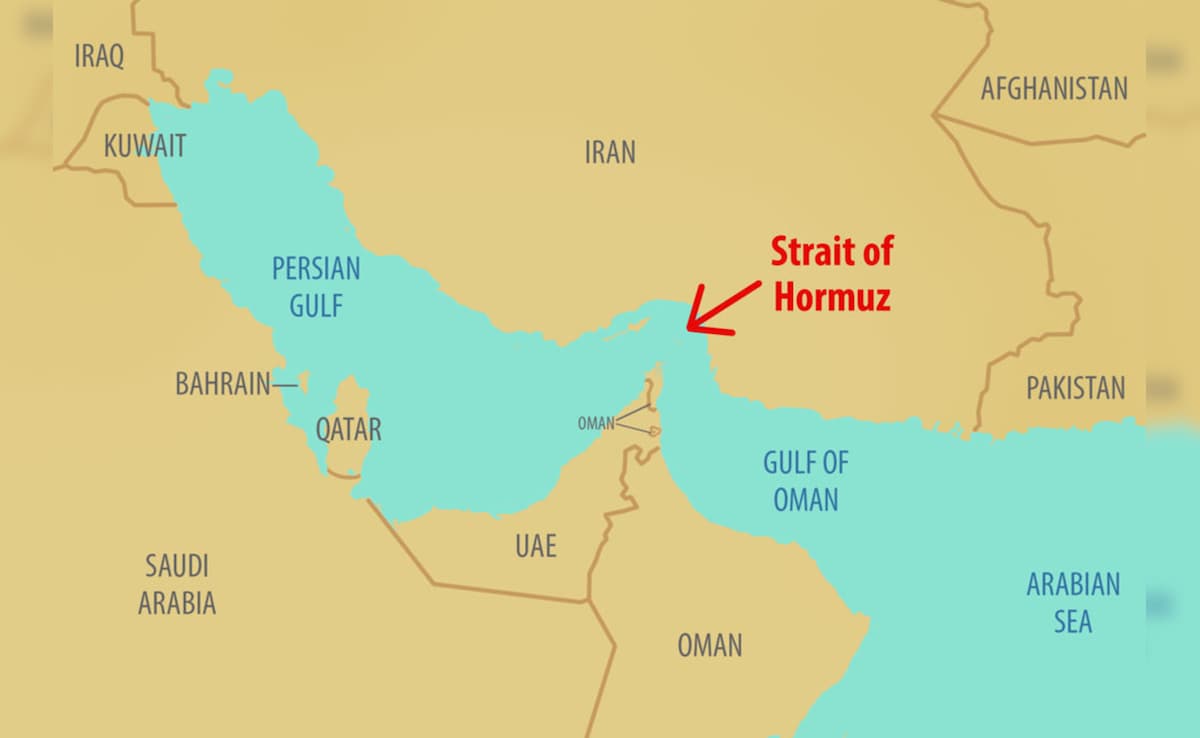
Twenty-one miles. That is the width of the shipping lane at its narrowest point in the Strait of Hormuz. To a navigator, it is a hallway. To the global economy, it is the carotid artery. If it ever stops pulsing, the world doesn’t just get more expensive. It stops.
We treat the flow of energy like a natural law, as reliable as the tides or the sunrise. We fill our tanks, heat our homes, and power the data centers that hold our digital lives without ever thinking about the Iranian coast or the Omani islands. But history is a jagged reminder that this water has a memory. It remembers the fire. It remembers the mines. It remembers the moments when the hallway was slammed shut.
The Ghost of the Tanker War
To understand why a single drone strike or a seized vessel today sends tremors through the New York Stock Exchange, you have to look back to 1984. Imagine being a merchant sailor during the "Tanker War." You aren't a combatant. You are a civilian working a grueling shift on a slow-moving vessel. Suddenly, the sky screams.
During the Iran-Iraq War, the Strait became a shooting gallery. Iraq began attacking Iranian tankers to choke their economy; Iran retaliated by hitting any ship serving Iraq’s allies. It wasn't surgical. It was chaotic. Over 500 merchant ships were damaged or sunk. Sailors watched the horizon not for land, but for the flash of an Exocet missile.
The United States eventually stepped in with Operation Earnest Will, the largest naval convoy operation since World War II. We re-flagged Kuwaiti tankers as American ships, sending destroyers to escort them through the gauntlet. This wasn't just about military posturing. It was a desperate attempt to keep the global heart beating. When the guided-missile frigate USS Samuel B. Roberts struck an Iranian mine in 1988, the explosion didn't just tear a hole in the ship’s hull. It nearly ignited a full-scale regional war.
The lesson was brutal and clear: the Strait is a place where a single tactical error can trigger a global catastrophe.
The Physics of a Chokehold
Why does this specific stretch of water hold such a terrifying grip on our lives? The answer is a matter of simple, unforgiving geometry.
Approximately one-fifth of the world’s total oil consumption passes through this gateway every single day. We are talking about 20 million barrels. If you lined up those barrels end-to-end, they would stretch from London to Tokyo and back again. Most of the liquefied natural gas (LNG) from Qatar—the fuel that keeps Europe’s lights on during the winter—must also run this gauntlet.
There are pipelines that bypass the Strait, carving through the deserts of Saudi Arabia and the mountains of the United Arab Emirates. They are impressive feats of engineering. They are also woefully insufficient. These bypasses can handle maybe 6 or 7 million barrels a day. That leaves a massive, gaping deficit. You cannot move a mountain of energy through a straw.
Consider a hypothetical refinery manager in South Korea or a trucking company owner in Ohio. They may never have heard of the Musandam Peninsula. But if a conflict in the Strait delays tankers by even seventy-two hours, the "just-in-time" supply chain begins to fracture. Prices don't rise because of a physical shortage—they rise because of the fear of a shortage. Speculation is a wildfire, and the Strait is the world's most effective tinderbox.
The Silent War Beneath the Surface
The threat today isn't just the overt exchange of missile fire. It is more subtle. It is "gray zone" warfare.
In 2019, the world watched in confusion as tankers were limpet-mined while at anchor. No one claimed responsibility. There were no declarations of war. Just holes in steel and smoke on the water. Later, the British-flagged Stena Impero was swarmed by fast boats and commandos rappelling from helicopters. It was a heist on the high seas, broadcast in high definition.
This is the modern reality of the Strait. It is a lever. By threatening the flow of oil, regional powers can negotiate with the entire planet at once. They don't need to win a war; they just need to make the cost of passage too high for the world to bear.
Imagine the insurance premiums. When a region is declared a "war risk," the cost to insure a single voyage can skyrocket by hundreds of thousands of dollars overnight. Those costs aren't absorbed by the shipping companies. They are passed down. They show up in the price of a gallon of milk, the cost of a plastic toy, and the interest rates on your credit card. The Strait is a ghost in every transaction we make.
The Fragility of the Digital Grid
We often talk about the Strait of Hormuz as an "oil story." That is an outdated perspective. It is now a data story.
The energy passing through those twenty-one miles powers the massive server farms of the Middle East and Asia. As we transition to an AI-driven economy, our thirst for electricity is exploding. While we dream of a green future, the bridge between today and that future is built on natural gas. If the Strait is blocked, the transition stalls. The "cloud" is powered by the earth, and much of that earth comes through a narrow gap in the Persian Gulf.
We like to think we have outgrown our dependence on geography. We have satellite internet, global finance, and virtual borders. But the physical world is stubborn. You cannot download oil. You cannot virtualize a cargo ship. We are still tethered to the mud and the salt of the sea.
The Weight of the Horizon
Standing on the shore of the Arabian Sea, watching the silhouettes of these giants pass by in a rhythmic, endless procession, you feel a sense of profound vertigo. You realize that our entire civilization—the schools, the hospitals, the bustling cities, the quiet suburbs—is participating in a high-stakes game of "don't blink."
The sailors on those ships know it. They look at the dark water and wonder if something is lurking beneath. They look at the radar and watch the swarms of small, fast craft that weave in and out of the shipping lanes like hornets. They know that they are the tiny red blood cells in a giant that is struggling to breathe.
We have seen this movie before. We saw it in the 80s, we saw it in 2011 with the threats to close the Strait over sanctions, and we saw it in the naval skirmishes of the last few years. Every time, the world holds its breath. Every time, the price of life ticks upward.
The Strait of Hormuz isn't just a geographical feature. It is a mirror. It reflects our total, terrifying dependence on a single, fragile point of failure. It reminds us that for all our technological arrogance, we are still at the mercy of a hallway twenty-one miles wide, guarded by shadows and governed by the ghosts of past conflicts.
The next time you turn a key or flick a switch, remember the Musandam Peninsula. Remember the narrow water. Remember that the world is only as stable as the passage of the next ship.
Would you like me to analyze the specific economic impact of a forty-eight-hour closure on global crude prices?