Two decades is long enough for a child to grow up, graduate from university, and bury their own youth. It is long enough for concrete to crack, for empires to shift, and for a government to hope that an inconvenient ghost simply fades into the background noise of history.
Yet on a bitter morning in Ulaanbaatar, where the winter air tastes faintly of coal smoke and frozen earth, the grief feels as fresh as an open wound.
When Mongolia formally lodged its diplomatic protest against Malaysia over the handling of a twenty-year-old murder case, the wire services treated it like a dry footnote in international relations. A diplomatic note. A procedural objection. A routine friction between two Asian nations separated by thousands of miles of ocean and steppe.
They missed the point entirely.
Behind that diplomatic protest lies the shattered life of Altantuya Shaariibuu, a twenty-eight-year-old Mongolian mother and translator who vanished in Kuala Lumpur in October 2006. She was not merely murdered. Her body was obliterated in a patch of jungle outside the Malaysian capital using military-grade C4 explosives—the kind of ordnance guarded under lock and key by elite state security forces.
Think about that for a second.
To erase a human being so completely that only bone fragments remain requires access, intent, and an overwhelming confidence that nobody will ever make you pay.
The Ghost in the Jungle
Let us strip away the diplomatic jargon and look at what actually happened. If you have ever watched a family member fight a bureaucratic machine that simply refuses to blink, you know the specific, suffocating exhaustion that settles into your bones. You fill out the forms. You hire the lawyers. You fly across continents on borrowed money, sitting in sterile courtrooms where clerks avoid your eyes and judges postpone hearings for months at a time because a single signature is missing from a dossier.
That has been the reality for Shaariibuu Setev, Altantuya’s father.
For twenty years, a retired professor from Mongolia has carried his daughter’s photograph across oceans, knocking on the doors of Malaysian courts, embassies, and prime ministers' offices. He was not asking for vengeance. He was asking for an answer to a question so basic that even a child understands it: Who gave the order, and why?
In 2006, Altantuya traveled to Malaysia to collect a promised commission for her work as a translator on a massive defense contract—a multi-billion-dollar deal involving the purchase of French Scorpène-class submarines for the Royal Malaysian Navy. She was fluent in multiple languages, sharp, ambitious, and supporting two young sons back home, one of whom suffered from severe medical conditions requiring constant care.
She checked into a hotel in Kuala Lumpur. She got into a car outside the home of Abdul Razak Baginda, a prominent political analyst and close confidant of then-Deputy Prime Minister Najib Razak.
And then she ceased to exist.
Two elite police officers from the Special Action Unit—the very unit tasked with guarding Malaysia’s highest-ranking officials—were eventually convicted of her murder. Sirul Azhar Umar and Azilah Hadri. Both were sentenced to death.
Case closed, right? Not even close.
A Murder Without a Motive
Imagine walking into a courtroom and watching a judge convict two hitmen for executing a stranger they had never met, in a city where they had no personal quarrel with her, using military explosives they had no personal reason to steal—and then watching the court declare that the question of who hired them is legally irrelevant.
It defies common sense. It insults the basic mechanics of human logic.
You do not wake up on a Tuesday morning, requisition restricted military explosives from a state armory, abduct a foreign national from outside a political insider's house, shoot her twice in the head, and blow up her remains in a forest just to pass the time. Hitmen do not work for free, and they certainly do not work without instructions.
Yet for twenty years, the Malaysian judicial process operated like a series of bulkheads slamming shut on a sinking ship, sealing off every corridor that led upward toward political power.
Abdul Razak Baginda, the man who had an affair with Altantuya and admitted to asking the police for help because she was harassing him outside his home, was acquitted of abetment without even being called to enter his defense. The prosecution chose not to appeal his acquittal.
Think about what that silence tells you. When a state prosecutor declines to challenge the acquittal of the central link in a murder conspiracy, the message is unmistakable: the investigation stops here. Do not look higher. Do not ask whose political career might collapse if the thread keeps unraveling.
The Escape and the Commutation
If the absence of a motive was the first wound, what happened next felt like salt rubbed directly into the bone.
Before his final appeal could conclude in 2015, one of the convicted killers, Sirul Azhar Umar, simply boarded a flight and walked out of the country. He landed in Australia, where he was detained at an immigration facility in Sydney—safe from the gallows because Australian law prohibits deporting anyone to a country where they face execution. From behind the walls of detention, Sirul gave interviews claiming he had been a scapegoat, a pawn following orders from above.
Meanwhile, back in Malaysia, the political tectonic plates finally shifted. In 2018, Najib Razak—who had risen to become Prime Minister—was voted out of office amid the colossal 1MDB corruption scandal, eventually landing in prison for looting billions from a sovereign wealth fund. Suddenly, there was a flicker of hope in Ulaanbaatar. A new government in Kuala Lumpur promised reform, transparency, and a fresh look at old ghosts.
Azilah Hadri, sitting on death row, filed a statutory declaration from prison alleging that Najib Razak had directly ordered him to "shoot to kill" Altantuya, characterizing her as a dangerous foreign spy. Najib vehemently denied the claim, dismissing it as a desperate fabrication by a condemned man.
Yet the Malaysian courts rejected Azilah's bid for a retrial.
And then came the final straw that broke Mongolia’s diplomatic patience. Following Malaysia’s abolition of the mandatory death penalty, the Federal Court commuted Azilah Hadri’s death sentence to forty years in prison—backdated to his arrest in 2006. With standard remissions for good behavior, a man convicted of blowing a young mother to pieces with C4 explosives could walk out of prison a free man within a few years, without ever naming the architect of the crime.
At the same time, civil court rulings awarding millions in damages to Altantuya’s family—rulings that explicitly held the Malaysian government vicariously liable for the actions of its police officers—remained bogged down in endless appeals and bureaucratic delays.
For Ulaanbaatar, enough was finally enough.
Why a Landlocked Nation Stood Up
To understand why Mongolia’s formal protest matters, you have to understand Mongolia itself.
Sandwiched between two massive geopolitical giants—Russia to the north and China to the south—Mongolia survives on a delicate balancing act known as its "third neighbor" policy. It relies heavily on international law, multilateral treaties, and diplomatic norms because, without tanks or aircraft carriers to project power across oceans, rules are the only shield a smaller nation has.
When a Mongolian citizen is murdered abroad by state agents of another country, and that country spends two decades shielding the masterminds while letting the triggermen slip toward freedom, it is not just a family tragedy. It is an existential insult to sovereignty.
If a passport from Ulaanbaatar means your life can be extinguished with military ordnance in a foreign capital without accountability, then what is the worth of diplomatic recognition?
Consider a hypothetical scenario to grasp the asymmetry at play here. Suppose an Australian or American businesswoman had been abducted outside the home of a senior advisor to a European prime minister, executed by the prime minister’s own bodyguards with military explosives, and erased in a forest. Would that case have lingered unresolved for twenty years? Would the prosecution have declined to appeal the acquittal of the prime suspect? Would the diplomatic pressure have remained polite and muted?
We all know the answer.
Global justice frequently operates on a silent caste system. Citizens of wealthy, militarily dominant nations command instant outrage, sanctions, and relentless diplomatic leverage. Citizens of smaller, quieter nations get condolences, procedural delays, and the slow, grinding erosion of memory.
The Architecture of Impunity
I have spent years reporting on institutional failures, and if there is one pattern that repeats itself across every continent, it is this: cover-ups rarely require a room full of villains cackling over a blueprint.
They only require delay.
Time is the greatest ally of the powerful. In year one, people are outraged. In year five, the headlines shrink. In year ten, witnesses forget details, documents go missing, and key officials retire with full pensions. By year twenty, the public has moved on to newer scandals, and the surviving family members are treated like eccentric relics clinging to an ancient grudge.
Malaysia’s handling of the Altantuya case is a masterclass in institutional attrition. Every delay—every postponed appeal, every unchallenged acquittal, every jurisdictional technicality—served a single function: to run out the clock until the political generation implicated in the submarine scandal had aged out of consequence.
Even the civil victory achieved by Altantuya’s family in 2022, when the Shah Alam High Court finally ordered the Malaysian government, Abdul Razak Baginda, and the two police officers to pay five million ringgit in damages, felt bittersweet. Money cannot reconstruct a mother’s voice for two boys who grew up without her. And when the state immediately appealed even that modest acknowledgment of responsibility, it confirmed that contrition was never on the agenda.
What Really Happened to the Submarines?
You cannot separate Altantuya’s death from the steel hulls sitting in Malaysian waters.
In 2002, Malaysia signed a deal worth roughly one billion euros with the French defense giant DCN (now Naval Group) to purchase two Scorpène submarines. Years later, French judicial investigations into the deal uncovered staggering allegations of kickbacks, shell companies, and illicit commissions funneled to Malaysian officials and intermediaries.
Altantuya was in the room when deals were translated. She knew who met whom. She knew what had been promised, and when those promises went unpaid, she traveled to Kuala Lumpur to demand what she believed she was owed.
In the world of high-stakes arms procurement, where hundreds of millions of dollars vanish into offshore accounts, a witness who refuses to stay quiet is treated not as a human being, but as a liability on a balance sheet.
And when state security forces are treated as a private cleanup crew for political elites, the rule of law rots from the inside out. Malaysia’s own democratic institutions have paid a heavy price for the culture of impunity nurtured during those years. You cannot selectively turn off justice for one murder without weakening the entire immune system of the state. When courts look away from C4 explosives used on a civilian, they signal that power sits above the law.
The Weight of a Father’s Promise
Step back from the geopolitics, the French prosecutors, and the diplomatic cables, and picture a single room in Ulaanbaatar.
Shaariibuu Setev is now in his seventies. Over the past twenty years, he has buried not only his daughter, but also Altantuya’s disabled younger son, Mungunshagai, who passed away without ever seeing his mother’s killers fully brought to justice. The elder son grew up carrying a silence too heavy for young shoulders, watching his grandfather pack his bags year after year for flights to Kuala Lumpur that always ended in another postponement.
Think about the sheer physical toll of that endurance.
Most people struggle to fight a parking ticket for six months before giving up out of sheer frustration. This man fought an entire foreign state apparatus for two decades, armed with nothing more than stubborn love and an unshakeable conviction that his daughter’s life mattered.
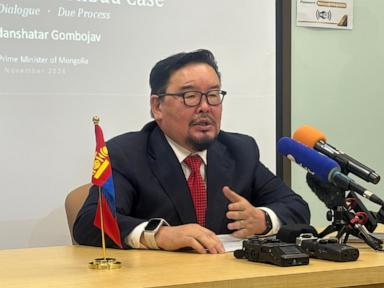
When Mongolia’s Ministry of Foreign Affairs finally summoned Malaysian representatives and issued its formal protest, it was validating twenty years of a father’s refusal to let his daughter become a footnote. It was saying, in the formal, measured language of diplomacy, what Shaariibuu has been screaming into the wind since 2006: You do not get to erase her twice.
First with explosives in a jungle. And second with silence in a courtroom.
The Question That Won't Go Away
Diplomacy is often dismissed as theater—carefully worded statements exchanged by people in dark suits that rarely change reality on the ground. Perhaps Malaysia’s current leadership, which came to power promising institutional reform and an end to the corruption of the past, will treat Mongolia’s protest as an uncomfortable nuisance to be managed with polite assurances and bureaucratic committees.
Or perhaps they will realize that a nation cannot claim to have turned the page on corruption while the ghost of Altantuya Shaariibuu still stands unavenged at its doorstep.
Truth has a stubborn half-life. You can bury it beneath twenty years of legal transcripts, hide it behind sovereign immunity, or scatter it across a hillside in Selangor, and still, twenty winters later, a small nation on the Eurasian steppe will rise up and ask the exact same question it asked on day one.
Across the miles between Ulaanbaatar and Kuala Lumpur, a father is still waiting by the phone, holding a faded photograph of a twenty-eight-year-old woman who never came home.