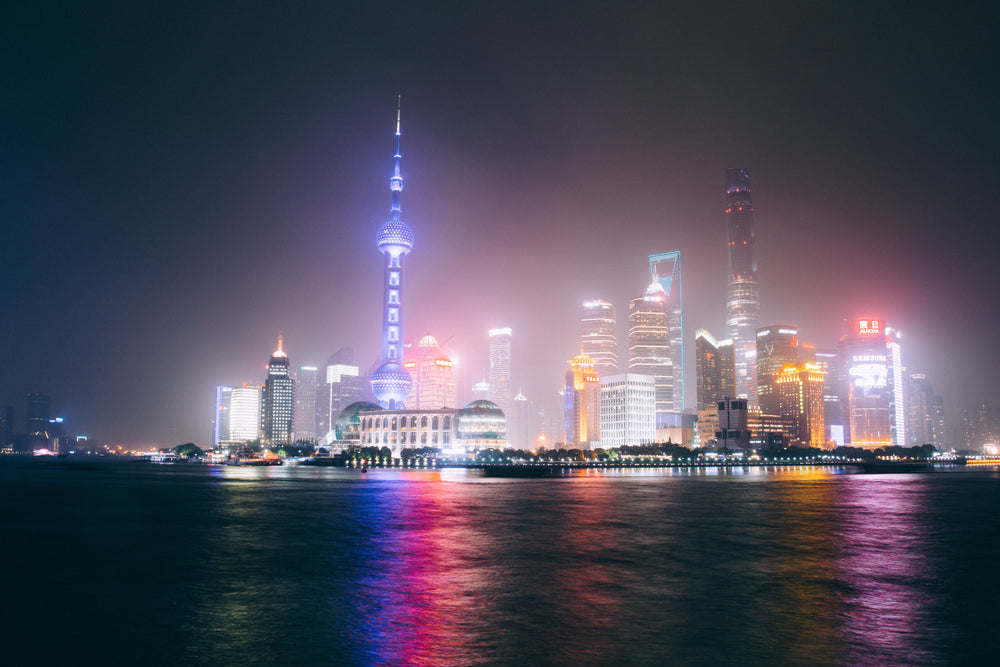
The air in Hanoi in August is a thick, humid blanket that clings to the skin, smelling of exhaust and grilled pork from street-side stalls. On the surface, it looks like any other Tuesday. Motorbikes swarm like schools of silver fish through the intersections. But inside the ornate halls of the government buildings, a tectonic shift was occurring.
Pham, a hypothetical but representative tech entrepreneur in Da Nang, doesn't care much for diplomatic jargon. He doesn't wake up thinking about "Enhanced Comprehensive Strategic Partnerships." He wakes up thinking about semiconductors. He thinks about the fact that his father grew up in a country defined by scarcity, while his daughter is growing up in a country that is suddenly the most popular girl at the global trade ball.
While the world was distracted by the shouting matches of the G7 or the latest silicon valley drama, Vietnam and India just quietly rewrote their future. They didn't just sign papers. They tied their fates together with thirteen different knots.
The Weight of Thirteen Pens
Thirteen Memorandums of Understanding (MoUs) sound like the height of bureaucratic boredom. In reality, these are the blueprints for a new world order. When Indian Prime Minister Narendra Modi and Vietnamese Prime Minister Pham Minh Chinh sat down, they weren't just checking boxes. They were acknowledging a hard truth: the old ways of doing business in Asia are dying.
For decades, the gravity of the region pulled toward one massive neighbor. Now, that gravity is splintering. India is looking east; Vietnam is looking for a partner that understands the struggle of rapid, messy, brilliant growth.
Consider the "Enhanced Comprehensive Strategic Partnership." It is a mouthful. It is also the highest level of diplomatic intimacy Vietnam offers any nation. By moving India into this inner circle, Vietnam isn't just making a friend; it is building a fortress. This isn't about tea ceremonies. It’s about the South China Sea. It’s about ensuring that the trade routes Pham depends on to ship his chips remain open, regardless of who decides to flex their naval muscles that week.
Beyond the Silicon and the Steel
One of the thirteen agreements focuses on something remarkably human: the digital payment revolution.
In India, the Unified Payments Interface (UPI) has turned the sidewalk chai wallah into a digital banker. You don't see cash in Bangalore anymore; you see QR codes taped to wooden carts. Vietnam is watching this with hungry eyes. They want that friction to disappear. Imagine a future where a small textile manufacturer in Ho Chi Minh City can receive a payment from a boutique in Mumbai as easily as sending a text message.
No banks taking a 5% cut. No three-day waiting periods for "verification." Just a pulse of data across the ocean.
But the real meat—the stuff that keeps regional analysts awake at night—is the defense credit. India extended a $500 million line of credit to Vietnam for defense equipment. This isn't because Vietnam wants to start a war. It’s because in this part of the world, peace is an expensive commodity. It requires a visible, modern, and capable deterrent.
The sea is the lifeblood of both nations. India wants a stable "Indo-Pacific" (another phrase that sounds like a geography textbook but actually means "a place where our ships don't get stopped"). Vietnam wants to protect its sovereign waters. By sharing defense technology and maritime intelligence, they are telling the rest of the world that the two dragons are now swimming in the same current.
The Hidden Stakes of the Green Corridor
Then there is the energy.
Vietnam is starving for power. Its manufacturing sector is growing so fast the grid is screaming under the pressure. India, meanwhile, has become a laboratory for large-scale solar and wind projects. They signedhttp://googleusercontent.com/image_content/200
agreements to collaborate on green energy and "traditional" minerals.
This is where the human element gets gritty. Without this deal, Pham’s factory in Da Nang faces rolling blackouts during the peak of summer. Those blackouts mean missed deadlines. Missed deadlines mean lost contracts to competitors in Thailand or Malaysia. For Pham, a diplomatic agreement on "Energy Cooperation" is the difference between hiring fifty new workers or laying off twenty.
It is easy to look at the photos of world leaders shaking hands and see two wealthy men in suits. It is harder, but more important, to see the millions of people standing behind them. You have to see the Indian pharmacy student who will now find it easier to work in a Vietnamese hospital due to relaxed professional standards. You have to see the Vietnamese farmer who will soon see Indian-made tractors that are cheaper and more durable than anything he’s used before.
The Ghost in the Room
We have to talk about the silence.
In every diplomatic meeting between these two, there is a third party that isn't invited but is always present. China.
Vietnam and India share a unique, often painful history with their northern neighbor. They both know what it's like to have a border that feels more like a wound than a line on a map. This new partnership isn't an "anti-China" pact—neither country is that reckless—but it is a "pro-independence" pact.
It is a declaration that the future of Asia does not have to be unipolar. There is a different path. It’s a path that goes from the Ganges to the Mekong.
The complexity is staggering. You have two cultures with vastly different languages, religions, and political systems. India is a rambunctious, loud, chaotic democracy. Vietnam is a disciplined, single-party socialist state. On paper, they shouldn't work. But they share a specific type of ambition. They are both countries that have been told "not yet" by the West for a century.
Now, they are telling each other "right now."
The Architecture of the New Asia
The thirteen MoUs cover everything from oceanography to "capacity building" in law. This sounds like fluff until you realize that trade requires a shared language of rules. If a Vietnamese company sues an Indian supplier, which laws apply? How do you measure the salt content of the sea they both share? How do you ensure a satellite launched from Sriharikota can provide weather data to a fisherman in Haiphong?
These agreements are the connective tissue. They are the nerves being laid down so the body can eventually move as one.
http://googleusercontent.com/image_content/239
It’s tempting to be cynical. We’ve seen "historic" deals fall apart before. We’ve seen MoUs gather dust in filing cabinets while the world moves on. But there is a different energy this time. You can feel it in the way the Indian diaspora is beginning to look at Vietnam as a serious investment hub. You can feel it in the Vietnamese schools that are starting to offer IT certifications backed by Indian tech giants.
This isn't just about trade balances. It’s about a shared realization that the 21st century doesn't belong to the Atlantic. It belongs to the people who are willing to build the bridges that no one else thought were necessary.
As the sun sets over West Lake in Hanoi, the orange light reflects off the glass of new skyscrapers. Somewhere in one of those buildings, a legal team is staying late. They are pouring over the fine print of an agreement regarding "Customs Cooperation." It is tedious work. It is boring work.
But it is the work of building a world where a cargo ship can move from Chennai to Cam Ranh Bay without a single hitch, carrying the components of a future that neither country could have built alone. The ink on the thirteen documents is dry, but the story is just beginning to breathe.