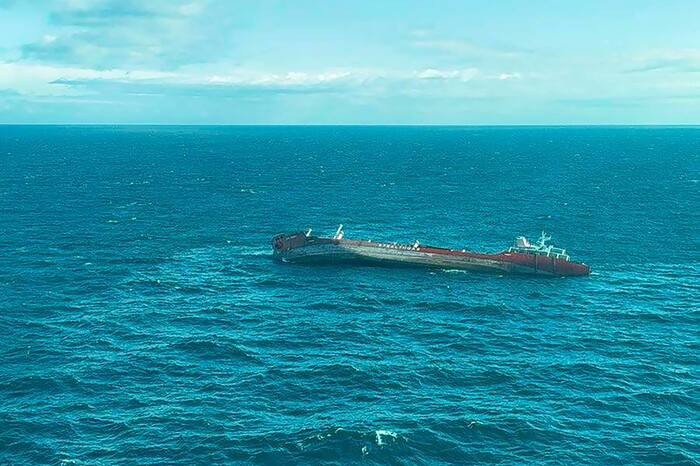
Two merchant vessels going down off the exact same stretch of coastline within 48 hours isn't bad luck. It's a glaring warning sign about the state of commercial shipping in the western Black Sea right now.
When the second cargo vessel sank off Bulgaria's Black Sea coast in as many days, maritime trackers and regional observers barely blinked. Why? Because anyone who has followed Black Sea freight corridors since 2022 knows this corridor is running on borrowed time, aging hulls, and brutal winter weather patterns.
Let's be clear about what's happening out there. You have a narrow maritime bottleneck where geopolitical friction, aggressive storm systems, and under-maintained "shadow" or aging coastal freighters collide. When a winter gale sweeps across the western Black Sea basin, those older vessels don't just take a beating. They break.
What Actually Happened Off the Bulgarian Coast
The sequence of events reads like a textbook maritime failure. Over a 48-hour window, two separate merchant ships operating in Bulgarian waters suffered catastrophic hull and flooding emergencies, ultimately sinking despite rapid mobilization from Bulgarian maritime rescue authorities and nearby commercial traffic.
In maritime incidents like these, the immediate focus is always crew survival. Search and rescue teams in the western Black Sea—operating out of ports like Varna and Burgas—face steep, short-period waves that make small-boat transfers a nightmare. Unlike open ocean swells, Black Sea waves are tight, choppy, and relentless. They slam against a ship's hull every few seconds, giving a listing vessel almost zero time to recover between hits.
Once water breaches a cargo hold on a smaller coastal freighter, the math turns ugly fast. Free surface effect—where water sloshes freely across an open hold—destroys a ship's stability in minutes. You don't get hours to pump it out. You get minutes to grab an immersion suit and get to the muster station.
The Structural Problem Nobody Wants to Fix
If you talk to naval architects or port state control inspectors who work the Black Sea, they'll tell you the same thing. Too many coastal cargo ships operating between Turkey, Bulgaria, Romania, and Ukraine are well past their prime.
Many of these vessels are 30 to 40 years old. They were built in Soviet-era shipyards or late-20th-century European yards for river-sea transit, meaning they have shallow drafts and lighter hull plating than deep-ocean bulkers. When money gets tight in regional freight, maintenance is the first thing owners cut.
Here is what happens behind the scenes before a ship ever hits a storm:
- Deferred steel replacement: Corroded hull plates near the waterline get patched rather than cropped and renewed during dry-docking.
- Flag of convenience loopholes: Vessels shift registries to jurisdictions with minimal physical inspection oversight, allowing marginal ships to keep trading.
- Cargo shifting: Improperly secured bulk grain, scrap metal, or timber shifts during a roll, pinning the ship at a dangerous list until waves pour over the hatch covers.
- Aging bilge and ballast pumps: When flooding starts, corroded piping or underpowered pumps fail right when the crew needs them most.
Honestly, it's a miracle more of these coastal freighters don't split in half every winter. Port State Control regimes under the Black Sea Memorandum of Understanding (BS MOU) regularly detain vessels for severe structural and safety deficiencies, yet the economic pressure to keep moving cargo means older tonnage stays active until something gives way.
Why Bulgaria's Coastline Is a Maritime Bottleneck
Look at a map of the western Black Sea. Every ship moving between the Bosphorus Strait and the major northern ports—Constanța in Romania, Odesa in Ukraine, or Varna and Burgas in Bulgaria—has to hug this western shelf.
Since the escalation of conflict in the northern Black Sea in 2022, commercial traffic has been pushed even closer to the coastal waters of NATO members Bulgaria and Romania. Ships stick to shallow, territorial corridors to avoid deeper-water hazards and drifting naval mines.
That compression creates two massive headaches:
- Zero sea room in a storm. When a sudden northeasterly gale hits, a captain can't always run out into deep water to ride out the swell. They're trapped near a lee shore with shallow shoals and rocky headlands.
- Traffic congestion. Fishing boats, coastal bulkers, naval patrols, and grain carriers are all sharing narrow transit lanes.
When a ship loses propulsion or takes on water in those coastal lanes, there is nowhere to drift safely. You either drop anchor and hope the chain holds against 30-knot gusts, or you run aground.
The Environmental and Operational Fallout
A sunken merchant ship isn't just a loss for the cargo owner and the hull insurer. Even smaller general cargo ships carry tens of thousands of liters of heavy fuel oil or marine diesel, alongside lubricants and hydraulic fluids.
When a vessel goes down in relatively shallow coastal waters off Bulgaria, local environmental agencies immediately have to monitor for surface sheens drifting toward beaches and fishing grounds. Bulgaria's coastline relies heavily on summer tourism and commercial fishing. A slow bunker oil leak from a wreck sitting in 30 or 40 meters of water can foul miles of shoreline for months if cold water temperatures keep the oil viscous and clumped on the seabed.
Wreck removal is another nightmare. Salvage operations in the Black Sea are notoriously expensive, and when a ship belongs to a single-vessel shell company with questionable P&I (Protection and Indemnity) insurance, the coastal state often gets stuck fighting legal battles just to get the wreck marked or pumped out.
How Maritime Operators and Shippers Can Reduce Risk
If you're chartering vessels, moving freight, or managing maritime logistics in the Black Sea basin, two sinkings in two days should force an immediate audit of your counterparties. Relying on bare-minimum regulatory compliance isn't enough when winter weather hits this region.
- Check the vessel's detention history directly. Before fixing a charter on any vessel over 20 years old, pull its full inspection record from the Paris MOU, Black Sea MOU, or Equasis databases. Walk away if you see repeated hull, hatch cover, or watertight integrity deficiencies.
- Verify P&I club membership. Confirm the ship is insured by an International Group P&I Club rather than an obscure, undercapitalized regional insurer that will vanish if a wreck removal order is issued.
- Enforce strict weather routing. Build explicit weather-delay clauses into charter parties so captains aren't pressured by commercial timelines to push through developing winter gales off Cape Kaliakra or the Burgas Bay approaches.
- Audit cargo securing manuals. For bulk and breakbulk loads, require independent surveyor sign-off on trim and lashing before departure, especially during autumn and winter months.
Commercial shipping in the Black Sea isn't slowing down, and the winter storm season is far from over. Until charterers stop booking substandard tonnage and coastal states tighten enforcement on aging hulls, Bulgaria's rescue crews will keep getting called out into the dark.