Language doesn't wait for peace treaties to shift. Sometimes it takes a shockwave thousands of miles away to wake up memories people buried for half a century.
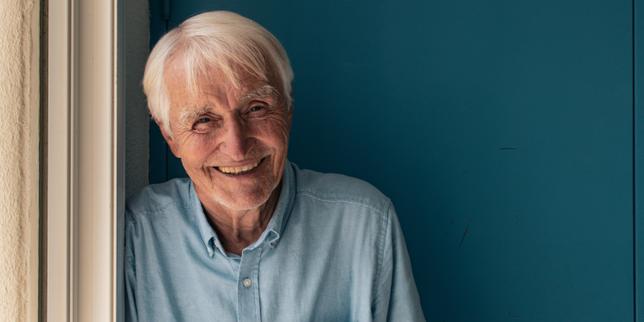
In southwestern France's Gironde department, an 83-year-old man named Jury Ziembicki, who arrived in France as a child and spent decades treating his roots as background noise, felt pulled back toward his heritage after Russia's full-scale invasion of Ukraine. His story sits right at the intersection of two very different waves of migration: older families whose ties to Ukraine were stretched thin over generations in France, and newer arrivals displaced by war who suddenly need community spaces where their mother tongue isn't treated like an afterthought. For a different view, check out: this related article.
Let's be honest. When people read a headline about an octogenarian keeping the Ukrainian language alive in Gironde, they often picture a quiet, nostalgic hobby. A Sunday afternoon tea, a few old songbooks, a polite nod to the past.
That picture misses what's actually happening on the ground. Related reporting on this trend has been published by Apartment Therapy.
Why war wakes up a dormant mother tongue
Language shift in diaspora families usually follows a predictable arc. First generation speaks it fluently at home. Second generation understands a bit, speaks haltingly, and leans hard into the host country's language to fit in. Third generation barely catches the rhythm unless someone pushes back.
I've seen this pattern across immigrant households in Europe and North America for years. Assimilation isn't always malicious; often it's just practical. Parents want kids to succeed in French schools, get good jobs, and avoid standing out. Over decades, silence sets in around words you don't use every day.
Then a crisis hits, and the math changes overnight.
When a homeland faces military assault and cultural erasure, speaking its language stops feeling like an optional family quirk. It becomes an act of memory and solidarity. For someone like Jury Ziembicki, reconnecting with Ukrainian after years of relative distance isn't about rewriting his whole life. It's about claiming a piece of history that suddenly feels urgent rather than dusty.
And there's a subtle linguistic point here that outsiders frequently misunderstand. Ukraine has long been bilingual or multilingual in everyday life, with Russian heavily present in cities, media, and family homes alongside Ukrainian. War has accelerated a conscious shift toward Ukrainian as a marker of distinct national identity and cultural decolonization. Even people who grew up hearing fragments of Ukrainian—or who spoke another Slavic language or Russian at home—are choosing Ukrainian deliberately now.
What actually happens in Gironde beyond the headline
If you look closely at southwestern France, language preservation doesn't happen in a vacuum. It happens alongside practical survival and everyday integration.
In the Bordeaux metropolitan area, local associations like La Maison ukrainienne Mérignac-Gironde stepped up after the 2022 full-scale invasion to coordinate humanitarian aid, organize cultural screenings and concerts, and help displaced residents navigate life in France. Meanwhile, public institutions like the Académie de Bordeaux set up dedicated support structures and school pathways—such as UPE2A classes for newly arrived allophone students—so children displaced from Ukraine could attend local schools while learning French.
Notice the tension that creates for families. Children pick up French fast in classrooms and playgrounds. Adults often wrestle with administrative hurdles, housing uncertainty, and shifting residency rules.
In France, thousands of displaced Ukrainians have navigated Temporary Protection permits—extended at the EU level and adjusted nationally over time—while some have also looked at longer-term legal options as the war dragged on past its third year. Keeping Ukrainian alive in a place like Gironde means balancing two realities at once: helping newcomers build a workable life in French society while giving both longtime diaspora members and recent arrivals a space to speak, read, and hear Ukrainian without feeling isolated.
Three myths about diaspora language revival
People love tidy stories about language survival, so a few myths keep popping up whenever local initiatives make the news.
- Myth 1: Older speakers automatically pass fluency down effortlessly. Being a native or heritage speaker doesn't automatically make someone a grammar coach, especially if they haven't taught adults or children before. Real progress takes patience, structured conversation, and low-pressure practice where learners don't feel judged for rusty vocabulary.
- Myth 2: A community group can replace formal schooling. Kitchen-table conversation and local cultural events do wonders for confidence and belonging. Still, building strong reading, writing, and academic skills takes consistent study over years, not just occasional gatherings.
- Myth 3: Everyone in the room shares the same starting point. In any diaspora or displaced group, you'll find people who grew up in western Ukraine, people from eastern or southern regions, children born in France, and older relatives who left decades ago. A smart language circle treats differences in accent, dialect, and prior exposure as normal rather than a test of purity.
Why this matters for culture and memory
At a broader level, local efforts in places like Gironde echo what cultural institutions are trying to do on a global scale. According to UNESCO's work on safeguarding Ukraine's cultural and documentary heritage, protecting language, archives, and living traditions isn't secondary to physical reconstruction—it's part of keeping a society's memory intact when war disrupts communities and displaces millions.
Big treaties and international grants get the press releases. Small, stubborn rooms where people practice verbs, share news from home, and keep a language audible are where culture actually breathes.
You don't need a massive budget to start doing something similar in your own community. Start small and stay consistent.
- Find or host a low-pressure conversation table. Meet once a week for an hour—even with three or four people—and agree to speak Ukrainian for part of the session without worrying about perfection.
- Pair generational stories with practical language. Ask older relatives or longtime community members for everyday words, idioms, or family history, and write them down in a simple notebook you'll actually review.
- Support local cultural and educational initiatives. Check what local associations and schools in your area—such as groups around Bordeaux and Mérignac or regional educational networks—need in terms of books, volunteer hours, or community events.
- Protect time for kids and beginners. Keep activities playful and short for younger learners so the language feels like a bridge to family and friends rather than extra homework after a long school day.