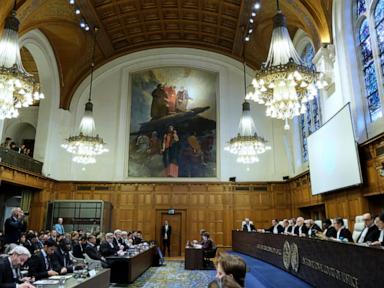
Celebrations broke out across human rights circles on November 19, 2026. Headlines declared a historic victory. For the first time in the eighty-year history of the International Court of Justice (ICJ), judges found a sovereign nation directly responsible for committing genocide.
Mainstream coverage immediately framed this verdict against Myanmar as a watershed moment for global accountability. Analysts rushed to catalog the court's past rulings—Bosnia, Croatia, and the pending docket involving Gaza—treating the Hague like a supreme moral referee that finally found its backbone.
That consensus is dangerously naive.
If you look closely at the legal mechanics of The Gambia v. Myanmar, the ruling is not a triumph of justice. It is an indictment of an international legal architecture designed to fail whenever powerful geopolitical interests are on the line. It took nearly a decade of litigation, a collapsed domestic government, a rogue military junta with zero Western allies, and a razor-thin 9–6 judicial majority just to state the obvious about a campaign that displaced over 700,000 Rohingya Muslims in 2017.
Stop asking how the UN court ruled in other cases. Start asking why the bar for state accountability is rigged so high that only geopolitical pariahs ever trip over it.
The Trap of the "Only Reasonable Inference" Standard
To understand why the ICJ took eight decades to convict a state of genocide, you have to look at the legal straitjacket the court stitched for itself.
Under Article II of the 1948 Genocide Convention, proving genocide requires establishing dolus specialis—the specific intent to destroy, in whole or in part, a national, ethnical, racial, or religious group. In criminal tribunals like the International Criminal Tribunal for the former Yugoslavia (ICTY), prosecutors only needed to prove an individual commander harbored that intent.
At the ICJ, which adjudicates state responsibility rather than individual criminal guilt, judges invented an almost insurmountable evidentiary hurdle.
In Bosnia and Herzegovina v. Serbia and Montenegro (2007) and again in Croatia v. Serbia (2015), the court ruled that if a state's genocidal intent is inferred from a pattern of conduct rather than an explicit written order, that intent must be "the only reasonable inference" drawn from the evidence.
Read that again.
If a military slaughters thousands of civilians, burns their villages, and erases their cultural footprint, a state's defense team simply needs to offer one plausible alternative motive—counter-insurgency, territorial conquest, or forced displacement—to beat a genocide charge.
- In 2007, the ICJ agreed that the 1995 Srebrenica massacre of over 8,000 Bosniak men and boys was genocide. Yet it cleared Serbia of direct responsibility, ruling Belgrade merely failed in its duty to prevent the slaughter.
- In 2015, the ICJ acknowledged that Serbian forces committed widespread genocidal acts in Croatia between 1991 and 1995. Again, it acquitted Serbia of genocide because the primary objective could be interpreted as creating an ethnically homogeneous Serb state through forced expulsion rather than physical destruction.
I have watched legal teams spend millions of dollars and years of investigative labor building airtight evidentiary records of mass atrocity, only to watch those cases implode over semantics. By treating military objectives and genocidal intent as mutually exclusive, the ICJ created a blueprint for impunity. Any general smart enough to frame a slaughter as a "security operation" gets a free pass from the World Court.
Why Myanmar Lost (And Why Other States Won't)
Mainstream commentators look at the Myanmar verdict and assume the court finally lowered that impossible bar. They are wrong.
The 9–6 split among the judges reveals deep doctrinal fractures inside the Peace Palace. Myanmar did not lose because the ICJ suddenly embraced a progressive standard of proof. Myanmar lost because its military regime—the Tatmadaw—was uniquely reckless, politically isolated, and left behind a mountain of unvarnished evidence that left zero room for alternative explanations.
Consider the factual anomalies that made Myanmar an easy target:
- Decades of Codified Erasure: Unlike sudden wartime escalations, Myanmar spent generations systematically stripping the Rohingya of citizenship, restricting marriage, and regulating births. When the 2017 "clearance operations" began, the state apparatus had already spent forty years defining the group out of legal existence.
- Undeniable Biological Destruction: The court specifically found violations under Article II(a) (killing), Article II(b) (serious bodily or mental harm), and Article II(c) (imposing measures intended to prevent births). The documented patterns of mass sexual violence and targeted slaughter of infants and children could not be rationalized as collateral damage in a counter-insurgency campaign against the Arakan Rohingya Salvation Army.
- Zero Diplomatic Shield: Following the 2021 military coup, Myanmar’s junta became a global outcast. Eleven states formally intervened in the case on behalf of The Gambia. No permanent member of the UN Security Council expended serious political capital to protect Naypyidaw's legal team.
Even with every imaginable advantage stacked in the prosecution's favor—an isolated defendant, overwhelming UN fact-finding reports, and a 2020 provisional measures order that Myanmar blatantly ignored—six judges still voted against finding Myanmar responsible for committing genocide.
If it takes a 9–6 squeaker to convict a military junta that burned babies alive and drove three-quarters of a million people across a border, what does that say about the viability of the Genocide Convention in complex modern warfare?
The Dangerous Illusion of the Gaza Precedent
The lazy consensus in international journalism right now is that the Myanmar ruling paves a clear runway for South Africa's genocide case against Israel. Legal pundits are already drawing straight lines between Rakhine State and Gaza.
This is a fundamental misreading of both law and timeline.
First, look at the calendar. In South Africa v. Israel, the court issued interim provisional measures in 2024. Yet Israel has until May 2029 just to file its written counter-memorial. Public hearings on the merits will not happen until the late 2020s, meaning a final judgment will likely arrive in the early 2030s—long after the military campaign on the ground has concluded.
Second, look at the legal doctrine. Oxford international law expert Janina Dill noted immediately after the Myanmar verdict that the 9–6 split exposes persistent doctrinal friction over how the court assesses intent during active armed conflict.
In an urban war against an entrenched militant group like Hamas—which launched the October 7, 2023 attacks killing roughly 1,200 people and taking 250 hostages—a state has a built-in, legally recognized counter-narrative: self-defense and the destruction of a military adversary. Under the ICJ's strict dolus specialis framework, as long as a state can plausibly argue its high civilian death toll stems from asymmetrical urban combat rather than an intent to physically destroy a protected group as such, a conviction on the merits remains an uphill battle.
The same structural paralysis haunts the court's other pending genocide dockets:
- Ukraine v. Russia (filed 2022): Kyiv flipped the convention on its head, suing Moscow for falsely accusing Ukraine of genocide to justify its invasion, prompting Russian counterclaims. The legal maneuvering has devolved into procedural trench warfare.
- Nicaragua v. Germany (filed 2024): Managua attempted to hold Berlin liable for aiding genocide via arms exports to Israel, testing the outer limits of third-party complicity.
- Democratic Republic of Congo v. Rwanda (filed June 2026): Another regional conflict dragged into The Hague with little prospect of immediate enforcement.
Treating the ICJ as a rapid-response mechanism to stop ongoing wars is like hiring an architectural historian to put out a house fire. By the time the court finishes analyzing the blueprints, the building is ash.
The Enforcement Mirage Nobody Wants to Admit
Even when the ICJ delivers a landmark judgment, a brutal question remains: Who enforces it?
ICJ rulings are technically binding and final, with no option for appeal. In practice, the court has no police force, no army, and no mechanism to seize state assets. Under Article 94 of the UN Charter, enforcement falls exclusively to the UN Security Council.
That is where international law goes to die.
Any permanent member of the Security Council—the United States, Russia, China, the United Kingdom, or France—can veto an enforcement resolution with a single raised hand. When a ruling targets a permanent member (like Russia in Ukraine) or a close strategic ally of a permanent member (like Israel with the United States, or Rwanda with Western partners), the enforcement mechanism is dead on arrival.
Even in Myanmar's case, where no Security Council member is rushing to defend the junta, the ruling cannot physically repatriate a single Rohingya refugee from the sprawling camps in Bangladesh. Worse, the ground reality in Rakhine State has already outpaced the court. By late 2026, the ethnic armed group known as the Arakan Army seized control of most of Rakhine State from the junta—and human rights monitors report the Arakan Army has imposed its own brutal regime of forced labor, arbitrary detention, and war crimes against the remaining Rohingya.
The ICJ spent seven years convicting the previous oppressor while a new one took over the territory.
What Actually Needs to Change (And the Trade-Offs)
To be fair to the contrarian argument, stripping away the ICJ's strict intent standard carries real risks. If the court lowers the threshold for dolus specialis so that any high-casualty military campaign qualifies as genocide, the word itself loses its unique legal gravity. Genocide becomes indistinguishable from war crimes or crimes against humanity—atrocities that are already illegal under the Geneva Conventions and the Rome Statute, though notably lacking a standalone international treaty comparable to the 1948 Genocide Convention.
We do not need to dilute the definition of genocide. We need to stop pretending the ICJ is the primary arena for stopping mass atrocities.
Real accountability requires bypassing the theatrical, decade-long choreography of state-versus-state litigation in favor of mechanisms with actual teeth:
- Weaponize Universal Jurisdiction in Domestic Courts: Don't wait ten years for The Hague. Domestic courts in countries with universal jurisdiction laws can issue arrest warrants, freeze assets, and prosecute individual commanders directly. In 2025, an Argentine court issued arrest warrants for dozens of Myanmar officials, including junta chief Min Aung Hlaing. That restricts their movement and threatens their wealth immediately—something an ICJ declaratory judgment never does.
- Enforce Third-Party Prevention Duties Now: Buried in the Myanmar judgment is a legal doctrine far more potent than the genocide conviction itself. The court reaffirmed that a state's legal obligation to prevent genocide under Article I does not require waiting for a final court verdict that genocide has occurred. The moment a serious risk exists, third-party states are legally bound to act. Advocates should use this exact standard to sue Western governments in their own domestic courts to block arms sales and intelligence sharing with abusive regimes.
- Establish a Dedicated Crimes Against Humanity Treaty: States keep forcing every atrocity through the narrow keyhole of the 1948 Genocide Convention simply because it is the only treaty granting automatic ICJ jurisdiction. Passing a global convention on crimes against humanity—which does not require proving the impossible standard of group-destruction intent—would close the loophole that let Serbia walk free in 2007 and 2015.
The November 2026 ruling against Myanmar will be cited in law school textbooks for decades. Legal scholars will dissect Judge ad hoc Claus Kress’s opinions and debate the nuances of collectivist intent.
Meanwhile, the Rohingya remain stateless, Gaza remains in ruins, and the world's most powerful militaries continue to operate with the quiet confidence that by the time the World Court finishes deliberating, everyone involved will already be retired.