Twenty years is a long time to fix a broken reputation. Back in 2006, the United Nations scrapped its old Commission on Human Rights because the body had become an international punchline, replaced by the shiny new UN Human Rights Council in Geneva. The promise was simple: higher standards, peer accountability, and a genuine shield for people living under repressive governments.
Yet here we are two decades later, and the UN Human Rights Council is fighting the exact same credibility crisis it was built to solve. Ask any diplomat walking the halls of the Palais des Nations, and they'll tell you the body has done genuinely life-saving investigative work. Ask an ordinary citizen watching dictators get elected to its 47-member panel, and you'll get an eye roll. Both reactions are completely justified.
The core problem isn't mysterious. It's structural. Unlike a courtroom where independent judges weigh evidence, the Human Rights Council is a political body run by UN member states—meaning governments get to police each other. When the foxes hold half the votes on the henhouse committee, things get messy fast.
How the 2006 Reset Was Supposed to Fix Everything
To understand why the UN Human Rights Council draws so much heat today, you have to remember how bad its predecessor was. By the early 2000s, the old UN Commission on Human Rights had lost almost all moral authority. Countries with atrocious domestic records routinely won seats just to block resolutions criticizing themselves or their allies. Even Kofi Annan, then the UN Secretary-General, admitted in 2005 that the commission's declining credibility had cast a shadow over the entire United Nations.
So the General Assembly passed Resolution 60/251 in March 2006. They wiped the slate clean and created the Human Rights Council with a few supposedly tough guardrails:
- Direct General Assembly elections. Candidates now need an absolute majority of all 193 UN member states—at least 97 votes—rather than slipping in through uncontested regional backroom deals.
- Term limits. Members serve three-year terms and can't serve more than two consecutive terms, preventing permanent blocks of obstructionist states.
- A suspension mechanism. If a sitting member commits gross and systematic violations of human rights, two-thirds of the General Assembly can kick them out.
- The Universal Periodic Review (UPR). Every single UN country, no matter how powerful, has to submit its human rights record for public scrutiny every four and a half years.
On paper, this looked smart. In practice, regional groups still run "clean slates" all the time—putting forward the exact number of candidates as there are open seats. When there's no competition on the ballot, the 97-vote threshold becomes a formality rather than a real vetting process.
The Foxes Guarding the Henhouse Problem
Nothing tanks the council's public image faster than its membership roster. Over the past twenty years, countries like China, Russia, Venezuela, Cuba, Eritrea, and Saudi Arabia have all won seats at the table. You don't need a degree in international law to see why that looks terrible to the public.
Watch how it plays out during a Geneva session. A bloc of authoritarian states coordinates their voting, shields each other from country-specific resolutions, and waters down language on press freedom or arbitrary detention. When a coalition of Western and Latin American nations tried to put China's treatment of Uyghurs in Xinjiang on the formal agenda for debate in October 2022, the motion failed by a narrow 19-to-17 vote, with 11 abstentions. Even after the UN's own human rights office released a damning report citing possible crimes against humanity, the council couldn't muster enough votes just to talk about it.
That moment stung. For human rights defenders who risked everything to get evidence to Geneva, watching member states block a simple debate felt like a betrayal.
Does the suspension rule ever work? Technically, yes, though it's painfully rare. Libya was suspended in 2011 during Muammar Gaddafi's violent crackdown on protesters, and Russia was suspended in April 2022 following its full-scale invasion of Ukraine—though Moscow quickly announced it was quitting the body anyway to save face. Those two cases prove the mechanism exists, yet the political bar is so high that dozens of chronic abusers sit comfortably through full three-year terms without a scratch.
Selective Outrage and the Item 7 Controversy
If membership hypocrisy is the first major strike against the UN Human Rights Council, double standards on its agenda are the second. Critics have pointed out for years that the council spends a disproportionate amount of time condemning certain countries while giving far worse crises a free pass.
Look at the council's permanent agenda. Out of ten standing agenda items, Item 7 is dedicated exclusively to the human rights situation in Palestine and other occupied Arab territories. Every other country on earth—whether North Korea, Syria, Sudan, Iran, or Myanmar—falls under Item 4, which covers general situations requiring the council's attention.
I've followed Geneva proceedings long enough to see how destructive this structural quirk has become. Regardless of where you stand on the Israeli-Palestinian conflict, having a permanent, standalone agenda item for one country while every other crisis on the planet shares a single bucket hands critics an easy talking point. The United States has repeatedly cited Item 7 and the council's membership makeup when explaining why it walked away from the body during the George W. Bush administration and again in 2018 under Donald Trump, before the Biden administration rejoined in 2021.
When major democracies walk out, they don't actually help reform the council. They just leave the room open for authoritarian governments to write the rules unopposed.
What the Critics Miss About Geneva's Real Work
Here is where the mainstream media coverage usually gets lazy. Pundits love dunking on the Human Rights Council whenever a dictatorship wins a seat, and then they ignore the 90 percent of the council's work that actually delivers concrete results on the ground.
If you judge the UN Human Rights Council solely by its political votes, you miss its most powerful tools:
- Independent Fact-Finding Missions and Commissions of Inquiry. When the council authorizes an investigation into war crimes in Ukraine, Myanmar, Syria, Sudan, or Iran, those teams aren't staffed by diplomats taking orders from governments. They're independent legal experts, forensic investigators, and military analysts collecting evidence that later ends up in real courts. Prosecutors at the International Criminal Court and national courts using universal jurisdiction rely heavily on files built by UN-mandated investigators.
- Special Rapporteurs. These are unpaid, independent experts who travel the globe, interview victims, confront governments, and publish blunt reports on everything from torture and extrajudicial executions to digital surveillance and extreme poverty. Governments hate being called out by them because their findings stick to the permanent UN record.
- The Universal Periodic Review. It sounds bureaucratic, and honestly, the sessions can be dry. Still, the UPR is the only mechanism on earth where powerful nations like the United States, China, and India have to sit in a room and answer direct questions from peers and local civil society groups about police violence, prison conditions, or minority rights. Even authoritarian states occasionally accept minor recommendations on things like birth registration or disability access just to avoid looking totally isolated.
None of this erases the council's political flaws. You can't pretend a council seat for a serial human rights abuser isn't damaging. At the same time, shutting the whole institution down—as some hardline critics suggest—would wipe out the primary international evidence-gathering machinery for mass atrocities.
Why Geopolitics Is Making Reform Harder Today
Twenty years after 2006, the global environment around the UN Human Rights Council is much colder than when it launched. Back then, the post-Cold War consensus around universal human rights still had some momentum. Today, multipolar competition has turned Geneva into a diplomatic trench war.
China, Russia, and a shifting coalition of aligned governments actively push alternative definitions of human rights—arguing that economic development and state sovereignty matter more than individual political freedoms, and that Western criticism is just neo-colonial interference. Meanwhile, Western governments lose credibility with the Global South whenever their responses to civilian casualties look selective depending on who the ally is.
When both sides accuse the other of weaponizing human rights for geopolitical gain, smaller countries caught in the middle simply abstain. Abstentions don't stop atrocities.
Practical Ways to Make the Council Actually Work
Fixing the UN Human Rights Council doesn't require tearing up the UN Charter or waiting for authoritarian regimes to suddenly grow a conscience. Real leverage already exists if democratic governments and civil society groups stop treating Geneva like a ceremonial talking shop and start playing smarter politics.
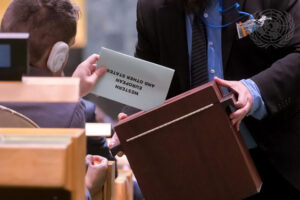
- Kill clean-slate regional ballots. Democratic countries need to actively recruit qualified regional rivals so elections are genuinely competitive. When voters at the General Assembly have an actual choice on the secret ballot, atrocious regimes routinely lose—just like Russia lost its bid to rejoin the council in October 2023.
- Enforce the membership pledge. Resolution 60/251 explicitly states that council members must "uphold the highest standards in the promotion and protection of human rights." Civil society coalitions should systematically score candidates against their own UPR track records before every autumn election and publish the receipts for diplomats to see.
- Stay in the room. Boycotting the council is a gift to every government that wants less scrutiny. Influence in Geneva comes from showing up, building cross-regional coalitions with Latin American, African, and Asian democracies, and funding independent investigative mandates.
- Track follow-through, not just resolutions. Passing a fiery resolution in Geneva accomplishes zero if nobody monitors what happens six months later. Journalists, watchdogs, and donor governments should tie diplomatic engagement and aid decisions directly to whether states implement their UPR commitments and cooperate with UN investigators.
Follow the council's upcoming session schedules, read the unvarnished reports published by independent Special Rapporteurs rather than just the headlines about who won a seat, and hold your own government's foreign ministry accountable for how it votes when competitive ballots come up in New York each October.