In November 2004, a series of radar anomalies off the coast of Southern California culminated in the most documented military encounter with unidentified aerial phenomena in modern history. The events surrounding the USS Nimitz Carrier Strike Group were not mere ghost stories told by bored sailors. They were tracked by the world's most sophisticated radar systems, recorded by advanced airborne targeting pods, and witnessed firsthand by highly trained strike fighter pilots. Yet two decades later, the official response remains a mix of institutional embarrassment and calculated ambiguity. The incident exposes critical vulnerabilities in national airspace security and raises questions about military sensor reliability that Washington prefers to ignore.
The public narrative usually centers on the visual account of Commander David Fravor, who described a white, wingless object shaped like a Tic Tac mint maneuvering erratically over the Pacific Ocean. But focusing exclusively on the pilot testimonies misses the broader, more troubling technical reality. The incident was fundamentally a breakdown of aerial domain awareness that the American military apparatus was completely unprepared to handle.
The Radar Tracks Over the Pacific
For days leading up to the famous November 14 intercept, the USS Princeton, a Ticonderoga-class guided-missile cruiser equipped with the AN/SPY-1B radar system, had been tracking multiple anomalous targets. These objects were operating at altitudes above 80,000 feet, far above the standard ceiling for commercial or known military aircraft. They dropped down to sea level in a matter of seconds, defied conventional aerodynamic principles, and then hovered before accelerating out of the area at speeds that would liquefy a human pilot.
Senior Chief Fire Controlman Kevin Day, stationed in the Princeton’s Combat Information Center, watched these tracks repeat across multiple shifts. This was not a single malfunctioning sensor. The AN/SPY-1B radar was the peak of maritime air defense technology, designed to detect and track skimming anti-ship missiles and high-altitude threats simultaneously. Day ordered the system recalibrated, believing it might be a software glitch generating false tracks. The tracks remained. They were real, physical returns returning clear radar cross-sections.
When Fravor’s F/A-18F Super Hornet was vectoring toward the object, the aircrew expected to find a drug smuggling vessel or a misplaced training drone. Instead, they found a disturbance in the water below, followed by the appearance of the smooth, featureless object. The object did not possess wings, rotors, visible windows, or any discernible means of propulsion. When Fravor attempted to close the distance, the object mirrored his movements before accelerating away so quickly that it vanished from sight within seconds.
Minutes later, the Princeton called the pilots to report that the object had reappeared at their combat air patrol station. This point was sixty miles away. It had traveled that distance in a fraction of a minute, implying a velocity that shatters the performance metrics of any known aircraft platform.
A Breakdown of the Sensor Evidence
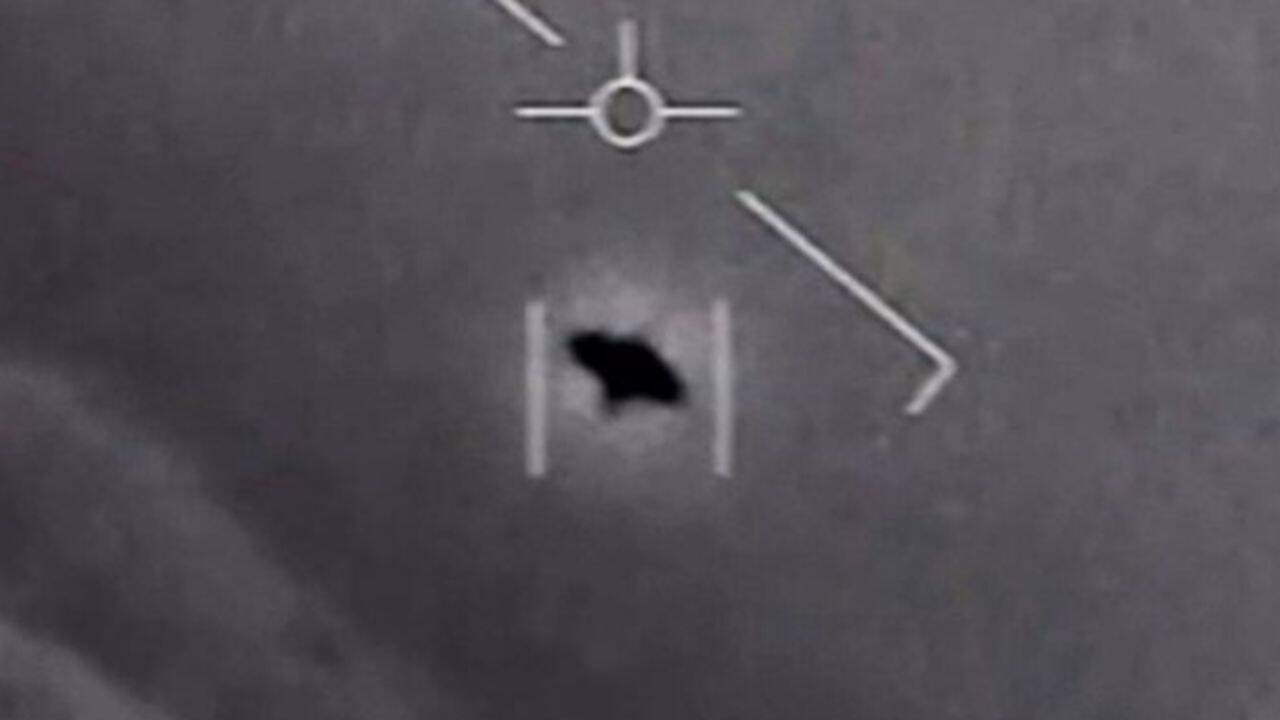
The secondary encounter involved a subsequent flight of Super Hornets equipped with the Raytheon AN/ASQ-228 Advanced Targeting Forward-Looking Infrared pod. The resulting video footage, later released to the public under the name FLIR1, provides the only unclassified physical record of the encounter. It shows a dark shape suspended in the center of the display, which suddenly darts to the left at high speed when the pod attempts to reacquire a solid lock.
Skeptics have argued that the sudden movement was an artifact of the targeting pod changing its mechanical mode or losing tracking continuity. They suggest the object could have been a distant commercial airliner or a meteorological balloon viewed through a distorted thermal lens. This perspective fails to account for the multi-sensor fusion that occurred during the week of the exercise. A distant airliner does not drop from the edge of space to the ocean surface in seconds, nor does it register as a stationary track on a naval radar network while simultaneously spoofing the visual tracking of multiple aviators.
The infrared data indicates a distinct lack of thermal exhaust. Conventional jet engines leave a massive heat signature behind them, a plume of superheated gas that is impossible for a mid-wave infrared sensor to miss. The object in the FLIR1 video shows no such plume. It remains thermally distinct from the cold ocean background but lacks the telltale signature of combustion-based flight.
This lack of thermal output points toward two distinct possibilities. Either the object utilized a radical, non-combustive method of propulsion, or the sensors themselves were subjected to a highly sophisticated form of electronic deception. Neither explanation provides comfort to naval planners tasked with defending carrier strike groups from foreign interference.
System Glitch or Electronic Warfare
The hypothesis that the strike group was targeted by a foreign power testing an advanced electronic warfare suite deserves serious scrutiny. If a foreign adversary developed a method to inject false targets into the cooperative engagement capability of a US Navy strike group, it would represent a catastrophic intelligence failure. Such technology would allow an enemy to create phantom fleets on American radar screens, masking actual threats or forcing defenses to waste ammunition on non-existent targets.
However, electronic warfare rarely accounts for simultaneous, multi-angle visual confirmation by multiple pilots spread across different airframes. The pilots did not just see a blip on their heads-up displays. They saw a physical object interacting with the ocean surface, creating a localized patch of whitewater that suggested a physical mass hovering just above the waves.
To believe this was entirely a hallucination or a trick of the light requires dismissing the testimony of career officers with thousands of flight hours. These individuals are trained specifically to identify aircraft silhouettes under extreme stress. They know the difference between a stray weather balloon and a vehicle performing evasive maneuvers. The consistency between the radar operators on the Princeton and the aviators in the sky suggests a physical reality that cannot be easily brushed aside by armchair analysts.
The Intelligence Failure and Bureaucratic Silence
The aftermath of the Nimitz incident highlights a systemic issue within the Department of Defense regarding unexplained phenomena. Immediately following the encounter, data logs from the USS Princeton were reportedly secured and removed by unidentified personnel who arrived via helicopter. This assertion, made by several crew members present during the cruise, points to an immediate, compartmentalized effort to control the information flow before a formal debriefing could even occur.
For years, the files sat within classified enclaves, untouched until a small group of insiders leaked the footage in 2017. The Pentagon’s subsequent admission that the videos were authentic was less an act of transparency and more a damage-control measure driven by public exposure. The establishment of various task forces in the years since has produced plenty of bureaucratic reports but few concrete answers.
This institutional silence is driven by a simple reality. Admitting that unknown objects can operate with impunity inside restricted military airspace is an admission of vulnerability. If these objects are foreign drones, the military has failed to secure its domestic training grounds. If they are something else entirely, the technological gap between the operators of these crafts and the United States military is wider than anyone cares to acknowledge.
The Pentagon prefers the ambiguity of the UAP label because it prevents them from having to answer for either failure. By classifying the details of the sensor data, the raw radar logs, and the telemetry files, the government ensures that independent scientific analysis remains impossible. The public is left with grainy, downsampled video clips while the actionable data remains locked in vaults beneath the Pentagon.
The true legacy of the Nimitz incident is not the mystery of the Tic Tac itself. It is the realization that the most advanced military machine on earth can be thoroughly outmaneuvered in its own backyard, and its response is to simply pretend the problem does not exist. The radar tracks have faded, the pilots have retired, but the vulnerability remains floating off the coast, waiting for the next exercise to begin.