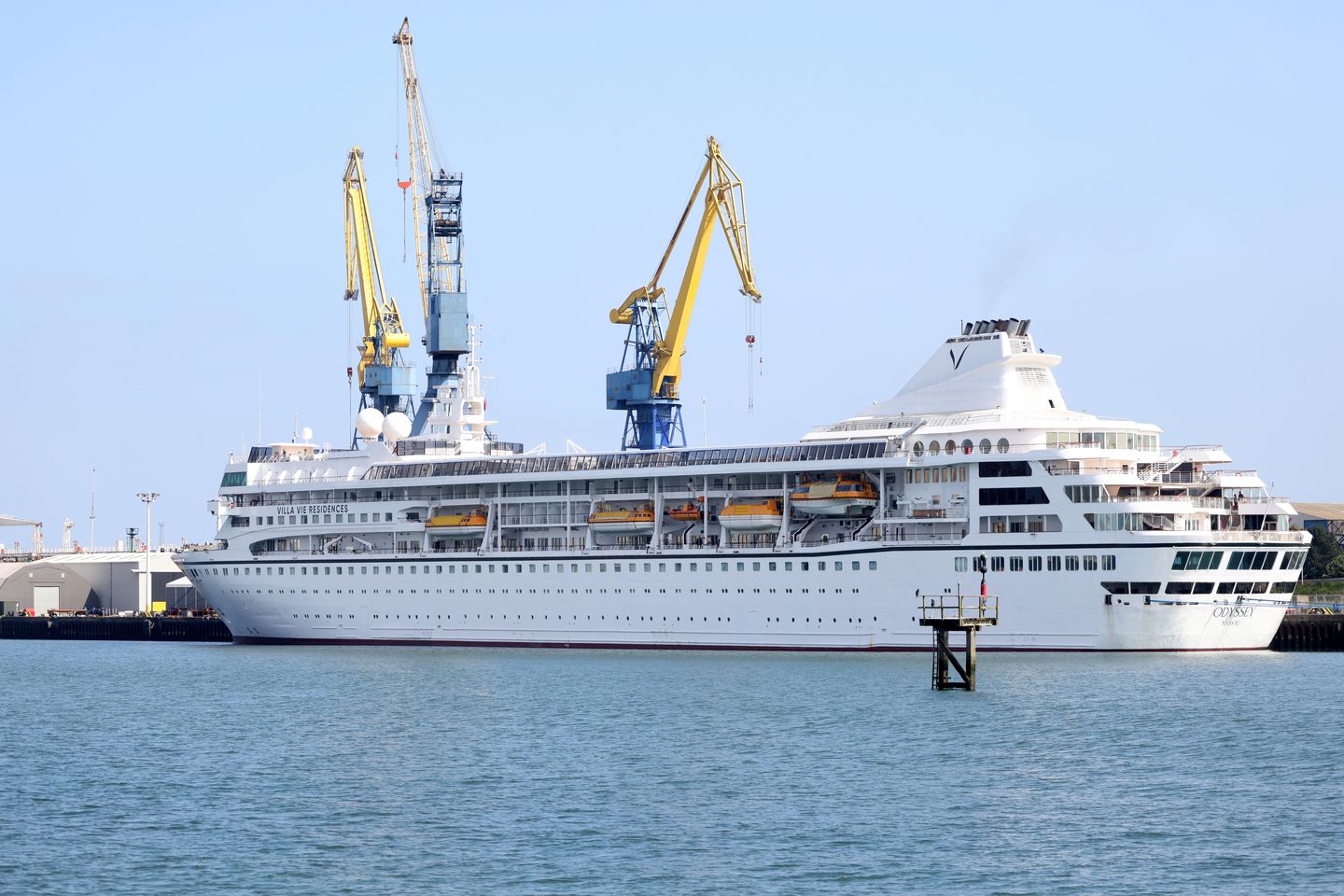
The abrupt termination of a multi-year residential cruise in Cambodia is not an isolated operational failure; it is the inevitable mathematical outcome of applying software-style pre-sale financing to capital-intensive maritime logistics. When a residential cruise operator strands passengers in an unplanned port of call, the root cause rarely stems from a single mechanical breakdown or an isolated diplomatic dispute. Instead, the collapse reflects a structural mismatch between fixed asset depreciation, regulatory compliance velocity, and front-loaded working capital models. Understanding why these ventures implode requires stripping away the lifestyle marketing and analyzing the underlying cost functions, regulatory bottlenecks, and liquidity traps inherent to perpetual maritime hospitality.
The Structural Flaw of Pre-Sold Maritime Capacity
Traditional cruise lines operate on a high-frequency inventory turnover model. They sell cabins months in advance for seven-to-fourteen-day voyages, allowing them to dynamically reprice future inventory to match real-time fluctuations in marine fuel, port tariffs, and food inflation. Perpetual or "never-ending" cruises invert this model by locking in multi-year customer revenue at a fixed price point prior to securing the physical vessel or finalizing port clearances.
This creates an immediate asset-liability duration mismatch. The operator collects cash upfront—essentially taking on an unsecured debt obligation denominated in future nautical miles—while remaining entirely exposed to spot-market operational expenses.
The Three Pillars of Residential Cruise Insolvency
- The Working Capital Trap: In a startup residential cruise venture, customer deposits are frequently used to acquire, refit, and certify the vessel rather than being held in ring-fenced escrow accounts. Once the ship enters dry dock for mandatory structural retrofits, unforeseen engineering defects inevitably emerge. Because the capital raised from ticket sales is consumed by capital expenditures (CapEx) before the ship generates a single dollar of ancillary onboard revenue, the operator enters active service with near-zero liquidity buffers.
- Unhedged Cost Escalation: Marine gas oil (MGO) and very low sulfur fuel oil (VLSFO) represent the single largest variable cost in maritime operations. Standard cruise operators hedge fuel prices up to 24 months out using complex derivatives. Under-capitalized residential startups lack the balance sheet strength to secure credit lines for fuel hedging. When geopolitical events spike bunker fuel costs, the operator cannot pass those costs onto passengers who have already paid for three-year leases.
- Asymmetric Churn and Refund Liability: Unlike a standard cruise where an unhappy passenger disembarks after a week and leaves a bad review, a dissatisfied residential passenger demands a pro-rata refund of a six-figure sum. A single wave of cancellations triggered by itinerary delays creates an immediate run on the company’s cash reserves, forcing the operator to halt operations at the nearest low-cost port—such as Sihanoukville, Cambodia—to stop the daily cash burn of propulsion and port fees.
Regulatory Friction and the Refit Bottleneck
A common misconception among entrants to the residential cruise market is that purchasing a retired commercial cruise ship provides a turnkey asset. In maritime law, transferring ownership of a passenger vessel across jurisdictions and altering its operational profile triggers a cascade of regulatory audits.
Every commercial passenger vessel must maintain classification from a recognized organization (such as DNV, Lloyd’s Register, or the American Bureau of Shipping) and adhere to the International Convention for the Safety of Life at Sea (SOLAS). When a startup acquires an aging vessel—often 25 to 30 years old to keep acquisition costs low—the ship must undergo a Special Survey in dry dock.
The Cascade of Compliance Delays
- Steel Renewal and Piping: Corroded hull plates and degraded ballast water treatment systems must be replaced to meet modern environmental standards enforced by the International Maritime Organization (IMO).
- Life-Saving Appliances (LSA): Converting standard passenger cabins into long-term residences changes the weight distribution and stability calculations of the vessel. This requires updated intact and damage stability booklets, alongside recertification of lifeboats and marine evacuation systems.
- Flag State Audits: Before carrying paying passengers, the vessel must pass Port State Control (PSC) inspections. If an operator attempts to rush a vessel out of dry dock to meet an advertised departure date, PSC inspectors in major ports will detain the ship until every deficiency is rectified.
Each day a vessel sits idle in a shipyard or anchorage waiting for regulatory sign-off, the operator incurs "hotel load" costs. Even when stationary, a cruise ship must burn fuel to run auxiliary generators for air conditioning, sewage treatment, fresh water production, and crew quarters. Combined with crew wages, marine insurance, and dockage fees, a mid-sized cruise ship burns between $50,000 and $150,000 per day simply existing. Without incoming cash flow, a four-month regulatory delay evaporates $6 million to $18 million in working capital before the anchor is ever raised.
The Geopolitics of Port State Control and Terminations
When a cruise line runs out of cash mid-voyage, it cannot simply drop anchor in international waters indefinitely, nor can it dock in high-tariff Western ports without risking immediate arrest of the vessel by maritime creditors. This explains why distressed maritime ventures frequently terminate operations in developing coastal hubs like Cambodia.
The Mechanics of Vessel Arrest and Port Selection
Under international admiralty law, suppliers of fuel, provisions, and port services hold maritime liens against the physical ship, not just the corporate entity operating it. If an operator owes $500,000 to a bunker fuel supplier and docks in Singapore, Sydney, or Yokohama, the supplier will petition the local admiralty court to arrest the vessel. Once arrested, the ship cannot leave port, and the crew is legally bound to remain aboard in a skeleton capacity until the ship is auctioned off to pay creditors.
To avoid immediate seizure in major financial hubs, distressed operators route vessels toward secondary ports where port charges are lower, regulatory scrutiny is less aggressive, and local legal mechanisms for maritime lien enforcement move more slowly.
For the passengers onboard, the transition from a luxury residential voyage to a stranded repatriation event follows a predictable sequence:
- Itinerary Compression: High-cost marquee ports (e.g., Tokyo, Hong Kong, Singapore) are quietly dropped from the schedule and replaced with extended "sea days" or low-cost regional anchorages to conserve fuel and avoid port tariffs.
- Supply Chain Degradation: Local ship chandlers demand cash-in-advance rather than standard 30-day credit terms. Onboard inventory narrows, spare parts for non-essential systems (such as cabin HVAC or stabilizers) run out, and maintenance is deferred.
- The Force Majeure Declaration: Once cash reserves drop below the threshold required to purchase the next load of bunker fuel, the operator declares an operational pause or bankruptcy. Passengers are disembarked at the current port of call, shifting the logistical and financial burden of international airfare and emergency accommodation onto the consumers and their travel insurers.
Unit Economics of Long-Term Maritime Living
To evaluate whether a perpetual cruise model can ever achieve financial viability, one must analyze the unit economics at the cabin level. Proponents of residential cruising often claim that living at sea is cheaper than living in a major metropolitan area, citing an all-inclusive price point of $30,000 to $100,000 per year. This comparison ignores the fundamental cost structure of marine hospitality.
Cost Allocation per Passenger-Day
In a standard commercial cruise line (e.g., Carnival, Royal Caribbean), ticket revenue barely covers the direct operating costs of the vessel—fuel, crew payroll, food, port fees, and ship maintenance. Profitability in the mainstream cruise industry is entirely dependent on onboard ancillary spending: casinos, shore excursions, specialty dining, spa treatments, and beverage packages. Mainstream operators rely on high passenger turnover to maximize this spending; a guest on a seven-day vacation spends aggressively per day, whereas a permanent resident budgets like a homeowner.
Residential cruise models strip away the primary profit engine of the cruise industry while simultaneously increasing operational costs:
- Ancillary Revenue Collapse: Long-term residents do not gamble daily, buy $200 shore excursions in every port, or purchase overpriced photo packages. Ancillary revenue per passenger-day drops by an estimated 70% to 85% compared to vacationers.
- Crew-to-Passenger Ratio Rigidity: Even if a ship sails at 40% occupancy because the operator failed to sell all cabins prior to launch, SOLAS safety regulations mandate a minimum safe manning level. The operator must still pay a full complement of deck officers, engineers, safety personnel, and hotel staff. Fixed payroll cannot be scaled down to match low occupancy.
- Maintenance Amortization: A commercial ship requires a major dry dock every five years (and every two-and-a-half years for ships over 15 years old) for hull inspections and mechanical overhauls. A multi-year cruise model must amortize tens of millions of dollars in future dry-dock expenses into its daily ticket price. Startup operators routinely underprice their multi-year leases by omitting this CapEx reserve, creating an illusion of affordability that collapses when the ship’s class certificates expire.
Risk Mitigation Framework for Maritime Asset Ventures
For institutional investors, maritime lenders, and high-net-worth consumers evaluating long-term maritime residential projects, due diligence must focus on structural solvency rather than itinerary promises. Evaluating these ventures requires auditing four non-negotiable operational controls.
1. Escrow Ring-Fencing and Milestone Disbursements
Customer deposits must be held in an independent, third-party escrow account governed by a maritime trustee, not in the operator’s general corporate operating account. Funds should only be released to the operator in strict tranches tied to verifiable milestones: completion of hull acquisition, issuance of the Passenger Ship Safety Certificate, and completion of sea trials. If an operator relies on pre-sale deposits to fund initial ship acquisition or dry-dock repairs, the business model is functionally a Ponzi structure dependent on continuous new sales to fund past obligations.
2. Asset Ownership vs. Bareboat Chartering
Analyze whether the operator owns the vessel outright or operates under a bareboat charter agreement. Under a bareboat charter, the operator leases the empty hull from a shipowner and assumes all operational, crewing, and maintenance liabilities. If the startup misses a monthly charter payment, the shipowner can legally terminate the contract and repossess the vessel immediately, leaving passengers stranded regardless of how much they paid the operator. Viable long-term residential models require either outright unencumbered ownership of the asset or long-term institutional financing with built-in debt service reserve accounts (DSRA) covering at least 12 months of principal and interest.
3. Fuel Surcharge Clauses and Dynamic Indexing
Any multi-year maritime contract that offers a fixed, all-inclusive price without an indexed fuel adjustment factor (FAF) is mathematically unsound. Viable operators must peg long-term residential fees to an established marine fuel index (such as the Rotterdam or Singapore VLSFO benchmark). Without contractual mechanisms to pass extreme commodity inflation onto the consumer, a sustained 40% rise in oil prices will wipe out the operator's gross margin within two quarters.
4. Fleet Redundancy
Single-ship cruise operators possess zero operational resilience. In commercial shipping, mechanical failures—such as a damaged azimuth thruster, main engine crankpin failure, or pod bearing degradation—can take a vessel out of service for months while custom parts are forged. Major cruise lines absorb this risk by shifting passengers across a fleet of dozens of vessels. A single-ship residential startup faces total revenue cessation and catastrophic refund liabilities the moment a single critical mechanical component fails.
Strategic Mandate for Market Entrants and Regulators
The failure of perpetual cruise startups in ports like Cambodia demonstrates that the residential-at-sea model cannot survive on venture-style growth tactics or pre-sale bootstrapping. To achieve viability, future market entrants must abandon the charter-and-retrofit startup playbook in favor of an institutional real estate investment trust (REIT) structure. This requires securing full institutional equity to acquire and certify the vessel prior to accepting public deposits, separating real estate ownership (cabin leases) from variable hospitality operations (monthly maintenance and fuel fees indexed to actual costs), and maintaining a minimum liquidity reserve equal to 18 months of full operational burn. Until maritime regulators enforce strict escrow mandates on multi-year passenger ticket sales, under-capitalized operators will continue to treat consumer deposits as uncollateralized venture debt, ensuring that future iterations of the never-ending cruise meet the exact same premature end.


