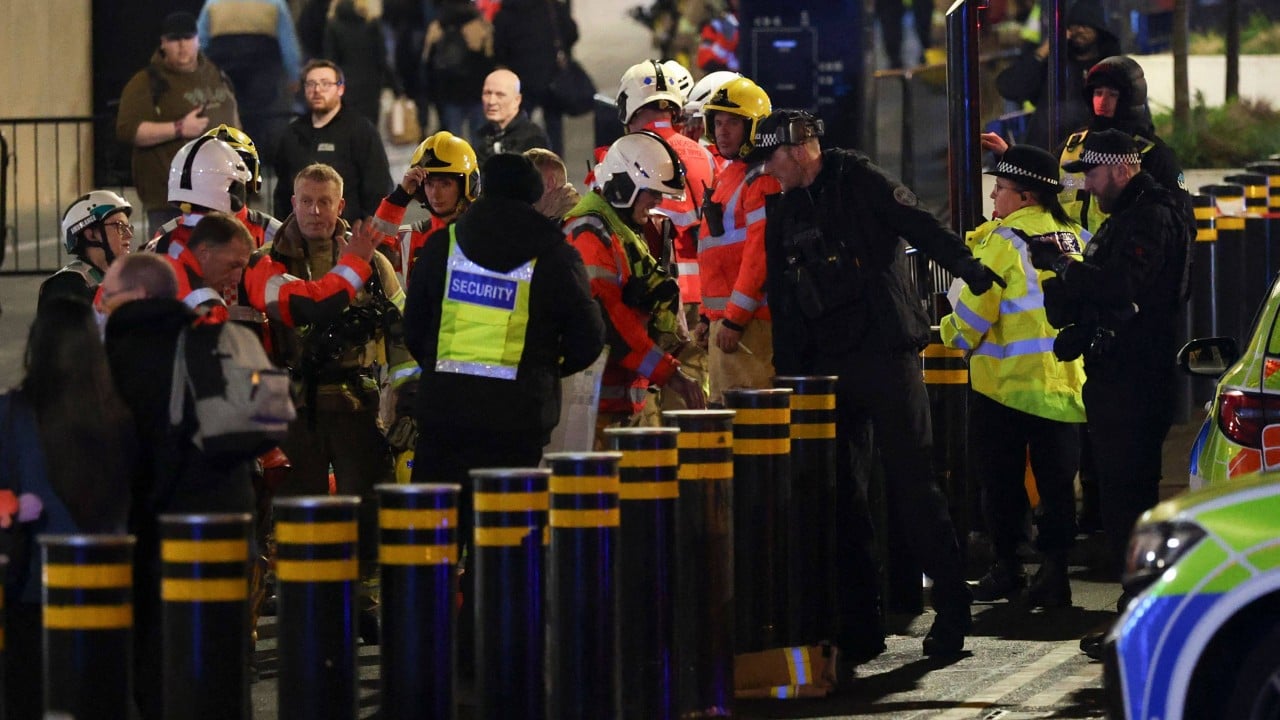
Panic moves faster than security ever could. When thousands of people are evacuated from a UK concert after an unknown substance is released, the headlines focus on the chaos outside the doors, yet the real story lies in the split-second decisions made inside the control room.
Most people assume a mass evacuation means a worst-case chemical attack. That's rarely the case. In fact, the vast majority of these alerts stem from localized irritant sprays, accidental chemical leaks from venue maintenance, or false alarms triggered by overheating equipment and vaping aerosols. Still, venue commanders can't afford to guess when hundreds of concertgoers start coughing at once.
If you've ever stood in the middle of a packed arena floor when the house lights suddenly slam on, you know the immediate confusion. The music cuts out. Security guards start yelling instructions over the din of a confused crowd. Nobody knows if it's a fire, a structural issue, or something in the air.
The Anatomy of a UK Concert Evacuation
When an unknown substance is reported at a major UK venue, emergency protocols kick in within seconds. The UK operates under strict public safety frameworks, including the Health and Safety Executive (HSE) event safety guidelines and counter-terrorism preparedness standards shaped by ProtectUK.
Venue security teams don't wait for lab results before clearing a bowl. They rely on behavioral cues from the crowd. If twenty people in the same lower-tier block suddenly start rubbing their eyes, wheezing, or clutching their throats, the safety officer calls a code.
Why Security Clears the Entire Building
You might wonder why a localized incident in section 104 forces ten thousand people out onto the street. Air circulation is the main culprit. Modern indoor arenas use massive Heating, Ventilation, and Air Conditioning (HVAC) systems that push air across the entire venue to keep body heat from turning the room into a sauna.
If an irritant like pepper spray, CS gas, or a noxious industrial cleaner enters that airflow, it doesn't stay in one corner. It spreads. Shutting down the air handlers takes time, and keeping thousands of people trapped inside while an unidentified aerosol circulates is a liability no licensed UK venue will accept.
Emergency services—specifically the local police force, the ambulance service, and the Fire and Rescue Service—take command the moment the call goes out. Firefighters arrive with specialized Hazardous Materials (HazMat) units trained to test air quality using handheld spectrometers and multi-gas detectors.
What Most People Get Wrong About Unknown Substances in Crowds
Media coverage of a UK concert evacuation almost always leans into the mystery of the "unknown substance." That phrase triggers immediate fear. People picture military-grade nerve agents or complex biological threats.
Honestly, the reality is usually far more mundane, though still dangerous in a cramped space.
- Illicit self-defense sprays. Pepper spray and CS gas are illegal to carry in the UK under the Firearms Act 1968, yet they still slip past bag checks. When someone discharges one during an altercation in a mosh pit, the capsaicin or chemical irritant affects everyone within a thirty-foot radius.
- Refrigerant and maintenance leaks. Arenas run on miles of pressurized pipes for cooling systems, pyrotechnics, and CO2 cryo-jets. A blown valve on a stage cryo-cannon or a leaking refrigeration unit can release gas that displaces oxygen or smells strongly of ammonia, mimicking a chemical release.
- Mass psychogenic responses. Once ten people start coughing and shouting that they can't breathe, anxiety spreads through the crowd like wildfire. The human brain reacts to perceived airborne threats with real physical symptoms—shortness of breath, dizziness, and nausea—even among people nowhere near the initial source.
I've watched venue safety briefings where veteran security directors admit that managing crowd psychology is harder than managing the actual hazard. A minor irritant in a calm room is an inconvenience. The exact same irritant in a panicking crowd causes trampling injuries at the exit bottlenecks.
How Emergency Responders Identify the Threat
Once the building is empty and concertgoers are gathered at designated dispersal points, the slow work begins. You don't get instant answers in HazMat operations.
Firefighters enter the venue wearing Level A or Level B protective suits with self-contained breathing apparatus. They carry Photoionization Detectors (PIDs) and Fourier Transform Infrared (FTIR) spectrometers. These devices can identify thousands of volatile organic compounds and toxic industrial chemicals on the spot, without waiting days for a forensic laboratory.
Paramadic teams from the NHS set up triage zones outside the perimeter. They check exposed attendees for specific clinical signs:
- Pupil dilation or pinpoint pupils, which help rule out or confirm certain nerve agents and specific drug exposures.
- Skin blistering or chemical burns, indicating corrosive liquids or vapors.
- Respiratory distress patterns, distinguishing between simple upper-airway irritation from pepper spray and deeper pulmonary edema.
If the detectors find zero toxic compounds and medical checks show only mild eye and throat irritation, responders usually conclude that a personal defense spray or prank stink bomb was used and has since dissipated.
The Role of Martyn's Law and UK Venue Security
Crowd safety in the UK has undergone massive scrutiny over the past decade. Following the 2017 Manchester Arena bombing, campaigners pushed for the Terrorism (Protection of Premises) Bill, widely known as Martyn's Law.
This legislation requires venues with a capacity over 200 to formalize their emergency plans, train staff on threat recognition, and establish clear evacuation and lockdown procedures. For large arenas holding over 800 people, the requirements go much further, mandating physical security measures, risk assessments, and direct coordination with local counter-terrorism policing.
When thousands are evacuated from a UK concert, you're seeing Martyn's Law principles in action. Venues now invest heavily in high-definition CCTV, behavioral detection officers who watch the crowd rather than the stage, and automated PA systems that override the band's soundboard instantly.
Where Security Still Falls Short
Even with better laws, physical screening at UK concerts has obvious limits. Walk-through metal detectors catch knives and firearms, yet they won't flag a plastic canister of pepper spray or a glass vial of butyric acid.
Bag searches at major venues are often rushed. Security contractors work under intense pressure to clear queues before the headliner takes the stage. When thirty thousand fans arrive within a forty-five-minute window, guards are checking for big items, not inspecting the lining of every small crossbody bag.
Staff turnover is another weak link. Many stewards at large concerts are agency workers brought in for a single night. While senior supervisors know the evacuation routes cold, the temporary steward standing at Gate 4 might freeze when five thousand people surge toward the doors at once.
What You Should Do If an Evacuation Happens at a Gig
Most concertgoers make the exact same mistakes when an evacuation starts. They stop to film the scene on their phones. They try to push against the crowd to find a friend at the bar. Or they sprint blindly toward the main entrance they walked through two hours earlier.
Do the opposite.
First, ignore the main entrance. Almost everyone tries to leave the exact way they came in, creating dangerous crush points at the primary turnstiles. Every UK arena is legally required to have fire exits spaced evenly around the perimeter, marked by illuminated green running-man signs. Those side exits lead directly outside and stay clear far longer than the main concourse.
Second, cover your nose and mouth with dry fabric if you smell something sharp or feel your eyes watering. Don't pour water on your face if you suspect pepper spray or a chemical irritant until you're completely out of the area and know what it is—some dry chemical powders react violently with water, turning into acids on your skin.
Third, keep moving away from the building once you get outside. Standing right outside the exit doors blocks the people behind you and keeps you downwind if the venue vents contaminated air through roof exhausts. Walk at least two blocks away before stopping to call your friends or check social media for updates.
Practical Steps for Your Next Concert
You don't need to stay home out of fear, yet walking into a massive indoor crowd with a basic plan makes a massive difference if things go sideways.
- Locate two exits before the support act finishes. Take ten seconds when you reach your seat or standing spot to look left and right for the nearest green exit signs.
- Set an outside meeting point with your group. Mobile networks crash instantly during mass evacuations because thousands of people try to make calls and upload videos simultaneously. Pick a specific street corner or landmark outside the venue perimeter beforehand.
- Carry a small pack of saline wipes or tissues. If an irritant spray goes off nearby, wiping your eyes gently with dry tissue—rather than rubbing them with your bare hands—prevents you from grinding the chemical deeper into your corneas.
- Follow official police and venue channels only. During a live evacuation, rumors spread rapidly on X and TikTok, often falsely claiming active shooters or explosions. Rely exclusively on updates from the venue's verified account and local police forces for accurate instructions on when and how to retrieve belongings or head home.