The air in a windowless room has a specific, heavy scent. It smells of ozone, stale coffee, and the quiet, vibrating hum of servers that never sleep. For those who have spent years inside the labyrinth of the American intelligence community, that smell is the scent of "the mission." But for a few, it eventually becomes the scent of a trap.
John Kiriakou knows that smell better than almost anyone. He sat in those rooms. He tracked targets across the globe for the CIA. Then, he did the one thing the architecture of power is designed to prevent: he spoke. He didn't just leak a document; he gave a face to a practice the government wanted to keep in the shadows. He paid for that clarity with his freedom.
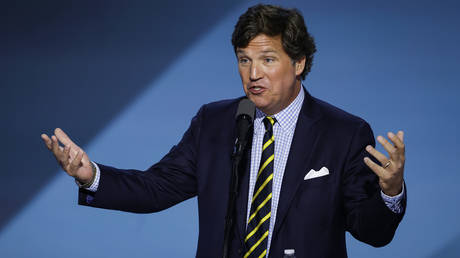
When a man like Kiriakou says he is worried about the safety of a figure as polarizing as Tucker Carlson, it isn't a partisan soundbite. It is a warning from a man who has seen how the machinery grinds when it decides someone has become a "problem."
The concern isn't necessarily about a cinematic ambush in a dark alley. The modern world is far more sophisticated. It is about the slow, methodical erasure of a person's ability to exist within the system. It starts with the digital footprint. Then comes the financial strangulation. Finally, there is the isolation.
The Anatomy of an Outcast
Imagine a journalist sitting in a high-end hotel in a foreign capital. They are there to interview a world leader that the domestic establishment has branded an untouchable enemy. In this hypothetical scenario—though one rooted deeply in recent headlines—the journalist isn't just recording an interview. They are crossing a tripwire.
The moment the camera starts rolling, a thousand miles away, a different kind of recording begins. Metadata is harvested. Travel records are scrutinized. Financial transactions are flagged. To the average person, these are just bureaucratic hurdles. To someone who has been through the meat grinder of the Espionage Act, these are the opening notes of a funeral dirge for a career.
Kiriakou’s perspective is grounded in a brutal reality. He saw how the state responded to his own whistleblowing regarding the waterboarding program. They didn't just disagree with him. They dismantled him. They used a law from 1917 to ensure he was silenced, not because he was a threat to national security in the literal sense, but because he was a threat to the narrative.
Tucker Carlson, regardless of what one thinks of his rhetoric, has stepped into that same crosshair. By bypassing the traditional gatekeepers of information, he has signaled that the old rules of engagement no longer apply. To the institutions that rely on those rules to maintain order, that isn't just dissent. It is an insurrection of the mind.
The Invisible Guardrails
We often speak of the "Deep State" as if it were a cabal of men in hooded robes meeting in a basement. The reality is much more boring and, therefore, much more terrifying. It is a collection of mid-level managers, lawyers, and analysts who all share the same worldview. They don't need a secret memo to tell them who the enemy is. They feel it in their bones.
When a public figure like Carlson travels to Moscow to interview Vladimir Putin, he isn't just doing a job. In the eyes of the intelligence community, he is providing "platforming" or "propaganda." Once those labels are applied, the gloves come off.
The danger isn't always physical. It is the threat of "legal grey zones." Consider the way the US government handled Julian Assange. They didn't need to touch him for years; they simply made the world so small for him that a broom closet in an embassy became his entire universe. They weaponized the law to create a vacuum.
Kiriakou’s fear for Carlson stems from this exact playbook. He understands that when you challenge the foreign policy consensus of the United States—especially regarding a conflict as existential as the one in Ukraine—you aren't just arguing with a news anchor. You are arguing with the trillion-dollar industry of war.
The Price of the Platform
There is a psychological toll to being the man in the arena when the lions are being fed. We see the polished suits and the confident monologues, but we don't see the late-night calls from lawyers. We don't see the realization that your phone is no longer a tool, but a tracking device.
The human element here is the weight of constant surveillance. It changes a person. It makes them paranoid, yes, but it also makes them harder. It forces a choice: retreat into the safety of the herd, or double down until the system breaks you or you break it.
Carlson has chosen the latter. By launching his own network and seeking out the most controversial figures on the planet, he has effectively declared himself a sovereign entity in the world of information. But sovereignty is expensive. It requires a security detail that rivals a small nation’s military. It requires private servers. It requires a level of vigilance that most people would find exhausting after forty-eight hours.
The Logic of the Leak
Why does this matter to the person reading this on their lunch break? Because the safety of a high-profile journalist is the canary in the coal mine for everyone else’s right to know.
If the state can successfully intimidate, prosecute, or physically endanger a man with millions of dollars and a massive platform, what hope does the average citizen have? Kiriakou’s warning is a mirror. It asks us to look at what we are willing to tolerate in the name of "security."
We have seen this pattern before. From the Church Committee hearings in the 70s to the Snowden revelations a decade ago, the pattern is consistent. The state seeks total information awareness. Anyone who disrupts that clarity is viewed as a pathogen.
The tools have changed, but the instinct remains the same. In the past, they might have intercepted your mail. Now, they intercept your life. They can see who you talk to, where you go, and—thanks to predictive algorithms—what you are likely to do next. When a figure like Carlson moves outside of these predictable lanes, the system glitches. And when the system glitches, it tries to "fix" the error.
The Shadow of the Espionage Act
The ghost of the 1917 Espionage Act hangs over this entire discussion. It is a broad, blunt instrument that has been used increasingly over the last twenty years to target anyone who reveals uncomfortable truths. It doesn't care about your intent. It doesn't care if the information you shared was in the public interest. It only cares that you colored outside the lines.
Kiriakou was the first CIA officer to be convicted under this act for disclosing classified information to a reporter. He knows that the law is not about justice; it is about leverage. If they want to get you, they will find a document you handled incorrectly, a conversation you had that wasn't authorized, or a source they can flip against you.
This is the "safety" Kiriakou is worried about. It is the safety of one's future. The safety of one's reputation. The safety of a life lived without a federal shadow following every footstep.
The Final Frontier of Dissent
We are living through a period where the definition of "truth" is being contested more fiercely than at any point in modern history. In this environment, the reporter isn't just an observer. They are a combatant.
When Carlson sits across from a man like Putin, he is engaging in a form of high-stakes diplomacy that the State Department didn't authorize. That is the ultimate sin in Washington. It is a violation of the monopoly on power.
The invisible stakes are the precedents being set right now. If we allow the state to decide which interviews are "safe" and which journalists are "protected," we have already lost the essence of a free society. We have traded the messy, dangerous world of open inquiry for the sterile, "safe" world of managed perception.
The scent of that windowless room is spreading. It is no longer confined to the basement of Langley. It is in our social media feeds. It is in our banking apps. It is in the way we look at people who dare to ask the questions we were told were already answered.
Kiriakou’s warning is a reminder that the most dangerous place to be is between a powerful institution and the story it is trying to hide. Whether you love Carlson or loathe him, his safety—his ability to speak and exist without state interference—is the fence that keeps the rest of us free.
Once that fence is torn down, the wind starts to blow very cold for everyone.
Consider the silence that follows when a loud voice is suddenly cut off. It isn't the silence of peace. It is the silence of a room where everyone is suddenly very, very careful about what they say next. That is the world Kiriakou is trying to prevent. That is the human cost of the mission when the mission becomes the suppression of the person.
The machinery is humming. The servers are warm. The eyes are watching. And somewhere, in a room without windows, a file is being updated.
Would you like me to analyze the historical parallels between current journalist safety concerns and the 1970s Church Committee findings?