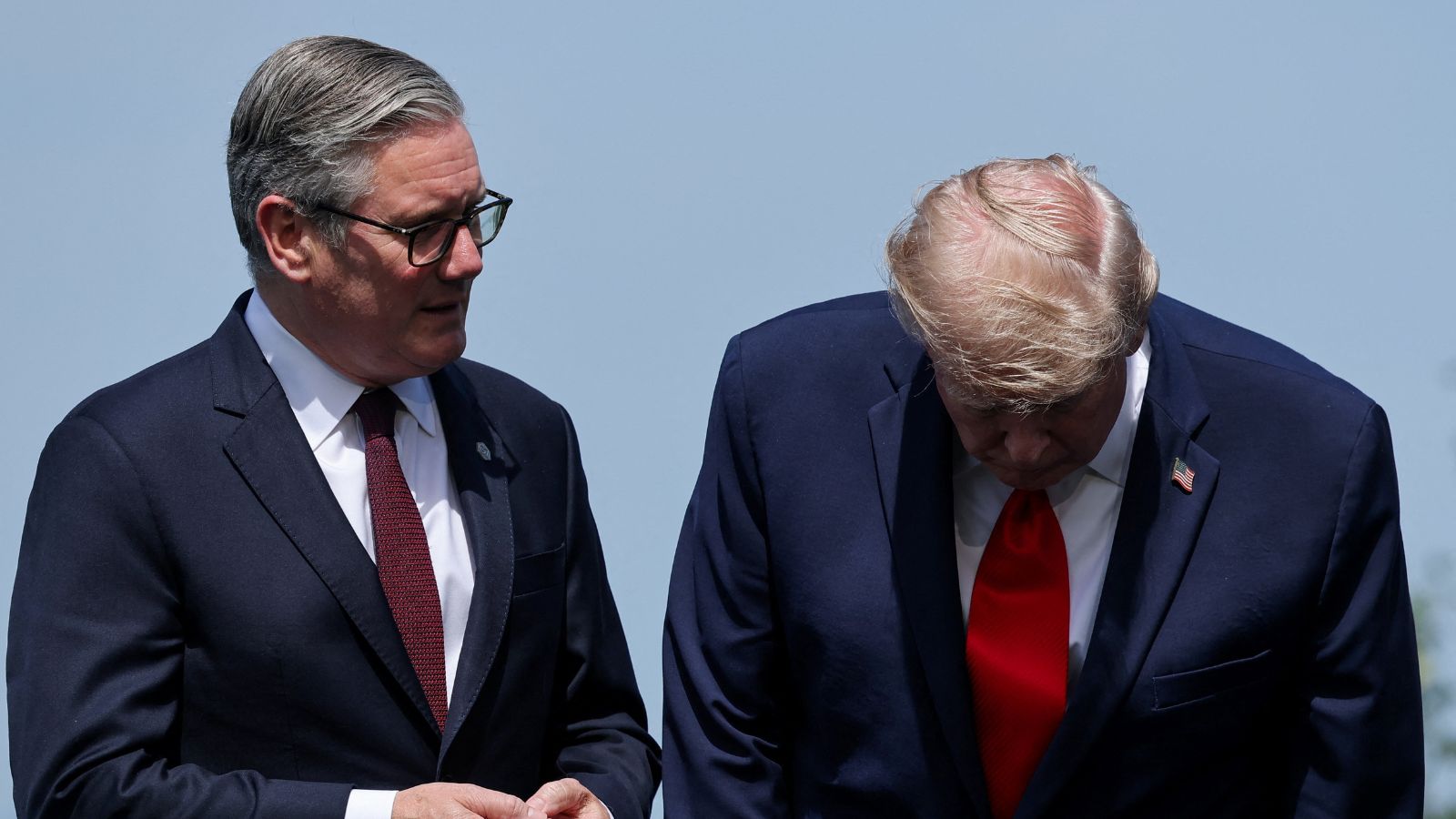
The air inside a G7 summit room does not circulate like regular air. It is heavy, thick with the scent of high-grade cedar, expensive wool, and the distinct, metallic tang of collective anxiety. In these rooms, microscopic shifts matter. A polite nod can secure a supply chain. A slightly prolonged handshake can steady a fluctuating currency. For decades, global diplomacy operated like an ultra-high-stakes poker game played by people who had spent their entire lives learning how not to blink.
Then came the disruption.
To understand what happens when traditional diplomacy collides with reality-television-style bravado, you have to look past the official communiqués. You have to look at the faces of the people stuck in the room. Diplomacy is ultimately a game of psychological leverage, and for four years, the leader of the free world decided to play a completely different game.
The Weight of the Monologue
Picture a formal dinner in Biarritz or Taormina. The cutlery is silver, the plates are porcelain, and the translators are sweating in their soundproof glass booths. Emmanuel Macron sits across the table, his posture perfect, ready to discuss carbon taxation or Iranian nuclear compliance. He has briefings. He has data.
Instead, he gets a lecture on his own marriage.
When Donald Trump publicly quipped about the age gap between the French President and his wife, Brigitte, it wasn’t just a breach of etiquette. It was a tactical deployment of discomfort. In traditional statecraft, personal lives are a sanctuary. By dragging a counterpart's private reality into the cold light of a multilateral press conference, the unwritten rules are instantly vaporized.
The strategy is simple: keep them off-balance. If a rival leader is wondering whether you are about to insult their spouse, they aren't fully focused on defending their steel tariffs.
But this approach carries an invisible cost. Trust is a non-renewable resource in international relations. When you treat a summit like a comedy club roast, you don't look strong to the people sitting next to you. You look unpredictable. In a world built on treaties and mutual defense pacts, unpredictability is a fire in a fireworks factory.
Ghosts in the Room
Nowhere was this friction more palpable than in the interactions with Japan.
Consider the historical weight that hangs over any meeting between an American president and a Japanese prime minister. Every word is weighed on a scale of decades. Yet, during a tense negotiation over trade deficits, the conversation suddenly veered into the Pacific theater of World War II. A casual remark about Pearl Harbor was thrown across the table toward Shinzo Abe.
Silence.
It is the kind of silence that makes the ears ring. For the Japanese delegation, history is not a punchline or a casual reference to be deployed over shrimp cocktail. It is a deeply felt ledger of national identity, trauma, and deliberate reconciliation. To invoke it carelessly is to signal that you do not see the person across from you as a partner with a shared future, but as an adversary defined by the past.
Abe, a master of political survival, chose the only path available to a traditional statesman confronted with chaos: absolute composure. He smiled. He nodded. He moved the conversation back to automotive manufacturing.
But the damage of those moments lingers long after the motorcades leave the tarmac. Leaders do not forget the feeling of being publicly managed. They do not forget the realization that the alliance they rely on for national security might hinge on the mood of a single man on any given Tuesday morning.
The Handshake as a Battlefield
We have all experienced the power dynamic of a bad handshake. The over-tight grip, the aggressive pull-in, the refusal to let go. It is a playground tactic modernized for global consumption.
During these summits, the physical interactions became a spectator sport. Photographers waited with fingers on shutters, desperate to capture the exact second a European leader tried to resist the famous America-First tug. When Macron gripped Trump’s hand so tightly their knuckles turned white and the skin left an imprint, it was celebrated by pundits as a triumph of resistance.
Think about how absurd that reality is.
The fate of Western democratic alignment was being measured by the friction of skin on skin. This is what happens when substance is systematically replaced by theater. The actual work of the G7—the grueling, late-night sessions where bureaucrats argue over the placement of commas in joint statements regarding maritime law—was completely eclipsed by the spectacle.
The real problem lies elsewhere. While the public was laughing at memes of a tense oval office meeting or analyzing the body language of a group photo where one leader stood apart from the rest, the foundation of the post-war order was quietly cracking.
Allies began to realize they were on their own.
The Solitary Path
The true climax of this era did not happen during a speech or a signing ceremony. It happened in a hallway, away from the main stage, where the realization finally set in that the old guardrails were gone.
For generations, the G7 was less about economic data and more about a shared psychological consensus. It was a club of nations that agreed on a basic set of facts: borders should not be changed by force, trade should be relatively free, and dictators should be resisted.
When the American president took a seat at that table and treated democratic allies like freeloaders while praising authoritarian leaders outside the room, the consensus shattered. The stakes were no longer abstract. They were visible in the eyes of Justin Trudeau as he tried to navigate a sudden barrage of hostile tweets sent from Air Force One after leaving a Canadian summit.
Consider what happens next when the noise fades.
The ultimate irony of aggressive, transactional diplomacy is that it isolates the person using it. You might win the press conference. You might get the viral clip that dominates the morning news cycle back home. You might even force a short-term concession on a trade quota.
But when the next global crisis arrives—whether it is a pandemic, a banking collapse, or a rogue state testing a ballistic missile—you look around the room for your friends. And you realize you have turned them all into spectators.
The cedar room is quiet now. The teacups have been cleared away. The translators have packed their bags. What remains is the memory of a period when the world’s most powerful leaders looked at the American chair not with the traditional mix of respect and envy, but with a quiet, watchful caution. They learned to survive the monologue. They learned to dodge the quips. And in doing so, they learned how to build a world that no longer looks to Washington for the rules of the game.