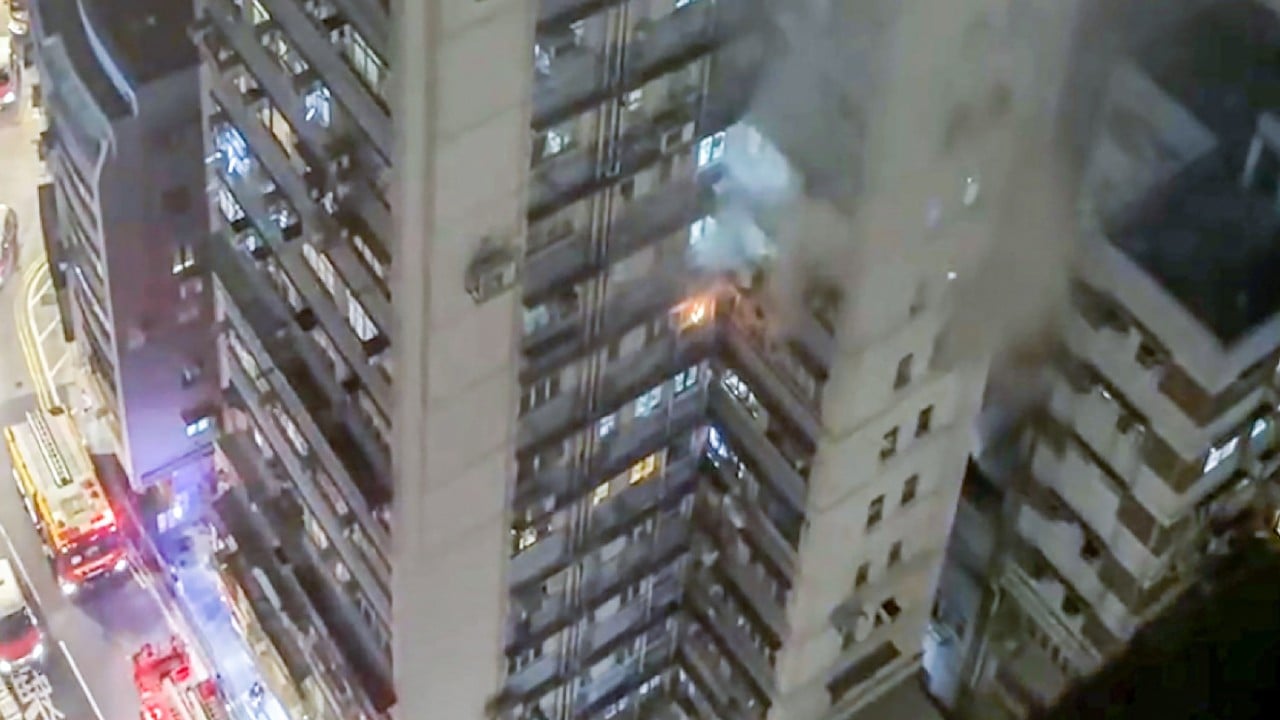
A fatal residential fire in a dense district like Sai Ying Pun rarely kills through flames alone; it kills through a compressed timeline of smoke accumulation, limited egress geometry, and delayed recognition by vulnerable occupants. Standard breaking-news reports capture the terminal event—an elderly resident pulled unconscious from a flat and later pronounced dead—but they treat the tragedy as an isolated point in time rather than the outcome of a coupled physical and operational system. To understand why older adults suffer disproportionate mortality in high-density urban fires, analysts must strip away chronological reporting and evaluate four structural mechanisms: thermal and toxic smoke dynamics in compact enclosures, age-specific physiological and mobility constraints, building and neighborhood morphology, and response-time friction from street to interior room.
Because no case-specific incident dossier or full competitor text is provided beyond the headline reference to a fatal flat fire in Sai Ying Pun, this analysis separates verified fire-safety and urban-risk mechanics from educated hypotheses about how such incidents unfold. Known facts include the basic physics of compartment fires, the established vulnerability of older adults to smoke inhalation and delayed evacuation, and the general urban profile of Sai Ying Pun as an older, high-density Hong Kong district with mixed-age residential stock. Educated hypotheses in this article are labeled explicitly as analytical models of cause and effect rather than claims about specific building code violations, equipment failures, or individual actions in a particular unverified event.
The Four Structural Drivers of Residential Fire Mortality
Breaking news frames a fatal fire as a sequence of discrete facts: ignition, rescue, hospitalization, and death. Operational risk analysis reframes the same event as a race between tenability loss inside the room of origin and intervention arrival from outside. Tenability—the threshold at which a human being can remain conscious, breathe safely, and move toward an exit—collapses far faster than structural walls fail.
Smoke Toxicity and Thermal Compression in Compact Flats
In modern residential interiors, synthetic furnishings, polymers, textiles, and household electronics burn rapidly once piloted or smoldering combustion transitions to active flaming. Even when the visible flame front remains confined to a single room or appliance area, incomplete combustion generates carbon monoxide, hydrogen cyanide, carbon dioxide, and dense particulate aerosols. Carbon monoxide binds to hemoglobin with roughly two hundred times the affinity of oxygen, reducing oxygen delivery to the brain and myocardium while impairing judgment long before a resident feels extreme heat.
In compact urban apartments, small room volumes accelerate smoke stratification and descent. Hot gases rise to the ceiling, form a thickening layer, and bank downward toward breathing height. An occupant who remains seated, lies in bed, or pauses to gather belongings encounters elevated concentrations of irritants and toxic gases within minutes. Hypothetically, if a fire starts near an exit path or kitchen zone in a small flat, smoke can obscure visual cues and irritate airways before conventional alarms or neighbor alerts register.
Age-Specific Vulnerability and the Mobility Gap
Age alters every stage of the fire-response chain: perception, decision-making, locomotion, and physiological resilience. Sensory acuity declines with age, meaning lower-frequency smoke alarm tones or subtle visual cues such as light haze may fail to wake a sleeping older adult or penetrate hearing impairment. Cognitive processing speed and baseline confusion—especially in individuals with dementia, mild cognitive impairment, or nighttime disorientation—can turn a straightforward exit sequence into hesitation or spatial misnavigation.
Physical mobility creates a second bottleneck. Arthritis, balance deficits, reliance on walking aids, or post-surgical weakness increase the time required to stand up, unlock a door, navigate narrow corridors, or descend stairs if lifts are out of service or unsafe to use. Physiologically, older adults have lower cardiovascular and respiratory reserves. When smoke inhalation coincides with exertion or underlying heart and lung disease, the margin between sub-lethal exposure and fatal hypoxia or cardiac arrest narrows sharply.
High-Density District Morphology and Legacy Building Constraints
Districts like Sai Ying Pun combine steep topography, narrow streets, tight lot boundaries, and multi-generational building stock spanning decades of evolving fire codes. Older walk-up or mid-rise residential blocks often feature smaller floor plates, tighter circulation corridors, older electrical or domestic appliance configurations, and varied levels of retrofit upgrades compared with newly constructed developments. High population density also increases the likelihood of clutter in common areas or interior entries, as well as complex household arrangements where an elderly person may live alone or with a caregiver who is temporarily absent.
Hypothetically, in a dense urban neighborhood, external constraints compound interior hazards. Narrow roadways, parked vehicles, or pedestrian congestion can slow initial vehicle positioning, while older stairwell enclosures or shared utility risers may present different smoke-containment behavior than modern pressurized cores. None of these factors guarantees a fatality on its own, yet together they compress the safety margin when an ignition occurs in an occupied flat.
Detection Lag and Response-Time Friction
Every minute in a compartment fire carries nonlinear consequences because heat release rate and smoke production escalate as fuels preheat and surfaces ignite. Detection lag occurs when a fire begins unobserved—such as overnight, in an unoccupied room, or from a fault behind furniture or cabinetry. Without early interconnected detection or immediate sensory cues, valuable minutes elapse before emergency services are called.
Once a call is placed, total response time comprises dispatch processing, travel through the urban street grid, arrival at the building exterior, access to the specific floor and flat, forcible entry if doors are locked or obstructed, and interior search and extraction. Even a well-trained fire service faces physical travel and access time that cannot be compressed to zero. When an occupant is already incapacitated by smoke or immobility prior to crew entry, extraction shifts from timely prevention to critical-care rescue under severe physiological stress.
Cause and Effect Chains Missed by Standard Reporting
Headline coverage naturally focuses on the dramatic moment a victim is pulled from a structure. That framing obscures the upstream chains of causality that determine whether a spark becomes a fatality.
One missed chain links quiet ignition to delayed alert. A smoldering or slow-developing fire produces heavy smoke and toxic gases while generating modest initial heat. If an occupant is asleep or has diminished olfactory and auditory sensitivity, early warning fails. By the time heat or visible flame becomes obvious, carbon monoxide and irritant gases may already impair coordination, preventing the occupant from opening a window, reaching a phone, or unlocking a door.
A second chain links interior layout and lock security to rescue delay. Many urban residents keep security gates or deadbolts engaged for crime prevention. While understandable in dense cities, complex locking mechanisms can slow both self-evacuation during disorientation and responder entry when seconds count. Similarly, placing furniture near doorways or storing items along narrow hallways turns minor obstacles into severe hazards under zero-visibility smoke conditions.
A third chain links medical baseline to post-rescue outcome. Pulling an unconscious resident from a smoke-filled flat does not end the physiological insult. Hypoxia, thermal airway injury, toxic gas binding, and acute adrenergic stress can trigger fatal arrhythmias, respiratory failure, or secondary complications in hospital even after airway support begins. Reporting the death as a simple consequence of "a fire" collapses distinct clinical and operational failure points into a single label.
Answering High-Intent Questions Through System Mechanics
People reading about a fatal flat fire involving an older resident typically want to know how such tragedies start, why older adults face higher danger, how rescue operations unfold, and what actually prevents deaths. Looking at these questions through system mechanics reveals clear operational trade-offs rather than simple slogans.
How Do Residential Fires Typically Escalate Inside Flats?
Most residential fires begin from ordinary domestic sources—cooking equipment left unattended or adjacent to combustibles, electrical faults or overloaded outlets, lithium-ion or portable batteries, heating appliances, or smoking materials. In the incipient stage, flames may be small and localized, while smoke begins to accumulate near the ceiling. In the growth stage, radiant heat preheats nearby surfaces, accelerating pyrolysis and expanding the smoke layer downward. If ventilation or fuel load allows flashover or full room involvement, temperatures surge rapidly and tenability disappears across the compartment.
Why Are Elderly Residents Disproportionately at Risk?
Risk concentrates among older adults because four vulnerabilities intersect:
- Slower hazard detection caused by age-related hearing loss, deeper or fragmented sleep patterns, and reduced sensitivity to smoke odors.
- Slower physical egress driven by reduced gait speed, balance limitations, joint pain, or reliance on mobility aids.
- Higher cognitive friction when sudden emergencies trigger confusion, memory lapses, or uncertainty about exit routes.
- Lower physiological tolerance because diminished respiratory and cardiac reserves make hypoxic and toxic atmospheres lethal at lower exposure thresholds.
What Happens Between Ignition and Extraction?
The interval between ignition and extraction is governed by two competing timelines. The hazard timeline runs from ignition through smoke buildup, tenability loss, and physiological incapacitation. The intervention timeline runs from detection and emergency call through dispatch, road transit, building entry, hose and search deployment, and patient removal. Fatalities occur when the hazard timeline overtakes the intervention timeline before an unassisted escape or timely rescue can happen.
Which Interventions Reduce Fatalities Most Reliably?
Prevention works best when it acts on both sides of the timeline. Early detection—especially photoelectric or multi-sensor smoke alarms placed appropriately and tested regularly—buys critical minutes during the incipient stage before toxic smoke reaches lethal levels. Source control around cooking, electrical cords, and charging devices reduces ignition probability in the first place. Meanwhile, clear egress paths, simple door hardware that allows rapid opening from inside, neighbor or caregiver check-ins for isolated seniors, and building-level fire safety maintenance reduce friction when an incident occurs.
Operational Trade-Offs and Limits of Prevention
No safety measure eliminates residential fire risk completely, and every intervention carries practical limits that analysts and practitioners must state candidly. Smoke alarms only warn occupants if they are installed in effective locations, powered reliably, audible to the specific sleeper, and acted upon; alarms do not physically move an immobile person or clear toxic gas from a room. Fire-resistant materials and modern building codes improve structural and compartment performance over time, yet older housing stock cannot be rebuilt overnight without major housing, cost, and displacement trade-offs.
Security measures and domestic convenience also compete with fire safety. Locking doors tightly deters intruders but can complicate rapid egress or entry if keys are misplaced or locks jam under stress. Likewise, emergency response times in dense, high-rise cities face inherent physical constraints of traffic, vertical travel, and complex building layouts. Claiming that any single checklist or technology guarantees zero fatalities overstates what operational controls can achieve in real homes.
Strategic Recommendation for High-Density Urban Fire Prevention
Municipal agencies, building managers, and families supporting older residents in high-density districts should shift focus from generic fire-awareness reminders to targeted tenability protection for high-vulnerability households. The highest-leverage operational play is a coordinated risk-stratification program that pairs early-detection hardware—such as interconnected smoke alarms and low-frequency or visual alert options suited to older adults—with practical home-egress and ignition audits for elderly residents living alone or in older multi-unit buildings. Coupling that household-level intervention with clear building common-area clearance and rapid-access protocols for emergency responders targets the exact bottleneck where smoke accumulation outpaces human mobility and street-to-flat arrival times.