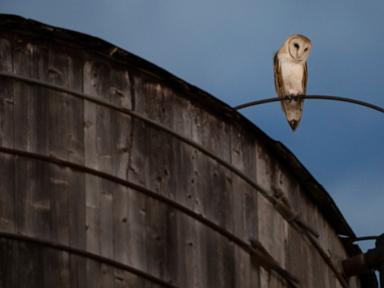
The media loved the narrative: a rare family of barn owls nested atop a historic wooden water tower in Manhattan, and the big, bad building owner dismantled the roof, driving out nature’s pest control. Cue the outrage machine. Environmental bloggers wept, neighborhood activists signed petitions, and urban wildlife advocates decried the destruction of a fragile ecosystem nestled amidst the concrete jungle.
It makes a tear-jerking headline. It is also an absurdly naive take on how urban ecosystems actually work.
The tear-down of that water tower roof wasn't a tragedy of human greed. It was a mandatory intervention driven by structural realities, public health codes, and a fundamental misunderstanding of raptor ecology. We have spent decades romanticizing the idea of wild predators setting up shop in collapsing human infrastructure while ignoring the brutal trade-offs involved.
If we actually care about wildlife in cities, we need to stop treating crumbling human architecture as impromptu sanctuaries.
The Water Tower Trap: Why Romanticizing Urban Nesting Destroys Raptors
Barn owls (Tyto alba) do not care about romantic urban aesthetics. They care about food supply and cavity shelter. A leaking, rotting cedar water tower on a rooftop in SoHo offers shelter, sure. It also offers a toxic cocktail of heavy metals, rodenticide-laced prey, and microplastic pollution that turns an urban nest into a ecological sink.
When well-meaning citizens fight to preserve an unsafe nesting site on active infrastructure, they are actively championing an ecological trap. An ecological trap occurs when organisms settle in poor-quality habitats that deceptively present key environmental cues of high-quality habitats.
Consider the reality of an active New York City water tower:
- Treated Water Exposure: These tanks store potable water for hundreds of residents. A brood of owls generates massive amounts of whitewash, regurgitated pellets, and decaying prey carcasses. Allowing animal waste to collect directly above a drinking water supply is a non-negotiable violation of the Department of Health and Mental Hygiene code.
- Secondary Anticoagulant Poisoning: Urban barn owls do not hunt in pristine meadows. They hunt rats in alleys. Those rats are stuffed with brodifacoum and bromadiolone—second-generation anticoagulant rodenticides (SGARs). Research from the New York State Department of Environmental Conservation continuously demonstrates high concentrations of SGARs in apex urban raptors. Encouraging owls to nest deeper in dense commercial zones guarantees higher mortality rates through internal hemorrhaging for both adults and fledglings.
- Structural Degradation: Wooden water towers rely on structural integrity and specific moisture balance. Once the roof membrane fails, structural rot accelerates. A collapsing roof guarantees the destruction of the nest during breeding season, killing eggs or nestlings outright.
Demolishing that decaying roof wasn't an act of environmental vandalism. It was the only responsible call available to property managers facing severe liability and public safety mandates.
The Real Estate Dilemma: You Can't Turn Active Infrastructure Into a Zoo
I have watched property owners spend hundreds of thousands of dollars trapped between municipal fines and public relations nightmares. City inspectors demand immediate repairs under Local Law 11 (facade and roof safety inspection standards), while local birdwatchers block construction crews because a raptor landed on a beam.
This tension highlights a profound ignorance of property law and structural engineering.
+------------------------------------+------------------------------------+
| Romantics' View of Urban Nesting   | Biological & Legal Reality         |
+------------------------------------+------------------------------------+
| Charming co-existence with nature | Severe public health violation     |
| Natural rodent control for free    | Toxic bioaccumulation of SGARs     |
| Permanent urban wildlife sanctuary | Temporary, unsafe structural decay |
+------------------------------------+------------------------------------+
Building managers are legally required to maintain structural elements to prevent collapse and water contamination. The moment an avian species settles inside a critical utility, the timer starts ticking. Expecting private real estate entities to abandon structural maintenance to preserve a single nest site is not conservation policy; it is municipal paralysis.
If a property owner allows a water tower to decay to spare a nest, the roof eventually caving in during a winter gale destroys the birds anyway—along with causing massive property damage and potential loss of human life on the street below.
Stop Fighting Property Owners: Build Purpose-Built Habitats Instead
The real problem isn't that a water tower roof got torn down. The real problem is that city planning relies on accidental habitats rather than intentional engineering.
We expect nature to adapt to our waste, and then we throw a tantrum when our maintenance schedules disrupt the accidental pockets of nature that emerge. It’s lazy. It’s performative.
Here is what actual, effective urban raptor management looks like:
- Mandatory Off-Site Nest Box Placement: If an active nest must be removed from industrial or residential infrastructure, the city should require the immediate installation of a modern, climate-controlled nest box on a non-utility structure within a 500-meter radius before work begins.
- Aggressive Rodenticide Bans Near Nesting Zones: You cannot save urban owls while putting rat poison in every sidewalk bait station. If a neighborhood wants to harbor apex predators, the entire BID (Business Improvement District) must transition to mechanical traps or birth control baits like ContraPest.
- Dedicated Urban Raptor Towers: Convert non-functional, decommissioned architectural features in public parks into dedicated nesting towers. Stop relying on private rooftop infrastructure.
Imagine a city where structural engineers and urban ornithologists work off the same blueprint rather than clashing outside a construction site on 14th Street. We could design artificial cavities into green roof initiatives, building dedicated nest niches away from water systems and HVAC exhausts.
Instead, we waste energy screaming at roofers for fixing a water tank.
The dismantling of that Manhattan water tower roof wasn't the death of urban wildlife. It was a harsh, necessary reminder that cities are built for humans, and if we want wildlife to share this space safely, we have to build dedicated infrastructure for them too. Stop defending rotting roofs. Start building real sanctuaries.