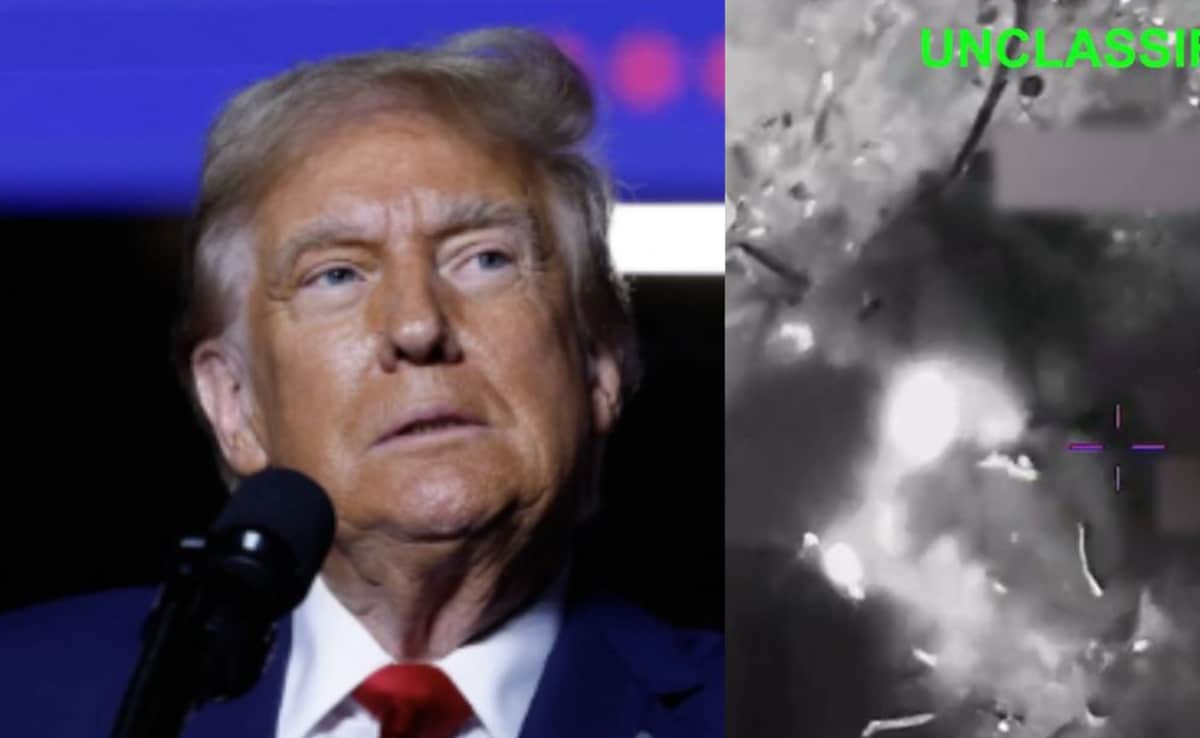
Trump talks about a "very complete" war. Iran "snaps back" with a list of demands that look like they were written for a 1970s revolutionary poster. The mainstream press treats this like a high-stakes chess match where one wrong move triggers nuclear winter.
They are lying to you. Or worse, they’re just bored and lazy.
The "escalation" you see in the headlines isn't a prelude to a kinetic conflict. It is a mutually beneficial marketing campaign. Both Washington and Tehran are currently trapped in a cycle of performative hostility that keeps their respective hardliners happy while ensuring that nothing—absolutely nothing—actually changes on the ground. If you’re waiting for the "big one," you’ve missed the fact that the status quo is far too profitable for both sides to abandon.
The Myth of the Rational Actor
The biggest mistake "experts" make when analyzing the Middle East is assuming that nation-states act like coherent individuals with logical long-term goals. They don’t. They act like collections of competing bureaucracies trying to justify their own budgets.
When Trump uses phrases like "very complete," he isn't describing a military doctrine. There is no "complete" war in the 21st century. Ask the ghosts of the Iraq War planners how "complete" that venture felt in year ten. Instead, this is brand management. It’s about projecting a specific image of strength to a domestic base that values bluntness over nuance.
On the flip side, Iran’s "terms" for de-escalation are designed to be rejected. If the US actually met those terms, the Iranian Revolutionary Guard Corps (IRGC) would lose its primary reason for existence. The IRGC doesn't want the sanctions to end; it wants to control the black market that the sanctions created. They have built an entire shadow economy on the back of being a "pariah state." Total peace would be a financial catastrophe for the Iranian elite.
Why a Real War is Mathematically Impossible
Let's talk about the math that the "war is coming" crowd ignores. Modern warfare is a logistical nightmare that neither side can afford.
- The Strait of Hormuz Trap: Roughly 20% of the world's liquid petroleum passes through this narrow choke point. If a "very complete" war broke out, Iran would sink a few tankers, seed the water with $20,000 mines, and the global price of oil would hit $250 a barrel overnight.
- The Proxy Perimeter: Iran doesn't need to fight the US directly. They have spent forty years building a "Ring of Fire" via Hezbollah in Lebanon, the Houthis in Yemen, and various militias in Iraq. A direct strike on Tehran doesn't end the war; it just turns the entire Middle East into a multi-front insurgency that the US military is no longer configured to fight.
- The Debt Ceiling Ceiling: The US is currently servicing debt at a rate that would make a subprime borrower blush. Funding a new, large-scale theater of operations against a sophisticated adversary like Iran—which has a mountainous geography that makes Afghanistan look like a Kansas wheat field—is a fiscal non-starter.
The "Snap Back" Fallacy
The media loves the phrase "Iran snaps back." It implies a position of strength. It suggests that Tehran is sitting on a winning hand.
In reality, the Iranian regime is screaming because it is suffocating, but it refuses to change its lungs. They set "terms" because it’s the only way to maintain the illusion of sovereignty for their domestic audience. When the Rial is cratering and Gen Z Iranians are increasingly uninterested in the slogans of 1979, the regime needs an external Great Satan to blame for the lack of indoor plumbing and high-speed internet.
The US provides that service for free. Every time a US President tweets a threat, he gives the Supreme Leader another six months of political oxygen.
The Industry Insider’s View: Follow the Money
I’ve sat in rooms where "regional stability" is discussed as if it’s a noble goal. It isn't. Stability is bad for business if your business is selling defense contracts or maintaining emergency powers.
The "War of Words" serves three specific functions:
- Defense Procurement: You can't justify a $800 billion defense budget if you don't have a credible, state-level "adversary." Russia is bogged down in a land war; China is a trade partner. Iran is the perfect "Goldilocks" enemy: strong enough to be scary, but too smart to actually start a war it knows it would lose.
- Oil Price Manipulation: Fear of conflict adds a "risk premium" to every barrel of oil. This benefits US shale producers and Middle Eastern OPEC members alike. The mere threat of war is more profitable than the war itself.
- Internal Consolidation: In both countries, the "enemy" is used to silence domestic critics. Don't like the economy? Too bad, we're at a "critical juncture" with Iran/The Great Satan.
Stop Asking "When Will They Fight?"
The question is fundamentally flawed. They are already fighting the only war they want: a low-intensity, high-visibility PR campaign.
If you want to understand the reality of US-Iran relations, stop reading the transcripts of their speeches. Look at the flow of illicit parts for Iranian drones. Look at the back-channel negotiations in Oman that happen while both sides are publicly screaming at each other.
The "War Very Complete" remark isn't a threat. It’s a script. Iran’s "terms" aren't a manifesto. They’re a script. They are two actors in a long-running soap opera who hate each other on camera but share a drink at the craft services table because the show pays too well to cancel.
Imagine a scenario where the US actually walked away. No sanctions, no threats, just total indifference. The Iranian regime would collapse within five years because they would have nothing to point at to explain why their country is failing. The greatest weapon the US has against Iran isn't a "very complete" war; it's a very complete silence.
But we won't use it. Because silence doesn't sell newspapers, and it doesn't get people re-elected.
The next time you see a headline about "Tensions Rising," remember that the thermometer is being held over a candle by people who want you to stay scared. The "war" is a lie, the "terms" are a joke, and the only people losing are the citizens of both countries who have to pay for the production.
Stop falling for the theater. The stage is old, the actors are tired, and the plot hasn't changed in forty years.
Don't buy the ticket. Turn off the show.
Would you like me to analyze the specific economic data of the IRGC's shadow companies to show you how they profit from the current sanctions regime?


