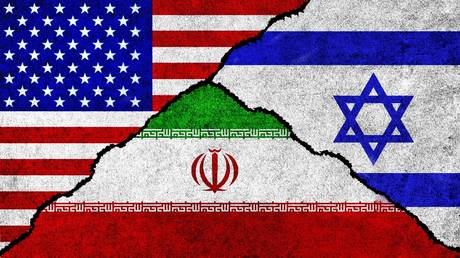
The shadow war between the US-Israeli alliance and Iran didn't just step into the light; it exploded. If you've been following the headlines since February 28, 2026, you know the Middle East is fundamentally different than it was two weeks ago. This isn't just another exchange of rocket fire or a series of "proportional" responses. We're looking at a systematic dismantling of the Iranian regime's hard power, and honestly, it’s not particularly close.
Operation Epic Fury, the joint US-Israeli campaign, has done more to degrade Iranian capabilities in ten days than a decade of sanctions ever could. While the media often portrays this as a balanced slugfest, the reality on the ground tells a much more lopsided story.
The Decapitation of the Old Guard
The most jarring shift is the vacuum at the top. The strike that killed Supreme Leader Ali Khamenei on the first day of the campaign wasn't just a lucky hit; it was a clear signal that the "red lines" of the past are dead. By taking out the one person who held the final word on every Iranian security decision, the US and Israel threw the Islamic Revolutionary Guard Corps (IRGC) into a state of paralyzed confusion.
When you look at how the warring sides are faring, you have to look at command and control. Iran’s leadership is currently playing a violent game of musical chairs. Israeli strikes on March 3 even targeted the building where the Assembly of Experts was supposed to meet to pick a successor. You can't run a regional war when you're too busy worrying about which office building is going to be leveled next.
Air Superiority and the Myth of Iranian Defense
For years, we heard about the S-300 systems and Iran’s "impenetrable" domestic air defenses. That narrative is gone. In the first 12 hours of the conflict, nearly 900 strikes hit Iranian soil. The US and Israel didn't just fly through Iranian airspace; they've basically moved in.
By March 8, 2026, the Israeli Air Force and US Navy assets—including the USS Gerald R. Ford and the USS Abraham Lincoln—have established a level of dominance that makes Iranian retaliation look desperate. Iran's response has mostly consisted of "swarm" drone attacks and ballistic missile volleys. While they’ve managed to hit some civilian infrastructure and US bases in places like Iraq and the UAE, the interception rates are staggering.
The Arrow-3 and David’s Sling systems, bolstered by US Aegis-equipped destroyers, are catching the vast majority of what Iran throws. Iran is burning through its expensive, long-range inventory for very little tactical gain.
The Proxy Network is Crumbling
Iran’s "Axis of Resistance" was supposed to be its ultimate insurance policy. It hasn't worked out that way.
- Hezbollah: Usually the most formidable threat, Hezbollah is currently fighting for its life in Southern Lebanon. After the 2024 campaign that killed thousands of its operatives, the group is a shadow of its former self. Even though they’ve joined the war, they’re facing a potential Israeli ground invasion south of the Litani River.
- The Houthis: They’re still a nuisance in the Red Sea, but they’ve been surprisingly restrained after being "decapitated" by Israeli strikes in late 2025. They know that if they go all-in, they’re next on the target list for the carrier strike groups.
- Syria: The fall of the Assad regime in late 2024 was the quietest catastrophe for Iran. They lost their primary land bridge to Lebanon. Now, they’re trying to fight a war on three fronts with a supply chain that’s been cut to ribbons.
Economic Suffocation and Domestic Chaos
You can't ignore what's happening inside Iran’s borders. The economy was already in a tailspin before the first bombs dropped. Now, with the IRGC distracted by the war, anti-government protests have flared up again.
The Iranian regime is fighting two wars: one against the F-35s over Tehran and another against its own citizens in the streets of Mashhad and Tabriz. When a government has to use its elite security forces to beat back student protesters instead of manning missile batteries, you know they're losing.
The Nuclear Program is in the Crosshairs
The biggest "why" behind this entire conflict is the nuclear program. While the IAEA hasn't officially confirmed the total destruction of sites like Natanz or Fordow, the Trump administration has been very vocal about "obliterating" the infrastructure.
Even if some of the material was moved to "Pickaxe Mountain" or other deep-underground bunkers, the scientists and the logistics required to turn that material into a weapon are under constant fire. Iran's path to a "breakout" has been pushed back years, if not decades.
What This Means for the Next 48 Hours
The conflict isn't over, but the momentum is entirely in the hands of the US and Israel. Iran’s only remaining card is to try and close the Strait of Hormuz, but with the US Fifth Fleet already destroying several Iranian naval vessels, that’s a suicide mission.
If you’re watching this play out, don't expect a diplomatic "off-ramp" anytime soon. The US and Israel have clearly decided that the status quo was no longer tolerable. They aren't looking for a deal; they're looking for a different Iran.
To keep track of how this develops, you should monitor the movement of the USS George H.W. Bush carrier group, which is currently steaming toward the region to provide a third layer of aerial dominance. If that group arrives and the Iranian "Assembly of Experts" still hasn't named a leader, the regime’s collapse might happen faster than anyone predicted. Keep an eye on the internal protests—that's where the real end of this war will likely be written.


