The headlines are dripping with mock outrage. Media outlets are breathlessly reporting that the United States government used "Iran-style covert transfers" to clandestinely siphon 90 million barrels of crude oil out of the Gulf Coast. The underlying narrative from the lazy consensus is predictable: Washington is acting like a rogue state, violating its own sanctimonious principles, and engaging in desperate, under-the-table smuggling operations to manipulate energy markets.
It is a comforting story for critics of Western foreign policy. It is also completely wrong.
The premise that the US is copying the Iranian playbook fundamentally misunderstands how global energy liquidity, state sovereignty, and legal maritime jurisdictions actually operate. I spent fifteen years analyzing commodity logistics and maritime trade flows for institutional hedge funds. I have watched billions of dollars vanish because traders assumed shipping manifests tell the whole story. The reality of this 90-million-barrel movement is not a scandalous descent into black-market piracy. It is the raw, unvarnished execution of state-level financial arbitrage that happens in plain sight every single day.
Stop looking at this as a geopolitical thriller. It is a corporate liquidation sale with a sovereign flag attached to it.
The Flawed Premise of Covert Transfers
To understand why the mainstream commentary is broken, you have to look at what actually constitutes an "Iran-style" transfer. When Iran moves sanctioned crude, it relies on a ghost fleet of unflagged or flag-of-convenience tankers, disabled Automatic Identification System (AIS) transponders, ship-to-ship (STS) transfers in deep international waters, and complex webs of shell companies based in jurisdictions like Panama or the Marshall Islands. The goal is to obscure the origin of the molecule.
The US movement of crude from the Strategic Petroleum Reserve (SPR) achieved the exact opposite. Every single barrel that moved out of the Gulf Coast was logged, budgeted, and authorized by congressional mandates or emergency executive orders.
The confusion stems from the use of commercial intermediaries. When the Department of Energy (DOE) releases crude from the SPR, it does not operate its own fleet of tankers. It auctions the oil to multinational trading houses, major oil corporations, and global refiners. Once those commercial entities take possession of the crude at the midstream terminal, it ceases to be "government property." It becomes commercial inventory.
When a Swiss commodity broker buys SPR sweet crude, blends it with Canadian heavy dilbit at a terminal in Houston, and ships it to a refiner in Rotterdam using a complex series of freight-forwarding contracts, the media screams "covert government transfer." In reality, it is just Tuesday at the Port of Houston. The molecule changed ownership three times before it cleared the jetty. That is not smuggling; it is midstream optimization.
The Myth of the Depleted Fortress
A common question dominating the public discourse is: "Is the US sacrificing its national security by emptying the SPR?"
The consensus view asserts that drawing down the SPR to its lowest levels since the 1980s leaves the domestic economy defenseless against a major supply shock, such as a war in the Middle East or a catastrophic hurricane season in the Gulf. This argument assumes the SPR is a physical fortress that must be kept full at all costs.
This is a dangerous miscalculation of modern energy infrastructure.
The SPR was conceived in 1975, a time when the US was an energy-dependent hostage to the OPEC cartel. Domestic crude production was cratering, and infrastructure was strictly built to import foreign oil and move it inland.
Today, the energy grid is fundamentally inverted. The US is the largest crude oil producer on the planet, pumping over 13 million barrels per day. The logistical challenge is no longer a lack of supply; it is a bottleneck of evacuation infrastructure.
Imagine a scenario where a catastrophic event cuts off foreign oil imports tomorrow. A full SPR would certainly provide a buffer, but the bottleneck would not be the volume of crude sitting in salt caverns in Texas and Louisiana. The bottleneck would be refining capacity. US refineries on the Gulf Coast are highly complex facilities designed to process heavy, sour crude from places like Venezuela, Mexico, and Saudi Arabia. The SPR contains a significant amount of light, sweet crude. Pumping more light crude into a refining system optimized for heavy sludge creates an operational mismatch.
Therefore, holding 700 million barrels of light crude in storage while domestic shale producers are drilling record amounts of the exact same grade is a massive misallocation of capital. The contrarian truth is that the US government realized the SPR is a depreciating asset in an era of domestic abundance. Selling 90 million barrels at peak prices was not a panic move; it was a highly profitable inventory liquidation.
Deconstructing the Shipping Logistics
Let us get into the mechanical weeds of how these 90 million barrels actually moved, because this is where the "covert" accusations completely fall apart.
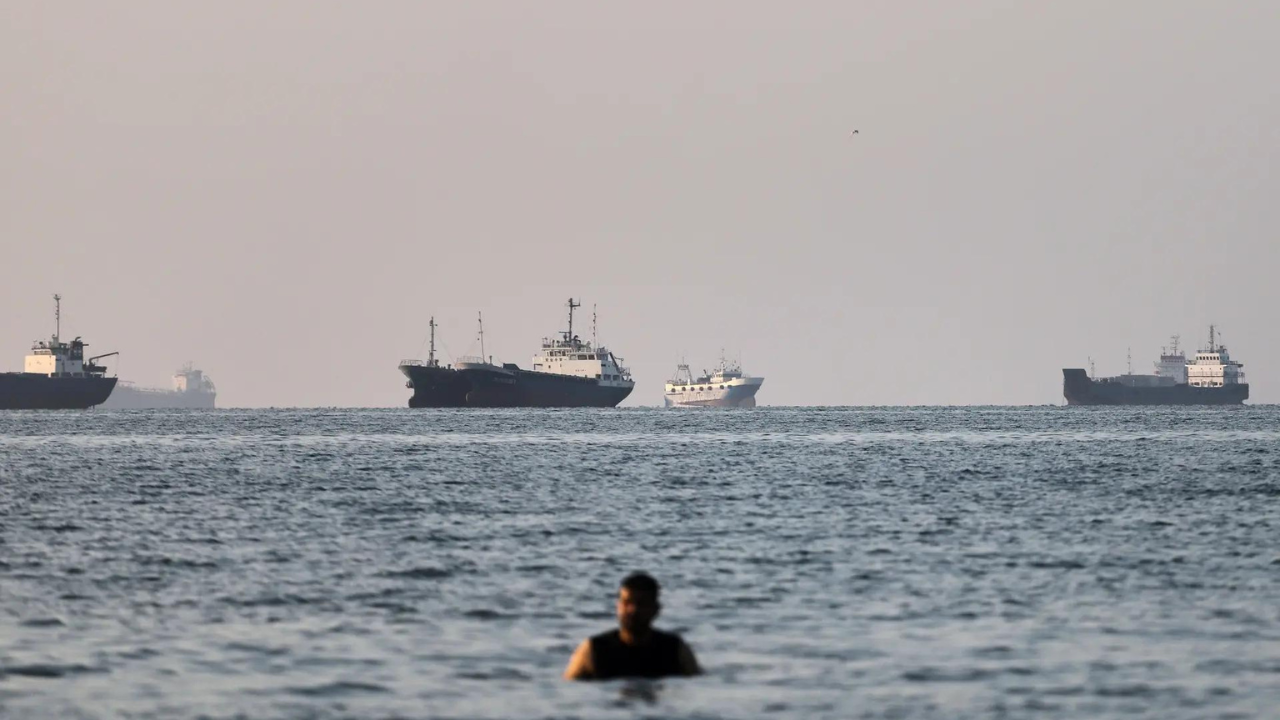
Critics point to the sudden increase in unlisted maritime movements out of Gulf terminals like South Loop East or the Louisiana Offshore Oil Port (LOOP). They note that vessels frequently changed destinations mid-voyage or utilized offshore lightering zones—where massive Very Large Crude Carriers (VLCCs) take on oil from smaller Aframax tankers because the deep-draft vessels cannot enter shallow ports.
This is standard maritime operational reality, not a clandestine operation.
[Gulf Coast Storage Caverns]
             │
             ▼
[Onshore Terminals (Houston/LOOP)]
             │
             ▼ (via Aframax Shuttles)
[Offshore Lightering Zones]
             │
             ▼ (Transferred to VLCC)
[Global Commercial Destination]
When a VLCC sits 20 miles off the coast of Galveston waiting to take on two million barrels of oil, it requires four or five smaller shuttle tankers to load it sequentially. During this process, which can take weeks, the final destination of the cargo is rarely fixed. The trading desk holding the bill of lading is actively shopping that cargo to buyers in Europe, Asia, and Latin America. The ship's captain updates the destination on the AIS transponder only when the commercial contract is finalized.
To an outside journalist tracking transponders on a public website, a tanker floating in the Gulf for ten days with "Destination: For Orders" looks incredibly suspicious. To an energy trader, it simply means the cargo is waiting for the arbitrage window to open in Singapore.
The Sovereign Double Standard
There is an undeniable element of structural hypocrisy in how global energy accounting is managed, and this is the one point where the critics accidentally stumble onto a partial truth. The global energy market is not a moral enterprise. It is a giant machine designed to launder molecules.
The US enforces strict sanctions on Iranian and Russian crude oil, penalizing any foreign entity that uses the Western financial system to facilitate those trades. Yet, through the use of blending, transshipment hubs, and commercial title transfers, sanctioned molecules find their way into Western supply chains every day.
Consider how Indian refiners buy discounted Russian Urals crude, process it into diesel fuel at facilities like the Jamnagar refinery, and then export that diesel directly to New York or Rotterdam. Legally, the origin of the product is India. Chemically, the energy originated in western Siberia.
When the US releases 90 million barrels of oil into the global market via commercial traders, it participates in this exact same system of molecular laundering. The government knows that once those barrels enter the commercial stream, they free up supply elsewhere, shifting the global balance of trade. Some of that oil inevitably swaps places with crude from less-than-reputable regimes.
The downside to this approach is obvious: it erodes the moral authority of the sanctions regimes themselves. You cannot easily convince developing nations to freeze out sanctioned oil when your own midstream infrastructure is optimized to absorb and re-export inventory whenever prices spike. But from a purely pragmatic standpoint, the US state apparatus prioritizes domestic price stability over absolute ideological purity.
How to Read the Energy Markets Moving Forward
If you want to survive in the modern commodity landscape without getting blinded by political theater, you must change the questions you are asking. Stop asking who owns the oil when it is in the ground. Start asking who owns the infrastructure that moves it across the water.
Here is the unconventional reality of global energy movements:
- Molecules have no nationality: Once crude oil is extracted and mixed into a pipeline or storage tank, its origin is an accounting fiction. The global market prices oil based on density and sulfur content, not political alignment.
- Arbitrage drives logistics, not conspiracies: The movement of 90 million barrels out of the Gulf occurred because Western domestic prices were lower than international benchmarks. Commercial entities bought low from the government and sold high to global buyers. The government allowed it because it achieved their goal of dampening global price volatility.
- The SPR is an obsolete tool: The idea that a nation's energy security is tied to a fixed physical stockpile in salt caverns is a mid-twentieth-century relic. True energy security in 2026 is defined by domestic drilling flexibility, electrical grid resilience, and supply chain redundancy.
The next time an investigative report drops claiming to have uncovered a secret pipeline flow or a hidden fleet of tankers operating with the tacit approval of a Western superpower, ignore the geopolitical melodrama. Follow the margin. Look at the spread between Brent and West Texas Intermediate. Look at the freight rates for VLCCs out of the US Gulf.
The data will tell you everything you need to know, and it will never require a conspiracy theory to make sense.