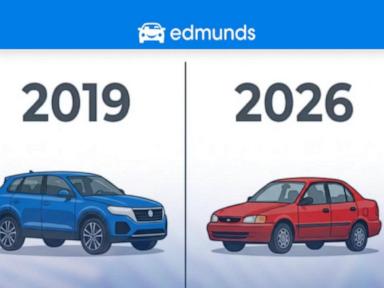
Used car pricing dynamics operate on a mechanical feedback loop tied directly to macroeconomic supply constraints, production pipeline friction, and shifting consumer credit thresholds. When standard market commentary points simply to rising used car prices, it misses the underlying structural mechanics governing depreciation curves, wholesale auction behaviors, and new vehicle inventory replacement rates. Understanding why pre-owned vehicle valuations remain elevated requires deconstructing the transmission mechanism from manufacturing plant bottlenecks to retail lot pricing.
The Supply Deficit Equation
The primary driver of pre-owned vehicle appreciation stems from a persistent multi-year deficit in new vehicle production. When automotive manufacturers faced severe microchip shortages, raw material cost spikes, and logistics failures, global vehicle assembly lines stalled. For a closer look into this area, we suggest: this related article.
[New Vehicle Production Deficit]
       ↓
[Depressed Trade-In Volume]
       ↓
[Wholesale Inventory Scarcity]
       ↓
[Retail Price Inflation]
This production shortfall created a structural void in the primary market. Fleet operators, rental car agencies, and individual consumers who traditionally purchased new vehicles were forced to retain existing units or pivot to the secondary market.
The secondary market absorbs this displaced demand instantly. Because the flow of late-model trade-ins relies entirely on the velocity of new car sales, a stalled primary manufacturing sector chokes off the supply of quality pre-owned inventory. Fleet liquidations, which historically flooded wholesale auctions with three-year-old sedans and SUVs at predictable intervals, dropped significantly. With fewer units entering the pipeline, auction bidding intensifies, driving wholesale acquisition costs upward for independent and franchise dealerships alike. For additional context on this issue, in-depth analysis can also be found at MarketWatch.
Financing Costs and The Total Cost of Ownership
Consumer behavior shifts rapidly when financing variables change. High interest rates alter the math of vehicle acquisition, pushing buyers away from expensive new models and toward pre-owned alternatives. However, this migration into the used market creates an unintended counter-pressure: increased demand for used inventory counteracts the cooling effect of expensive debt.
Buyers evaluating total cost of ownership must factor in depreciation velocity alongside interest rates. Under normal economic conditions, a vehicle sheds a predictable percentage of its MSRP in the first thirty-six months. Recent supply shocks flattened this curve. Because replacement vehicles are scarce, the residual value of existing assets stays artificially high.
- Acquisition Cost: Higher wholesale prices force dealers to pass elevated costs to retail buyers.
- Credit Friction: Elevated benchmark interest rates increase monthly payments even when vehicle purchase prices stabilize.
- Equity Retention: Owners find themselves with higher-than-average trade-in equity, which cushions the blow of high interest rates when transitioning to a newer used vehicle.
This environment changes how fleet managers and individual buyers calculate holding periods. Extending the operational lifecycle of an existing vehicle often yields a lower total cost than entering the current transaction market, regardless of whether the target is new or pre-owned.
Regional Variance and Inventory Segmentation
Price increases do not distribute evenly across all vehicle categories. Market stratification reveals distinct behavioral patterns based on vehicle class, fuel type, and mileage tiers.
Full-size trucks and utility vehicles maintain stronger pricing floors due to commercial demand and specialized manufacturing capacity constraints. Conversely, older, high-mileage commuter sedans experience price volatility tied directly to local economic conditions and the purchasing power of entry-level buyers.
Wholesale auctions segment inventory into distinct tiers based on mechanical condition, reconditioning costs, and cosmetic wear. When auction conversion rates rise—meaning a high percentage of offered inventory sells on the first pass—dealerships compete aggressively, bidding up vehicles that previously would have required extensive mechanical reconditioning. This willingness to absorb high reconditioning costs signals desperation for lot inventory, cementing higher retail price points.
Operational Adjustments for Fleet and Retail Buyers
Navigating a structurally inflated pre-owned market requires moving away from traditional inventory acquisition cycles. Dealerships and commercial fleet managers cannot rely on historical pricing matrices or seasonal depreciation models that assume steady, predictable supply replenishment.
Procurement strategies must shift toward direct-to-consumer acquisition channels, bypassing traditional wholesale auction houses where bidding wars inflate acquisition costs. Sourcing vehicles directly from private sellers through targeted digital acquisition campaigns cuts out auction fees and lowers the baseline cost of goods sold.
Fleet operators should extend asset replacement horizons while increasing preventative maintenance budgets. The marginal cost of repairing an existing fleet vehicle is frequently lower than the total cost of acquiring an inflated replacement unit in a constrained market. For operations requiring fleet expansion, staggered purchasing schedules minimize exposure to localized price spikes, distributing capital expenditure risk across multiple quarters rather than concentrating purchases during periods of peak auction inflation.