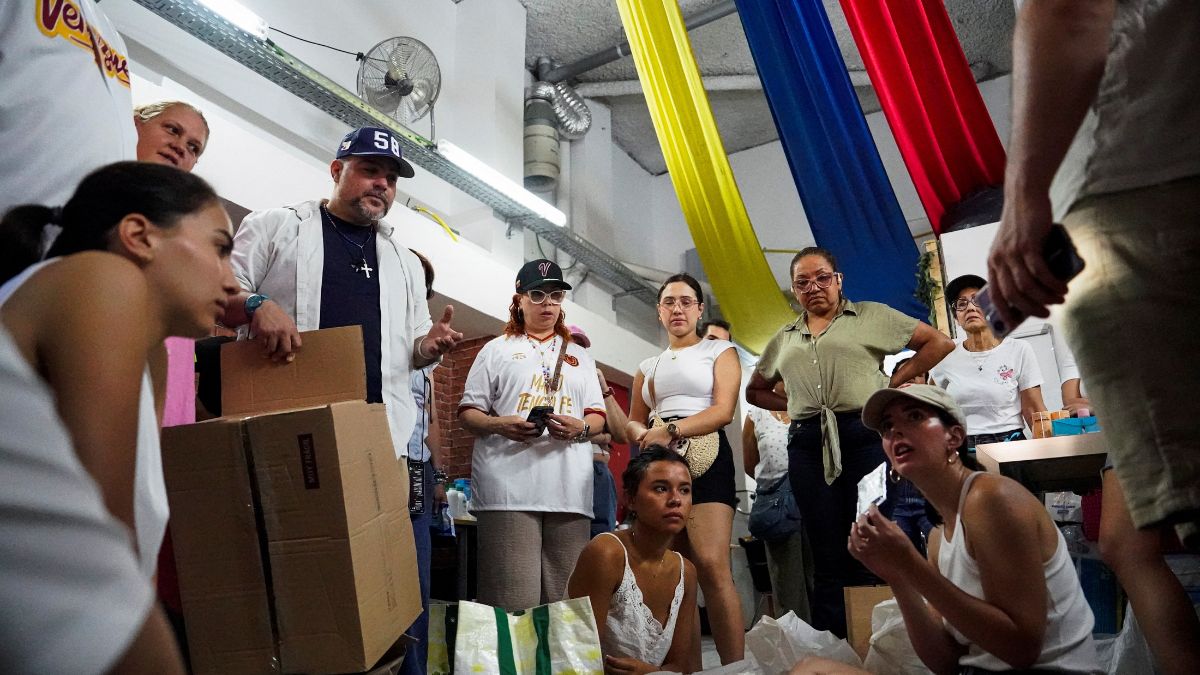
The media has a script for natural disasters. When seismic waves ripple through a region, the standard narrative machine cranks out stories of resilience, community kitchens, and mutual aid. It happens every time. We saw it when twin medium-magnitude earthquakes rattled Venezuela’s coastal and north-central regions. The coverage focused almost exclusively on human interest: neighbors helping neighbors, the triumph of the human spirit, and the comfort of communal soup pots.
It is a comforting lie.
Humanity and solidarity are beautiful concepts, but they do not repair high-voltage transformers. They do not stabilize a power grid that has suffered from a total absence of capital expenditure for twenty years. When an earthquake hits an already broken nation, celebrating "hope" is a dangerous distraction from a brutal reality: structural rot turns minor tremors into systemic catastrophes.
The Lazy Consensus of Disaster Humanism
Mainstream reporting loves to view disasters through a purely social lens. The narrative insists that the primary victim of an earthquake is the housing stock, and the primary solution is community mobilization. This focus misses the entire point of modern infrastructure dependencies.
In a functional economy, a 5.0 or 6.0 magnitude earthquake is a disruption. In a nation experiencing prolonged economic collapse, it is a trigger event for cascading systemic failure.
When you look closely at the data from recent Venezuelan seismic events, the structural damage to buildings, while tragic on an individual level, was not the real crisis. The real crisis was the immediate, widespread blackout that followed. The tremors did not just shake concrete; they shattered an electrical grid held together by literal duct tape and prayer.
To understand why solidarity fails as a recovery strategy, we have to look at the mechanics of the Venezuelan power network. The country relies overwhelmingly on the Guri Dam (the Simón Bolívar Hydroelectric Plant), which generates roughly 70 to 80 percent of the nation's electricity. This power must travel over thousands of miles of poorly maintained high-voltage transmission lines to reach population centers like Caracas and Valencia.
When an earthquake hits, the automatic protection systems of these substations trip. In a healthy system, engineers isolate the fault, reroute power, and bring modules back online within hours. In a collapsed system, a single trip can trigger a thermal runaway across the entire network because there is no spinning reserve—no backup thermal plants running in the background to absorb the shock.
Your neighbors can be the most altruistic people on earth, but they cannot fix a tripped 765-kV transmission line without insulated tools, specialized ceramic insulators, and a fleet of heavy transport vehicles that have functional tires and diesel fuel.
The Broken Premise of People Also Ask
If you look at search trends around South American seismic events, the questions people ask betray a deep misunderstanding of how infrastructure physics works.
Why do minor earthquakes cause such massive power outages in Venezuela?
The common assumption is that the shaking physically snaps the wires. It rarely does. The real reason is a phenomenon known as system instability due to zero redundancy. Over the last two decades, Venezuela's thermal power plants—like Táchira or Planta Centro—have gone completely offline due to lack of spare parts and fuel.
Imagine a table supported by four legs. If you kick one leg, the table stays up. That is a redundant grid. Now imagine a table balanced on a single central pillar—the Guri Dam. If you nudge that pillar even slightly with a minor tremor, the whole table flips over. The outage isn't caused by the earthquake destroying the lines; it is caused by the system lacking the dynamic stability to handle even a microsecond of voltage fluctuation.
Can international aid and community organizing rebuild the affected zones?
No. This is where well-meaning international observers get it completely wrong. Handing out blankets, water purification tablets, and flashlights keeps people alive for forty-eight hours, but it does absolutely nothing to address the structural deficit.
True recovery requires massive institutional capital injection. It requires bringing in multinational engineering firms like Siemens or General Electric to rebuild turbine halls. Community organizing cannot manufacture a utility-scale gas turbine rotor. By framing the solution around grassroots solidarity, we absolve the structural actors of their failure to maintain basic industrial assets.
The Cost of the Counter-Intuitive Approach
If we want to actually protect populations in volatile zones, we have to abandon the feel-good narratives and look at the cold math of infrastructure triage.
The contrarian truth is this: during a structural collapse, investing a million dollars into upgrading the telemetry and automated switching systems of a distant electrical substation saves far more lives during an earthquake than spending that same million dollars on local disaster relief supplies.
But this approach has a dark, pragmatic downside that nobody wants to admit. Triage means making cruel choices. It means that while you are allocating scarce capital to buy industrial transformers and telemetry software, you are explicitly not spending that money on immediate medical supplies or housing repairs for the people whose roofs just caved in.
It is an agonizing trade-off. If you fix the roofs first, you look like a hero on the evening news. Everyone praises the immediate impact. But the grid remains vulnerable, and the next minor tremor will plunge the entire hospital system into darkness again, killing far more people in the operating rooms than died in the initial collapse. True expertise requires choosing the invisible asset over the visible tragedy.
The Illusion of Resilience
I have spent years analyzing industrial systems under stress, and if there is one lesson written in the scars of failing utilities worldwide, it is that "resilience" is often used as a euphemism for institutional neglect. When a government or a media outlet praises a population for their resilience in the face of a disaster, what they are really saying is: "We have failed to provide you with the basic infrastructure of the twenty-first century, so please get used to suffering quietly."
Stop romanticizing the survival strategies of desperate people. The bucket brigades and the shared generators are not signs of a vibrant, hopeful community; they are the indictment of a failed system. When the ground shakes, solidarity is a bandage on a gunshot wound. You do not fix a broken country with hope. You fix it with capital, concrete, and engineering.