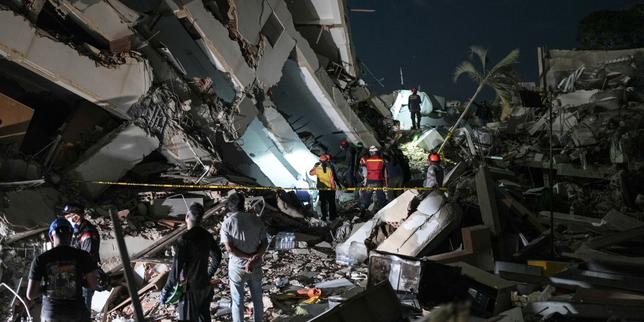
Natural disasters don't care about politics. But when the ground split open in Venezuela on June 24, 2026, a decaying state infrastructure turned a natural hazard into an absolute human catastrophe.
The official death toll from the Venezuela earthquake has now jumped to 1,719. National Assembly President Jorge Rodriguez confirmed the numbers on Monday, alongside 5,034 reported injuries. The United Nations fears the actual human cost is vastly higher. They estimate roughly 50,000 people are still missing. Recently making news in related news: What Most People Get Wrong About the Supreme Court Transgender Sports Ruling.
If you are looking at these numbers from the outside, you might think this is just another tragic earthquake story. It isn't. The real story is how decades of state neglect, economic collapse, and sheer administrative incompetence turned a pair of major tremors into an urban death trap. People aren't just dying from falling rubble. They're dying because the emergency response system is completely broken.
The Brutal Reality on the Ground in La Guaira
The worst of the devastation hit the coastal areas north of Caracas. La Guaira and Caraballeda bore the brunt of the double shocks. What used to be scenic beachside high-rises and residential neighborhoods now look like bombed-out war zones. More insights into this topic are covered by BBC News.
Look at the numbers provided by the local authorities. At least 189 buildings completely crumbled into dust. Another 666 structures are either partially collapsed or too unstable to enter. When you walk through the streets of La Guaira right now, the air smells like dust and decay.
Morgues of fortune have popped up inside shipping warehouses near the port. Local residents gather outside these makeshift facilities for hours. They stand in the sweltering heat, clutching photos of their siblings, parents, and children. They aren't waiting for a rescue miracle anymore. They are waiting for a body and an autopsy report.
The critical 72-hour rescue window closed days ago. Statistically, the chances of pulling someone alive out of a pancaked concrete building after four days drop to near zero. Yet, families are still digging with their bare hands because the official government heavy machinery simply never showed up.
Behind the Broken Venezuela Earthquake Response
Why is the body count rising so fast? The interim government led by Delcy Rodriguez has proven completely incapable of managing a crisis of this scale. For years, the ruling regime focused its resources on maintaining political control and funding security forces tasked with domestic repression. They ignored basic disaster preparedness, building codes, and emergency logistics.
When the twin quakes hit, the military didn't know what to do. They had no plan. They lacked the training for search and rescue operations in dense urban environments. Instead of deploying organized emergency units, the government improvised.
The state simply lacks the capacity to help its own people. Thirty-eight hospitals across the affected zone require major repairs right now. Think about that. At the exact moment when thousands of severely injured citizens need trauma care, surgery, and intensive stabilization, the hospitals themselves are structurally unsafe or lacking power.
The economic hit is staggering. Initial UN estimates place the physical damage at around $6.7 billion. In a country already crippled by hyperinflation, severe supply shortages, and economic sanctions, finding $6.7 billion to rebuild is a fantasy. Up to 6.76 million people are directly affected by the destruction of water lines, electrical grids, and housing. Two million of those people are in Caracas alone.
International Aid Is Arriving But Facing Bottlenecks
Local volunteer crews are exhausted. Foreign search teams from two dozen countries have landed to fill the massive void left by the Venezuelan state. More than 2,700 international rescue workers, 521 tons of emergency supplies, and specialized K9 units are on the ground.
The United States military deployed 130 Marines to repair the heavily damaged port at La Guaira. US Southern Command also sent helicopters to ferry food and clean water into isolated coastal towns. An amphibious transport dock ship, the USS Fort Lauderdale, is anchored just off the coast, serving as a logistics hub.
French and American rescue teams managed to pull a man and his teenage son alive from the rubble in Caraballeda five days after the initial shock. It was a stunning, rare moment of joy captured by journalists on the scene.
But individual miracles can't obscure the massive logistical bottleneck. Bringing aid into a country with a deeply paranoid government is a nightmare. Distribution is slow. Bureaucracy is choking the flow of medicine and food. While the UN plans to supply 10,000 body bags to handle the expected surge in confirmed fatalities, living survivors in towns like Tucacas are fighting over basic drinking water.
Stop Blaming Just the Fault Lines
Earthquakes happen. The tectonic plates beneath the Caribbean and South American plates will always move. But the sheer scale of this disaster is a direct result of human choices.
For nearly three decades, the Venezuelan government hollowed out municipal institutions. Safe building materials were redirected to political projects or lost to corruption. Concrete was mixed poorly. Buildings were constructed on unstable hillsides without proper engineering oversight.
When the ground shook, those buildings didn't just sway. They pancaked. They trapped thousands of families inside concrete tombs.
The population is furious. The initial shock has worn off, replaced by raw, unadulterated anger. People see the elite political class living in secure, undamaged compounds while regular citizens sleep on asphalt streets next to posters of their missing relatives.
What Needs to Happen Right Now
If you want to help or if you are tracking how this crisis develops, look at the logistics, not the government press conferences. The Venezuelan government loves to praise its own resilience on state television. Ignore the rhetoric. Look at the concrete actions required to stop the death toll from climbing toward the tens of thousands.
First, the regime must cede total operational control of the aid distribution to international agencies like the UN and the Red Cross. The Venezuelan military cannot handle this. They don't have the trust of the population, and they don't have the logistical expertise. Every hour spent auditing or policing incoming foreign aid shipments is an hour where someone dies of dehydration or preventable infection under a collapsed roof.
Second, immediate focus must shift from searching for survivors to preventing massive disease outbreaks. With water infrastructure completely destroyed across major portions of Miranda, Vargas, and the Capital District, millions of people are drinking contaminated water. Cholera and severe dysentery outbreaks are the next logical phase of this disaster if water purification units are not deployed to every street corner immediately.
Third, temporary long-term shelter solutions must be built outside the immediate fault zones. Housing over fifteen thousand newly homeless people in makeshift tent cities inside damaged urban parks is a recipe for a secondary humanitarian crisis. The government needs to utilize empty state-owned land to build structured, safe, temporary communities with proper sanitation.
This isn't a situation that will be fixed in a few weeks or even a few years. The June 24 double earthquake completely broke a country that was already fractured. Watching how the international community bypasses state corruption to deliver direct relief to the citizens of La Guaira and Caracas will determine whether Venezuela can ever truly recover from this blow.